Vaca frita translates to fried cow, which is exactly what it is and also exactly why it is one of the most satisfying things on a Cuban restaurant menu. Flank steak or flap meat that has been boiled until fully tender, then shredded, marinated with citrus and garlic, and pan-fried in batches until the edges crisp and char while the interior stays moist and juicy. The result is shredded beef with two distinct textures in every bite: the crispy, almost caramelized exterior and the tender, citrus-soaked interior. It is a technique dish disguised as a simple one, and the gap between a well-executed version and a mediocre one is significant enough to notice before you finish the first forkful.
If you have been searching for the best vaca frita near me and finding versions that are either bland or soggy rather than properly crisped, this guide helps you identify the kitchens getting it right.
What Vaca Frita Actually Is
The process for making vaca frita follows a specific sequence that cannot be shortened without losing the qualities that make it worth eating. The meat, typically flank steak, skirt steak, or flap meat, is first boiled or simmered in salted water until completely tender, which can take one to two hours depending on the cut. This step is not optional. Trying to crisp raw or partially cooked beef produces a completely different result.
Once the meat is tender and cooled, it is shredded by hand along the grain into irregular strips. The shredded beef is then marinated with lime juice, sour orange if available, garlic, salt, and pepper for at least 30 minutes and ideally several hours. The acid from the citrus penetrates the already-tender beef and adds a brightness that is the signature flavor element of vaca frita.
The crisping step is where most kitchens either succeed or fail. The marinated shredded beef goes into a hot pan with oil in batches. Too much beef in the pan at once causes steaming rather than frying, and the result is gray, soft shreds instead of crispy ones. A kitchen that takes the time to fry in small batches over high heat produces vaca frita with genuine texture contrast. One that dumps everything into a pan at once produces a stew.
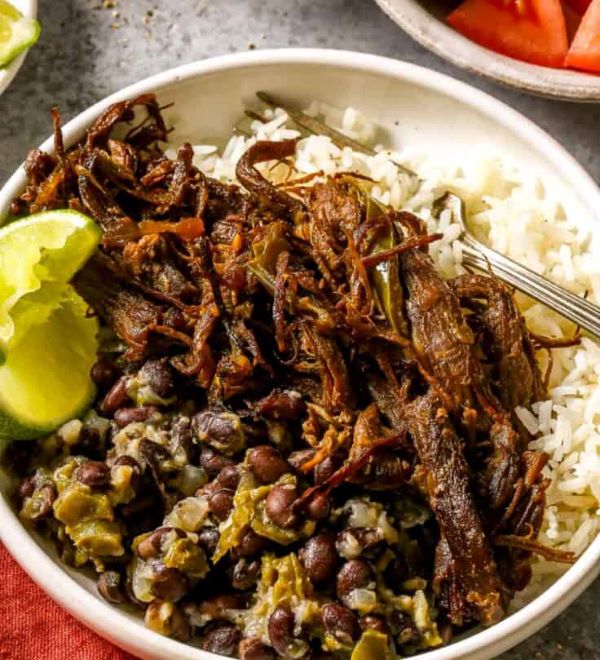
The traditional accompaniments are white rice, black beans, and either tostones or maduros. Sliced white onion, cooked briefly in the same pan after the beef, is piled on top as a garnish. This is vaca frita cubana in its complete form.
When you search for the best vaca frita near me, the crispiness of the beef edges and the presence of lime and garlic flavor throughout are the two most important quality markers.
Where to Find It
Cuban restaurants are the primary source. Vaca frita is a standard item on most Cuban restaurant menus and one of the dishes that distinguishes Cuban cooking from other Latin American cuisines that do not share this preparation tradition. A Cuban restaurant that carries ropa vieja, picadillo, and lechon alongside vaca frita is operating with a full traditional menu and is more likely to make each dish properly.
Cuban fondas and casual lunch spots are often the best source. The fonda format, a casual Cuban restaurant serving daily home-style plates at reasonable prices, is where vaca frita is most commonly eaten in Cuba itself. These spots make large quantities, cook through multiple batches during service, and produce consistent results because the volume demands it.
Cuban-American restaurants in Miami, Tampa, and Hialeah are the most reliable options in the United States given the size and depth of Cuban culinary tradition in those cities. The competition between Cuban restaurants in these markets keeps standards higher than in cities where Cuban food is less established.
Cuban home cooks and community vendors selling through Instagram and Facebook are a strong source in cities where dedicated Cuban restaurants are scarce. Vaca frita is a practical dish to sell in batches because it reheats well, and Cuban home cooks who sell traditional food regularly include it in their weekly offerings.
How to Search More Effectively
A search for the best vaca frita near me will return Cuban restaurants in your area. Here is how to find the ones making it properly:
Search Google Maps for Cuban restaurant in your city and browse photo sections for vaca frita specifically. A photo of the dish should show visible crispy edges on the shredded beef, sliced onion on top, and white rice and black beans alongside. A photo showing soft, gray shredded beef without any color or crispiness tells you the kitchen is not frying properly.
Search Yelp for Cuban restaurants and read reviews that mention vaca frita specifically. Reviewers will describe whether the beef was crispy, whether the lime and garlic flavor came through, and whether the onion was served properly. These details appear in reviews more often than you might expect because vaca frita is one of the dishes Cuban food fans care most about.
Search Instagram with “vaca frita” plus your city name. Cuban restaurant accounts post this dish regularly, and the visual difference between properly crisped beef and soft shredded beef is immediately apparent in photos.
Ask any Cuban restaurant directly how they prepare their vaca frita. A kitchen that describes boiling the meat first, shredding by hand, marinating in citrus and garlic, and frying in batches over high heat is using the correct process. A kitchen that describes grilling or cooking the beef a different way has modified the dish significantly.
What Good Vaca Frita Should Look Like
Once the plate arrives, a few specific things confirm whether the kitchen made it properly.
The color. Golden brown to dark brown at the edges of the shredded beef, with some slightly charred bits that add bitterness and crunch. Uniform gray or light beige across the surface means the beef was steamed in a crowded pan rather than properly fried. The dark, crispy edges are not optional cosmetics. They are the texture and flavor elements that define the dish.
The texture contrast. Both textures should be present in every bite: crispy exterior and moist interior within the same shred of beef. If the beef is uniformly crispy all the way through, it was overcooked. If it is uniformly soft, it was not fried hot enough or long enough.
The citrus and garlic flavor. Present from the first bite and running through the entire dish. The lime and garlic marinade penetrates the already-tender beef during the resting period and flavors it at the level of the meat rather than just the surface. A version that tastes only of fried beef without any citrus character was either not marinated or marinated for too short a time.
The onion. Sliced and cooked briefly in the same pan after the beef, placed on top as a garnish. The onion should be slightly softened and have picked up some of the beef fat and citrus from the pan. Raw onion on top is a shortcut that misses the point of this component.
The accompaniments. White rice, black beans, and plantains in some form. These are not optional sides. They are structural parts of the plate in Cuban cooking. A restaurant that serves vaca frita without black beans is not serving the complete dish.
Ordering Tips
Order vaca frita as a main course rather than sharing it as a tapas-style plate. It is designed as a full plate with rice and beans, and the proportions only make sense when eaten that way.
Ask whether the beef is marinated in fresh lime juice or sour orange. Sour orange, called naranja agria, is the traditional Cuban citrus for this dish and produces a different, more complex acid flavor than lime alone. A restaurant that uses sour orange is following the traditional preparation. Lime alone is acceptable and common outside of Cuba, but knowing which is used helps you set flavor expectations.
Eat it immediately. Vaca frita loses its crispy texture relatively quickly as the moisture from the interior of the beef works outward. A plate eaten within five minutes of arriving will have noticeably better texture contrast than one left for fifteen minutes.
Pricing Expectations
A full plate of the best vaca frita near me at a Cuban restaurant typically runs between $16 and $26 with rice, beans, and plantains included. Cuban fondas and casual lunch spots are often at the lower end of that range. Higher-end Cuban restaurants in major markets may price it at the top of that range or slightly above. Home cook and vendor versions sold by the portion are typically in the $12 to $20 range.
Key Takeaways
- The best vaca frita near me is most reliably found at Cuban restaurants and fondas with traditional menus, particularly in cities with strong Cuban communities like Miami, Tampa, and Hialeah.
- Vaca frita is flank or skirt steak boiled until tender, shredded by hand, marinated in lime juice and garlic, then pan-fried in batches over high heat until the edges crisp and char. Each step is necessary and cannot be shortened.
- The crispy, dark-edged beef is the primary visual and textural quality marker. Gray or uniformly soft shredded beef means the pan was too crowded or the heat too low during frying.
- Citrus and garlic flavor running through the meat, not just on the surface, confirms the beef was properly marinated before frying.
- Ask whether sour orange or lime is used. Sour orange is the traditional Cuban ingredient and produces a more complex acid flavor.
- Search Instagram with “vaca frita” plus your city name. The visual difference between properly and improperly fried beef is clear in photos.
- Eat it immediately. The texture contrast between crispy edges and moist interior disappears within minutes as moisture redistributes through the meat.
- Expect to pay $16 to $26 at a sit-down Cuban restaurant and $12 to $20 per portion from a home cook or community vendor.