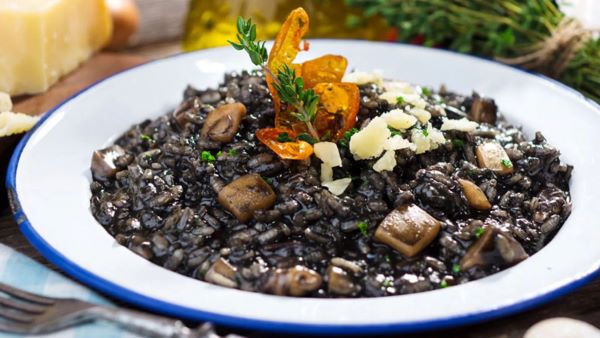
Arroz negro stops people at the table before the first bite. The rice is genuinely, deeply black from the squid ink mixed into the cooking liquid, and it arrives topped with tender squid rings or cuttlefish pieces and a spoonful of aioli on the side. It looks dramatic and it tastes like the sea in a way that few dishes outside of the Spanish coastal tradition manage. When it is made properly in a proper paella pan over real heat, with a sofrito built from patience and good tomatoes, with ink added at the right moment and rice cooked until it absorbs everything in the pan without going soft, it is one of the better things you can eat. Finding the best arroz negro near me requires knowing where to look and what to evaluate when you get there.
What Arroz Negro Actually Is
Arroz negro is a Spanish rice dish most closely associated with Valencia and the Catalonian coast. It is made in the same paella pan as paella and follows similar technique, but it is categorically different from paella valenciana and should not be confused with it. The rice is cooked in a sofrito base of onion, garlic, and tomato, to which squid or cuttlefish ink is added along with fish or seafood stock. The ink disperses through the liquid and turns the rice a uniform, glossy black during cooking.
The seafood in arroz negro is typically squid or cuttlefish, sometimes accompanied by shrimp or clams added in the final minutes of cooking. The ink itself does not taste strongly of squid in a fishy way. It adds a briny, slightly metallic depth and a visual impact that makes the dish unlike anything else on a Spanish restaurant menu.
The socarrat, the caramelized, slightly crispy layer of rice that forms at the bottom of the pan, is as important in arroz negro as in any paella. This bottom crust forms when most of the liquid has been absorbed and the rice is in contact with the hot metal of the pan. A pan with a good socarrat tastes of toasted rice and caramelized seafood in a way that the rest of the rice does not, and it is considered the prize of the dish.
The aioli served alongside is not optional. Its rich, garlicky creaminess against the briny ink rice is a combination that makes both elements taste better than they do independently.
When you search for the best arroz negro near me, the presence of a proper sofrito base, real squid or cuttlefish ink rather than artificial coloring, and evidence of socarrat in the cooking are the three quality markers worth asking about.
Where to Find It
Spanish restaurants with a serious rice program are the primary source. Any Spanish restaurant that carries multiple rice dishes, distinguishes between paella and arroz sec and arroz negro, and cooks them in traditional paella pans over real heat rather than in conventional oven pots is worth investigating.
Valencian or Catalonian restaurants are particularly worth seeking out. Arroz negro has its roots on the Mediterranean coast of Spain, and restaurants that specifically represent these regional traditions tend to treat it as a serious preparation rather than a novelty.
Seafood-focused Spanish restaurants are a strong secondary option. A restaurant that prioritizes fresh seafood sourcing and builds its menu around marine ingredients is more likely to have the squid or cuttlefish and the fresh ink needed for a properly made arroz negro.
Spanish restaurants in coastal cities where fresh seafood is more available tend to make arroz negro with better ingredients than those in landlocked markets. Cities like Miami, New York, San Francisco, and Los Angeles have access to quality seafood that makes a difference in the final dish.
How to Search More Effectively
A direct search for the best arroz negro near me will surface Spanish restaurants in your area. Here is how to identify the ones making it properly:
Search Google Maps for Spanish restaurant and look specifically at photo sections for images of arroz negro. A photo of the finished dish in a paella pan shows you whether the rice is uniformly black, whether seafood is visible on top, and whether the pan shows evidence of proper cooking. A dish served in a regular bowl or plate rather than a paella pan was not made in the traditional format.
Search Yelp for Spanish restaurants and read reviews that specifically mention arroz negro. Reviewers who know the dish will comment on the socarrat, the ink flavor, the aioli, and whether the rice was properly cooked rather than mushy or undercooked.
Search Instagram with “arroz negro” plus your city name. Spanish restaurant accounts post this dish regularly because it photographs dramatically. The black rice against white aioli in a dark paella pan is one of the more visually striking food photos possible, and restaurants that make it well use it accordingly.
Ask any Spanish restaurant whether their arroz negro uses real squid or cuttlefish ink or artificial coloring. A kitchen using real ink will confirm it without hesitation. Artificial ink coloring is used in some commercial preparations and produces a less complex flavor.
What Good Arroz Negro Should Look Like
Once the dish arrives, a few things tell you whether it was made properly.
The color. Uniform, deep, glossy black throughout. Not gray, not patchy, not fading at the edges. Real squid ink distributes evenly through the cooking liquid and stains every grain of rice completely. Uneven coloring suggests the ink was added improperly or in insufficient quantity.
The rice texture. Cooked through but still with a slight bite, similar to a properly made risotto but drier. Spanish arroz negro is not creamy like risotto. The grains should be distinct and slightly firm, having absorbed the ink and stock without going soft. Mushy rice means too much liquid or too long a cooking time.
The socarrat. A dark, slightly crispy layer at the bottom of the pan that tastes of caramelized rice and seafood. To check for it, scrape the bottom of the pan with a spoon. If the rice comes away cleanly without effort, there is no socarrat. If it requires some gentle scraping and the bottom rice has more color and crunch than the top, the socarrat is there.
The seafood. Tender, properly cooked squid or cuttlefish rings with no rubbery texture. Shrimp, if included, should be pink and cooked just through. The seafood should taste fresh and marine, not fishy or overcooked.
The aioli. Thick, properly emulsified, and strongly flavored with garlic. A thin or store-bought aioli is a shortcut that undermines the pairing. Real aioli made from egg, garlic, and olive oil has a texture and sharpness that a commercial product cannot replicate.
Ordering Tips
Arroz negro is typically a main course for two people rather than an individual plate. Most Spanish restaurants that make it properly require a minimum of two people per order and a preparation time of 20 to 30 minutes after ordering. Confirm this before visiting if you are dining alone.
Tell the server you want the socarrat. In Spanish restaurants that make arroz negro properly, asking for socarrat signals that you know what you are eating and the kitchen will ensure the bottom crust is developed.
Eat it immediately after it arrives. Like all paella-format rice dishes, arroz negro continues cooking in the residual heat of the pan. Leaving it to sit while you wait for other courses will result in overcooked rice by the time you eat.
The ink will stain your teeth and lips temporarily. This is inevitable and harmless. A glass of red wine helps clear some of it, and checking in a mirror before leaving the restaurant is a reasonable precaution.
Pricing Expectations
Arroz negro at a Spanish restaurant typically runs between $28 and $55 for a two-person serving, which works out to $14 to $28 per person. Higher-end Spanish restaurants in major coastal cities price it at the higher end of that range, particularly if they use premium squid or cuttlefish. Some restaurants price it by the person for individual servings at $18 to $28, though this is less common than the shared pan format.
Key Takeaways
- The best arroz negro near me is most reliably found at Spanish restaurants with a dedicated rice program that cooks in traditional paella pans over real heat, particularly those with Valencian or Catalonian regional focus.
- Arroz negro is Spanish black rice cooked in squid or cuttlefish ink with a sofrito base and seafood, served with aioli. It is not paella and should not be confused with it.
- Real squid or cuttlefish ink produces a uniform, deep, glossy black color and a briny, complex flavor. Artificial coloring produces a less saturated color and none of the flavor depth.
- The socarrat, the caramelized crispy rice at the bottom of the pan, is a primary quality marker. Ask for it specifically and scrape the bottom to check whether it is present.
- Search Instagram with “arroz negro” plus your city name. The visual drama of this dish means properly made versions are photographed and posted regularly.
- Ask any Spanish restaurant whether they use real ink or artificial coloring. A confident answer is a quality signal. Vague answers suggest artificial product.
- Tell the server you want the socarrat. This signals kitchen knowledge and ensures the bottom crust is developed before the dish leaves the kitchen.
- Expect to pay $28 to $55 for a two-person pan, or $18 to $28 per person at restaurants that serve individual portions.