Tres leches cake shows up across Latin American bakeries and restaurants in most cities with any significant Spanish-speaking community. Most versions are good. The Cuban version, when made properly, is something that stands apart from the rest. The cake base is lighter, the milk soak is more balanced, and the whipped cream topping is restrained in sweetness in a way that lets the soaked cake carry the flavor rather than the frosting. It is not a dramatically different dish from other tres leches preparations, but the differences are consistent enough and significant enough that people who have had the best tres leches cubano near me know it when they find it again.
What Makes Tres Leches Cubano Different
Tres leches, as the name says, uses three milks: evaporated milk, sweetened condensed milk, and heavy cream or whole milk. The three are combined and poured over a sponge cake that has been poked with a skewer or fork to allow maximum absorption. The cake sits in the milk mixture until it is fully saturated, then it is topped with freshly whipped cream before serving.
The Cuban version of this dessert follows the same core logic but differs in the cake base and the balance of the milk mixture. The Cuban sponge cake, called bizcocho, is typically made with more egg and less butter than standard sponge cakes, producing a slightly airier crumb with a fine texture that absorbs the milk soak more evenly and without becoming mushy. The milk mixture in a Cuban tres leches tends to be less aggressively sweet than versions from other traditions, relying on the natural sweetness of the condensed milk without adding extra sugar to the soak.
The topping is whipped cream, not a buttercream or fondant, and Cuban bakeries tend to keep it lightly sweetened and freshly whipped rather than stabilized and heavily sugared. The result is a dessert that feels lighter than you expect given how saturated the cake is, with each bite delivering milk-soaked sponge and fresh cream in a ratio that does not overwhelm.
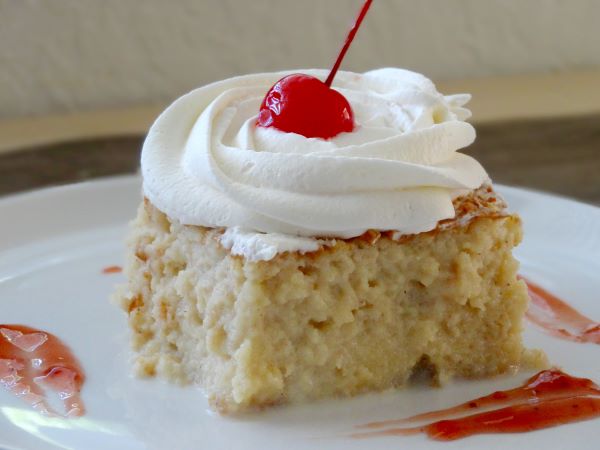
A sprinkle of cinnamon across the whipped cream surface is traditional in Cuban bakeries. Some versions add a maraschino cherry as a garnish. Neither is essential, but the cinnamon adds a warmth that lifts the flavor of the milk-soaked cake in a way that makes sense once you have tasted it.
When you search for the best tres leches cubano near me, the lightness of the cake base, the balance of the milk soak, and the freshness of the whipped cream topping are the three things that identify a Cuban bakery version from a generic interpretation.
Where to Find It
Cuban bakeries are the definitive source. A panaderia cubana that has been operating for any significant amount of time will make tres leches as a standard item, often sold by the slice from a large tray in the display case or available as a whole cake by order. Miami has the highest concentration of Cuban bakeries in the United States, but Tampa, Orlando, Hialeah, and cities in New Jersey and New York with established Cuban communities all have strong options.
Cuban restaurants often carry tres leches as their primary dessert offering. A Cuban restaurant that takes its postres seriously will make the cake in-house rather than buying slices from a supplier. A restaurant that can tell you when the cake was made and how long it has been soaking tends to produce a noticeably better version than one that is vague about its sourcing.
Latin American bakeries with Cuban influence sometimes carry tres leches with a Cuban-style preparation even if the bakery is not exclusively Cuban. A bakery that serves a mixed Cuban, Puerto Rican, or Dominican clientele may carry a version that follows Cuban bakery conventions simply because that is what its customers expect.
Cuban home bakers and community vendors sell tres leches by the slice and whole cake through Instagram and Facebook Marketplace in cities where dedicated Cuban bakeries are not available. The quality from experienced Cuban home bakers is frequently excellent and often superior to commercial restaurant versions because the cakes are made in small batches with attention to the soaking time.
How to Search More Effectively
A search for the best tres leches cubano near me will return Cuban restaurants and Latin bakeries in your area. Here is how to identify the ones doing it well:
Search Google Maps for Cuban bakery or panaderia cubana in your city and look at the photo sections of listing pages. Display case photos will show whether the restaurant carries tres leches and whether the visible slices look properly soaked and topped with fresh cream.
Search Yelp for Cuban food in your area and read reviews that specifically mention tres leches. Reviewers will describe whether the cake was moist or dry, whether the cream was fresh, and whether the sweetness level was balanced. These details tell you more than a star rating.
Search Instagram with “tres leches cubano” or “tres leches cubana” plus your city name. Cuban bakery accounts and home bakers who sell cakes post photos regularly, and a properly made tres leches cubano has a distinctive look from the cream topping and cinnamon dusting that makes it identifiable in photos.
Search Facebook Marketplace and local food groups for Cuban cake vendors in your city. Home bakers who take orders for tres leches usually post ahead of the weekend with order cutoff times and pickup details.
What Good Tres Leches Cubano Should Look Like
Once you find a source, a few specific things tell you whether the preparation was done properly.
The cake base. Light, fine-crumbed, and fully saturated with the milk mixture without being mushy or falling apart when sliced. A properly made bizcocho absorbs the milk evenly from top to bottom. The bottom of the slice should be as moist as the top. A cake that is dry in the center and wet only at the top was not soaked long enough or was made with too dense a crumb to absorb properly.
The color of the soaked cake. Slightly golden or cream-colored throughout, not white and dry at the center. The milk mixture should have penetrated completely, changing the color and texture of the entire crumb from airy to dense and moist.
The whipped cream. White, freshly whipped, and lightly sweetened. It should hold its shape when sliced but feel soft and light in the mouth rather than dense or greasy. Stabilized whipped cream that has been refrigerated for days will feel different from freshly whipped cream in a way that is immediately noticeable. Heavy or overly sweet cream on top usually means a commercial whipped topping was used rather than fresh cream.
The cinnamon. A light, even dusting across the cream surface. Present as an aromatic element rather than a thick coating. Too much cinnamon overpowers the milk flavors. Too little means the warmth that lifts the dessert is absent.
The slice integrity. A properly soaked tres leches holds together when sliced cleanly. A slice that collapses or oozes milk when cut was over-soaked or was served too cold, causing the milk to run rather than remain absorbed in the crumb.
Ordering and Eating Tips
Order tres leches cubano at room temperature rather than cold from a refrigerator. Cold tres leches has tightened crumb and less perceptible milk flavor because the fat in the milk mixture has solidified slightly. A slice that has been out of refrigeration for 20 to 30 minutes will taste noticeably more fragrant and moist than one served directly from the cold display case.
Ask when the cake was made and how long it has been soaking. The ideal soaking time is between 4 and 12 hours. A cake soaked for less than 4 hours may still have dry patches. A cake that has been soaking for more than 24 hours can develop a slightly dense, almost wet-bread texture that is less pleasant than the ideal.
Pair with a Cuban coffee, particularly a cortadito, which is espresso cut with a small amount of steamed milk. The bitterness of the coffee against the sweetness of the tres leches is the classic pairing in Cuban food culture.
If ordering a whole cake for a gathering, ask the bakery to bring the milk mixture separately if possible and soak it yourself within a few hours of serving. This gives you control over the timing and ensures the cake is at its best when served.
Pricing Expectations
A slice of the best tres leches cubano near me at a Cuban bakery or restaurant typically runs between $5 and $10 depending on the size and the market. A whole cake ordered from a Cuban bakery or home baker runs between $30 and $65 depending on size and any custom decoration. Home baker versions are often priced in the middle of that range and represent good value given the care that goes into small-batch production.
Key Takeaways
- The best tres leches cubano near me is most reliably found at dedicated Cuban bakeries, Cuban restaurants that make their desserts in-house, and Cuban home bakers who sell through Instagram or Facebook Marketplace.
- The Cuban version uses a lighter, airier bizcocho sponge base, a balanced milk soak that is less aggressively sweet than many other versions, and freshly whipped cream rather than stabilized or commercial toppings.
- A properly soaked tres leches cubano is uniformly moist from top to bottom, holds together cleanly when sliced, and has cream that feels light and fresh rather than dense or greasy.
- Ask when the cake was made and how long it has been soaking. The ideal window is 4 to 12 hours. Outside of that range, the texture suffers in predictable ways.
- Serve at room temperature, not cold from the refrigerator. Allowing 20 to 30 minutes out of refrigeration before eating significantly improves the milk flavor and crumb texture.
- A light dusting of cinnamon across the cream is the traditional Cuban finishing touch and adds warmth that lifts the overall flavor of the dessert.
- Pair with a cortadito or Cuban espresso for the classic pairing that balances the sweetness of the cake.
- Expect to pay $5 to $10 per slice at a bakery or restaurant, and $30 to $65 for a whole cake from a bakery or home baker.