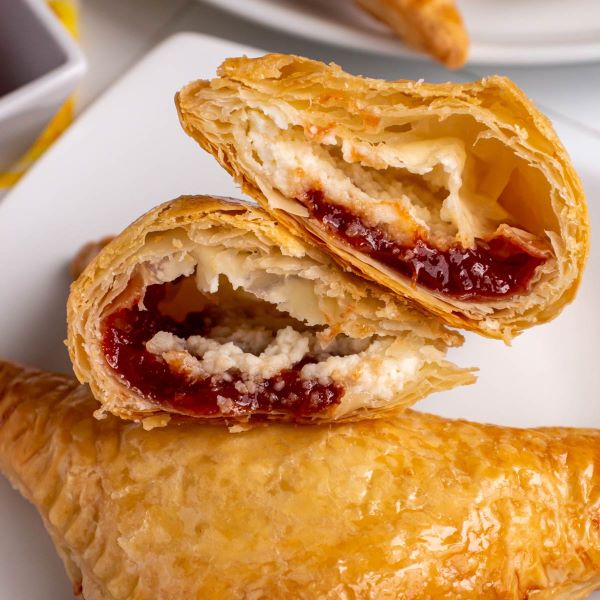
Pastelitos de guayaba are one of those pastries that people who grew up eating them miss with a specific and slightly irrational intensity when they are away from a place that makes them properly. The combination of flaky, slightly sweet puff pastry and thick guava paste, sometimes paired with cream cheese, is simple enough to describe and difficult enough to replicate that finding a good version outside of Miami or a city with a strong Cuban community requires some effort. If you have been searching for the best pastelitos de guayaba near me and keep landing on mediocre versions with stale pastry and insufficient filling, this guide helps you find what you are actually looking for.
What Pastelitos de Guayaba Actually Are
Pastelitos are small, filled pastries made from a laminated dough, similar to puff pastry, that is folded around a filling and baked until golden and layered. The guava filling is made from guava paste, called pasta de guayaba, a thick, firm, bright pink block made from cooked guava fruit and sugar. The paste is sliced or broken and placed inside the pastry before folding and sealing. During baking, the paste softens and intensifies, becoming jammy and fragrant while the pastry puffs and separates into layers.
The most common variation adds a layer of cream cheese alongside the guava paste. The combination, called pastelito de guayaba y queso, pairs the sweet, tropical tartness of guava with the mild tang of cream cheese. The contrast works so well that this version is now more common in many bakeries than the guava-only original.
The surface of a pastelito is typically brushed with egg wash before baking for color and sheen. Some bakeries add a light dusting of sugar on top or a brush of simple syrup after baking for additional gloss and sweetness. Both are acceptable finishing touches.
Cuban pastelitos are square or rectangular in shape, distinguished from the round empanada format. The layers of pastry visible at the edges and the slight puffing of the top surface during baking are visual markers of a properly laminated dough. A flat pastry with no visible layers was not made with true puff pastry.
When you search for the best pastelitos de guayaba near me, the lamination of the pastry and the quality of the guava paste are the two things that most directly determine whether the experience is worth the trip.
Where to Find Them
Cuban bakeries are the definitive source. A Cuban panaderia that has been operating for any significant length of time will make pastelitos de guayaba daily, often multiple batches, because the demand from the community is consistent. Miami has a concentration of Cuban bakeries that is difficult to match anywhere else in the United States, but cities including Tampa, Orlando, New York, and Los Angeles all have established options.
Latin American bakeries with Cuban influence sometimes carry pastelitos de guayaba alongside pastries from other traditions. A bakery that serves a broad Latin American clientele and lists pastelitos as a menu item is worth checking, though the quality will depend on whether the kitchen makes the pastry in-house or uses commercial puff pastry sheets.
Cuban restaurants often carry pastelitos as a breakfast or snack item available at the counter. A Cuban restaurant that also operates as a coffee counter with a pastry display is more likely to have fresh pastelitos throughout the day than one that only serves food at table.
Latin grocery stores and specialty food markets sometimes stock pre-packaged pastelitos de guayaba from regional producers. These are a fallback when fresh options are unavailable, though they cannot match the texture of a freshly baked version.
Cuban home bakers and community vendors sell pastelitos through Instagram and at Latin food markets in cities where dedicated bakeries are scarce. Search for Cuban pastry vendors or panaderia cubana in your city on social media to surface these options.
How to Search More Effectively
A search for the best pastelitos de guayaba near me will return results in cities with Cuban communities, but may miss smaller bakeries and vendors that do not rank well in standard search. Here is a more effective approach:
Search Google Maps for Cuban bakery or panaderia cubana in your city. Browse photo sections of listing pages where bakeries often show their display cases with pastelitos visible. A bakery that posts photos of golden, layered pastries with visible guava filling is giving you a preview of what to expect.
Search Yelp for Cuban food or Cuban bakeries and read reviews that specifically mention pastelitos. Reviewers will comment on pastry freshness, guava quality, and whether the cream cheese version was worth ordering.
Search Instagram with “pastelitos de guayaba” plus your city name. Cuban bakery accounts post photos of their daily pastry production, and pastelitos are among the most frequently photographed items because they are visually appealing and generate strong engagement.
Check Facebook groups for Cuban communities in your city. Ask where to find the best pastelitos. This question reliably generates strong opinions and specific recommendations from people who buy them regularly.
What Good Pastelitos de Guayaba Should Look Like
Once you find a source, a few things tell you whether the kitchen is making them properly.
The pastry layers. Visible at the edges and sides of the pastry, separated into thin, flaky sheets from the lamination process. A pastry with no visible layers and a uniform, bready texture was made from a shortcut dough rather than true puff pastry. The layers are not cosmetic. They are what gives the pastry its texture and its ability to shatter slightly when bitten.
The color. Deep golden brown across the surface, slightly darker at the edges. Pale pastry was underbaked. The Maillard reaction on the egg-washed surface creates flavor as well as color, and a pale pastry will taste bland compared to one with proper color development.
The filling. Visible at the edges when the pastry is cut or bitten, fully softened and jammy rather than cold and firm. Guava paste that was not given enough time in the oven to soften will still taste good but will lack the luscious, spreadable quality that makes a great pastelito different from an average one.
The guava color. Bright to deep pink, depending on the paste used. A brown or dull-colored filling indicates either a lower-quality guava paste or one that was overcooked. The pink color of good guava paste is part of how you identify a well-sourced ingredient.
The freshness. Pastelitos are at their best within two to three hours of baking. The pastry is at peak crispness, the filling is still slightly warm, and the layers have not yet softened from ambient humidity. A pastelito from a bakery that makes multiple batches throughout the day will always be better than one that has been sitting in a case since early morning.
Ordering Tips
Order both the guava-only and guava with cream cheese versions if you have never tried them side by side. The difference is significant and most people end up with a strong preference for one over the other.
Ask when the most recent batch was baked. A bakery that cannot answer this question or gives a vague response about baking them in the morning may not be turning over product fast enough to guarantee freshness.
Pair with a Cuban coffee, either a cafecito or a cortadito. The sweetness of the pastelito and the bitterness of a well-pulled Cuban espresso is one of the classic pairings in Cuban food culture and the two are designed to be eaten together.
Do not refrigerate pastelitos if you are buying them to eat within a few hours. The cold air toughens the pastry and dulls the guava flavor. If you are storing them overnight, a light reheat in a toaster oven at low temperature restores most of the texture.
Pricing Expectations
Individual pastelitos de guayaba at a Cuban bakery typically run between $2 and $5 each depending on the size and the market. Miami prices tend to be at the lower end given the volume of production and competition. In cities with fewer Cuban bakeries, prices may be slightly higher. A box of six to twelve pastelitos for sharing or gifting runs between $12 and $30 depending on the bakery and the size.
Key Takeaways
- The best pastelitos de guayaba near me are most reliably found at dedicated Cuban bakeries and panaderias rather than general Latin American or Spanish restaurants.
- Pastelitos de guayaba use a laminated puff pastry dough filled with guava paste, sometimes combined with cream cheese. The layers of pastry visible at the edges are the primary quality marker of a properly made version.
- A flat pastry with no visible layers was not made with true puff pastry and will have a bready rather than flaky texture.
- Search Instagram with your city name and “pastelitos de guayaba” and check Cuban community Facebook groups for specific bakery recommendations from regular buyers.
- Ask when the most recent batch was baked. Pastelitos are at peak quality within two to three hours of coming out of the oven.
- The guava paste should be fully softened and jammy inside, not cold and firm. Bright pink color indicates a quality paste. Brown or dull filling indicates a lower-grade ingredient or overbaking.
- Pair with Cuban coffee, either a cafecito or cortadito, for the classic pairing that makes both the pastry and the coffee taste better.
- Expect to pay $2 to $5 per individual pastelito and $12 to $30 for a box of six to twelve, depending on the city and bakery.