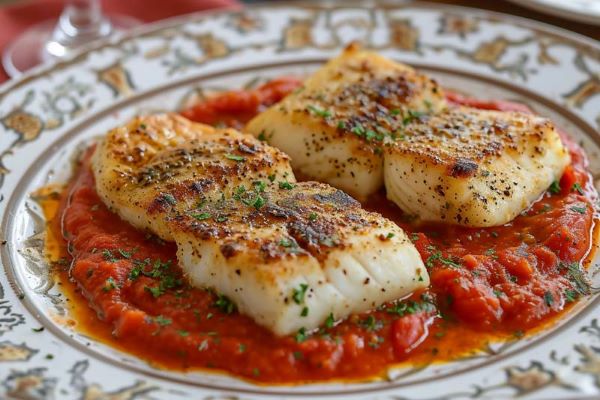
Bacalao a la vizcaina is one of the defining dishes of Basque cooking, and it is the kind of dish that rewards patience both from the cook and the diner. Salt cod that has been properly desalted over two days, braised in a sauce built on dried sweet red peppers called choricero, onion, garlic, and olive oil until everything becomes a unified, deeply flavored whole. It is not fast food and it is not subtle. The sauce is thick, slightly sweet from the peppers, and savory from the salt cod that releases its flavor into the braising liquid throughout the long cooking process. If you have been searching for the best bacalao vizcaina near me and coming up with results that do not quite match what you know this dish should be, this guide helps you search more precisely and evaluate what you find.
What Bacalao a la Vizcaina Actually Is
Salt cod, called bacalao in Spanish, has been a cornerstone of Basque and Spanish cooking for centuries. The preservation process of salting and drying fresh cod concentrates its flavor and changes its texture in ways that fresh cod cannot replicate. Before cooking, bacalao must be soaked in cold water for 24 to 48 hours with multiple water changes to remove the salt and rehydrate the fish to a workable texture. This step cannot be rushed. A bacalao vizcaina made with improperly desalted fish will be aggressively salty and the dish will be unbalanced regardless of how good the sauce is.
The sauce, called salsa vizcaina, is what makes this dish specific to the Basque province of Bizkaia. It is built on dried choricero peppers, a sweet variety without heat that is dried and sold as whole peppers or as paste. These peppers are rehydrated and their flesh is scraped out and cooked down with slowly caramelized onion, garlic, and a small amount of bread or hardboiled egg yolk to thicken the sauce. The result is a deep red sauce with a natural sweetness, body, and complexity that no shortcut version can reproduce.
The bacalao pieces go into the sauce and braise gently until the fish is just cooked through and has absorbed the flavors of the sauce while contributing its own gelatin and flavor back into it. The dish is traditionally served in a clay cazuela directly at the table.
When you search for the best bacalao vizcaina near me, the presence of choricero pepper paste or whole dried choricero peppers in the preparation is the single clearest marker of an authentic version versus a generic tomato sauce with salt cod.
Where to Find It
Basque restaurants are the primary source, and they are genuinely rare outside of a handful of cities. The United States has a small but dedicated Basque restaurant tradition concentrated in Nevada, Idaho, and parts of California due to historical Basque immigration linked to the sheep ranching industry. Restaurants in Boise, Elko, Reno, and parts of the San Francisco Bay Area serve traditional Basque food in family-style settings where bacalao vizcaina regularly appears on the menu.
Spanish restaurants with Basque or northern Spanish focus are worth checking in cities outside of the traditional Basque belt. A restaurant that specifically references Basque cuisine or the País Vasco on its menu is more likely to carry bacalao vizcaina than a general tapas bar.
Spanish restaurants during Lent and Holy Week are a seasonally reliable source. Bacalao dishes are traditional throughout Catholic Spain during Lent, and restaurants that might not carry bacalao vizcaina year-round often add it to their menu during this period.
Spanish delis and specialty food stores in cities with Spanish communities sometimes carry prepared bacalao vizcaina as a refrigerated or frozen item. The quality varies but is worth checking when restaurant options are limited.
How to Search More Effectively
A direct search for the best bacalao vizcaina near me may return limited results since this is specific enough that many restaurants do not feature it prominently in their online listings. Here is a more productive approach:
Search Google Maps for Basque restaurant or Spanish restaurant in your city and browse menus for bacalao, salt cod, or vizcaina. Restaurants with Basque-trained chefs or a menu that specifically references northern Spanish cuisine are your best targets.
Search Yelp for Spanish restaurants in your area and read reviews that mention bacalao specifically. Diners who order it will note whether the sauce was tomato-based, which indicates a shortcut, or whether it had the characteristic deep red color and sweetness of a proper vizcaina.
Search Instagram with “bacalao vizcaina” plus your city name. Spanish restaurant accounts that take their regional cooking seriously post this dish regularly, and a photo will immediately show you whether the sauce looks correct.
Contact Spanish cultural organizations or Basque cultural associations in your city. Basque cultural centers, called Basque clubs or Euskal Etxeak, exist in cities with Basque communities and can point you to local restaurants or community dinners where traditional bacalao vizcaina is served.
What Good Bacalao Vizcaina Should Look Like
Once you find a restaurant or source serving it, a few things confirm whether the preparation was done properly.
The sauce color. Deep red-orange from the choricero peppers, not bright tomato red. A tomato-dominant sauce is a different dish. The vizcaina sauce should look almost brick-colored, thick, and slightly glossy from the olive oil emulsified through the slow cooking process.
The sauce texture. Thick enough to coat the fish pieces and not pool thinly at the bottom of the dish. The body should come from the pepper flesh and the slow-cooked onion, not from added flour or cornstarch. A grainy or lumpy texture indicates the sauce was not blended or passed through a sieve after cooking.
The fish. Fully desalted and tender throughout, with no rubbery or excessively firm texture. Properly desalted bacalao flakes gently when pressed with a fork. The pieces should hold their shape in the sauce rather than falling apart completely, which would indicate overcooking.
The salt level. Assertive but not overwhelming. Bacalao vizcaina should taste savory and complex, with the natural salt of the fish contributing to the overall seasoning rather than dominating it. A dish that makes you reach for water immediately was made with improperly desalted fish.
The presentation. Traditionally served in a clay cazuela with the fish pieces visible above the sauce. Accompanied by good bread for soaking. White rice or boiled potato is a common side. A restaurant that serves it with incongruous sides is probably not thinking about the dish in its traditional context.
Ordering Tips
Bacalao vizcaina is a main course, not a tapas portion. It is a substantial, rich dish and does not need much alongside it beyond bread and a simple side.
Ask the restaurant whether they make the vizcaina sauce in-house from choricero peppers or use a commercial sauce base. An honest answer will tell you what to expect. A kitchen that makes it from scratch will be confident in describing the process.
Order it with a glass of white Rioja or a Basque txakoli if the restaurant carries either. The light acidity of txakoli in particular cuts through the richness of the olive oil-based sauce in a way that feels specifically designed for this pairing.
The dish reheats very well, which is one reason it is made in advance at many restaurants. A properly reheated bacalao vizcaina is often better than one eaten immediately after cooking, because the fish continues to absorb the sauce flavors.
Pricing Expectations
A full plate of the best bacalao vizcaina near me at a Spanish or Basque restaurant typically runs between $22 and $38 depending on the market and the restaurant’s positioning. The price reflects the cost of quality salt cod, the labor-intensive desalting process, and the time required to build a proper vizcaina sauce. Versions priced significantly below this range at non-specialized restaurants are worth approaching with caution.
Key Takeaways
- The best bacalao vizcaina near me is most reliably found at Basque restaurants, Spanish restaurants with northern Spanish or Basque focus, and traditional Spanish restaurants during Lent when bacalao dishes are seasonally featured.
- Bacalao vizcaina is salt cod braised in a sauce made from dried choricero peppers, slow-caramelized onion, garlic, and olive oil. The choricero pepper is what makes the sauce specific to Bizkaia and distinguishes it from generic tomato-based salt cod dishes.
- The sauce should be deep red-orange from the peppers, not bright tomato red. Tomato-dominant sauce means the kitchen used a shortcut and is not making the traditional dish.
- Properly desalted bacalao requires 24 to 48 hours of soaking. A dish that tastes aggressively salty means this step was rushed.
- Basque cultural associations and clubs in cities with Basque communities are an underused resource for finding both restaurants and community dinners where authentic bacalao vizcaina is served.
- Ask whether the vizcaina sauce is made in-house from choricero peppers. A confident, specific answer is a strong quality signal.
- Pair with white Rioja or Basque txakoli for the best complement to the olive oil-rich sauce.
- Expect to pay $22 to $38 at a Basque or Spanish restaurant. The labor and ingredient cost of a properly made version is significant.