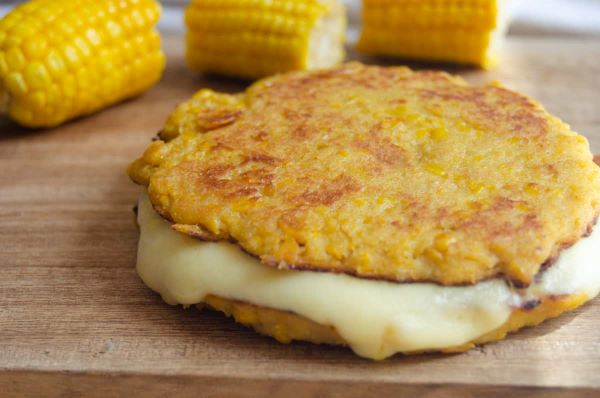
Arepa de choclo catches people off guard the first time they try it. Most people who have eaten arepas before are used to the white or yellow cornmeal version, which is savory, dense, and versatile. Arepa de choclo is something else entirely. It is made from fresh sweet corn, ground into a thick batter, and cooked on a griddle until the outside develops a thin crust and the inside stays soft, almost moist, with a natural sweetness from the corn itself. The classic serving adds a slice of fresh white cheese on top that melts slightly from the heat of the arepa underneath. It is street food in Colombia, breakfast food, afternoon snack food. It does not need much else.
If you have been searching for the best arepa de choclo near me and keep finding only the standard cornmeal variety, this guide gives you a more targeted path to finding the right version and recognizing quality when you do.
What Arepa de Choclo Actually Is
Choclo is the Andean word for fresh corn, as opposed to dried corn that gets processed into masa or cornmeal. Arepa de choclo uses fresh corn kernels, either blended or ground, mixed with butter, sugar, salt, and sometimes a small amount of cornstarch or flour to bind the batter. The result is thicker and more liquid than a standard arepa dough, and it gets portioned onto a hot greased griddle where it spreads slightly and cooks slowly.
The exterior develops a golden, slightly chewy crust from the natural sugars in the fresh corn caramelizing against the griddle surface. The interior stays tender and slightly sweet, with a texture closer to a thick corn pancake than a standard arepa. The flavor is unmistakably corn but with a freshness and sweetness that dried masa cannot replicate.
The traditional topping is cuajada or queso fresco, a fresh white cheese with a mild, slightly tangy flavor and a high moisture content that softens and warms against the arepa without fully melting. Some versions add a smear of butter underneath the cheese. Some restaurants and vendors add a thin drizzle of honey or hogao, a Colombian tomato and onion sauce, though these additions are regional and less universal.
When you search for the best arepa de choclo near me, the distinction between fresh corn and dried cornmeal is the single most important thing to confirm. A standard yellow cornmeal arepa with cheese on top is not the same dish.
Where to Find It
Colombian restaurants are the primary source. Arepa de choclo is a specifically Colombian preparation and is much more common at Colombian restaurants than at Venezuelan or Ecuadorian spots, which have their own arepa traditions using different corn preparations.
Colombian bakeries and panaderias are often an even better source than sit-down restaurants. Colombian bakeries frequently carry arepa de choclo as a breakfast or mid-morning item alongside other baked goods, and the versions at bakeries are often made in larger batches with more consistent quality than restaurant versions prepared to order during a busy service.
Latin American food markets with prepared food counters sometimes carry arepa de choclo as a morning or midday item, particularly in cities with Colombian communities. These counters are worth checking on weekday mornings when they are most likely to be freshly made.
Colombian home cooks and weekend vendors sell arepa de choclo at Latin food markets, pop-up events, and through Instagram batch orders. In cities where dedicated Colombian restaurants are scarce, a home cook who grew up making these is often the most authentic source available.
Venezuelan restaurants occasionally carry a version, though it will differ in preparation. Venezuelan arepas use a different corn base, and any sweet corn version you find there will not be the same as the Colombian arepa de choclo. Worth trying on its own terms, but not a substitute.
How to Search More Effectively
A direct search for the best arepa de choclo near me may return limited or mixed results since many restaurants list their arepas without distinguishing between types on their English-language menus. Here is how to find it more reliably:
Search Google Maps for Colombian restaurant in your city and browse menus specifically for arepa de choclo or sweet corn arepa. Some restaurants list their full menu with ingredient details. Those that distinguish between types of arepa on their menu are more likely to be making each one carefully.
Search Instagram with “arepa de choclo” plus your city name. Colombian restaurant accounts and home cook vendors post photos regularly, and the visual difference between a sweet corn arepa and a standard cornmeal arepa is clear enough in photos to help you identify the right thing before you order.
Search Facebook for Colombian community groups in your city and ask directly where to find arepa de choclo. Colombian expats will give you a specific answer, including whether any home cooks in the area make them on weekends.
Search delivery apps by dish name rather than by restaurant. Searching “arepa de choclo” on DoorDash or Uber Eats surfaces only restaurants that specifically list this variety, filtering out the many spots that carry standard arepas but not the sweet corn version.
Call ahead to confirm before visiting. Some Colombian restaurants carry arepa de choclo only at breakfast or brunch service and not during dinner. Showing up at 7pm expecting to order it may result in disappointment.
What Good Arepa de Choclo Should Look Like
Once you find a source, a few things tell you whether the preparation was done properly.
The exterior. Golden and slightly caramelized on the flat surfaces where the arepa contacted the griddle. The color should be uneven and natural-looking, darker where the corn sugars caught the heat and lighter in the center. A pale, uniformly colored arepa was cooked at too low a temperature and will lack the slight crust that is part of what makes the texture work.
The texture. Soft and slightly moist in the interior, with a thin crust on the outside that gives a little resistance before yielding. If the interior is dense and dry, the batter had too much flour or starch relative to the fresh corn. If the interior is wet and almost raw-tasting, it was not cooked long enough on sufficient heat.
The sweetness. Present but not cloying. The fresh corn provides natural sweetness that should be noticeable without the arepa tasting like a dessert. An overly sweet version has had sugar added beyond what the corn provides and loses the savory balance that makes the cheese topping work.
The cheese. A slice of queso fresco or cuajada placed on top of the hot arepa, softening slightly from the heat but not fully melted. The cheese should be mild, slightly salty, and fresh-tasting, not aged or sharp. A restaurant using a pre-packaged mild cheddar or a processed cheese slice as a substitute is not making the dish correctly.
The temperature. Hot off the griddle. Arepa de choclo cools quickly and the crust softens as it sits. A version that arrives lukewarm or has been sitting under a heat lamp will not have the right texture contrast between exterior and interior.
Ordering and Eating Tips
Arepa de choclo works as a breakfast item, a snack, or a light lunch. It is not typically a dinner dish in Colombian culture, though some restaurants serve it throughout the day.
Eat it immediately after it arrives. The crust softens within minutes as the moisture from the interior works its way outward. The experience of eating a freshly made arepa de choclo with warm cheese on top is significantly better than eating one that has been sitting for ten minutes.
If the restaurant offers hogao on the side, try a small amount alongside the arepa. The savory, slightly acidic tomato and onion sauce against the sweet corn is a combination that works better than it sounds on paper.
Order coffee or a fresh juice alongside. In Colombia, arepa de choclo is almost always paired with tinto, a small black coffee, or a glass of fresh fruit juice. The slight bitterness of coffee against the sweet corn arepa is the classic pairing.
Pricing Expectations
A single arepa de choclo at a Colombian restaurant or bakery typically runs between $4 and $9 depending on the size and the market. Some restaurants serve it as a side item at a lower price. Home cook and vendor versions at markets or pop-ups are often in the $3 to $6 range and frequently made with more care than high-volume restaurant versions.
Delivery platform prices will be slightly higher due to service fees, and the dish loses some of its crust quality in transit, so pickup or dine-in is the better option when available.
Key Takeaways
- The best arepa de choclo near me is most reliably found at Colombian restaurants, Colombian bakeries, and home cook vendors who sell through Instagram or community markets, not at Venezuelan or generalist Latin American restaurants.
- Arepa de choclo is made from fresh sweet corn ground into a batter, not from dried cornmeal or masa. The distinction matters and produces a completely different flavor and texture.
- Confirm the type before ordering. Many restaurants list all their arepas without distinguishing between fresh corn and cornmeal versions on their English-language menus.
- A properly made arepa de choclo has a golden caramelized exterior from griddle contact, a soft and slightly moist interior, natural sweetness without added sugar dominance, and a slice of queso fresco or cuajada on top.
- Search Instagram and delivery apps by dish name rather than by restaurant type. Colombian community Facebook groups are among the best resources for finding home cooks who make them on weekends.
- Call ahead to confirm availability. Some restaurants serve arepa de choclo only during breakfast or brunch service.
- Eat it immediately after it arrives. The crust softens quickly and the experience drops off within minutes of leaving the griddle.
- Expect to pay $4 to $9 at a restaurant or bakery, or $3 to $6 from a home cook or market vendor.