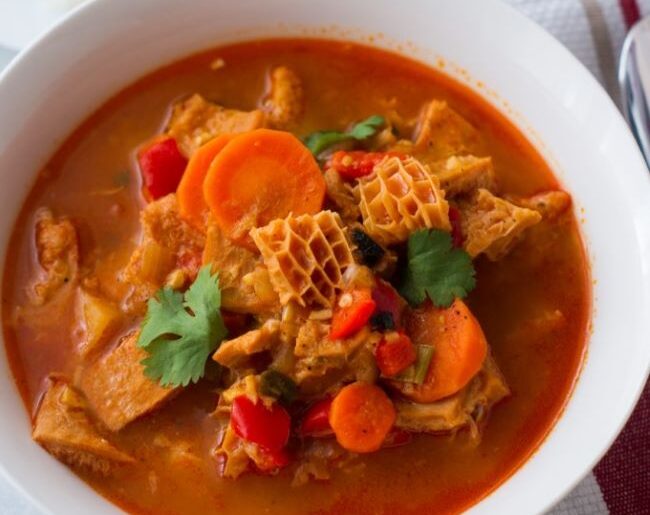
Mondongo soup is not a dish that meets you halfway. It is made from tripe, which is the stomach lining of beef, slow-cooked for hours in a broth built on sofrito, tomatoes, peppers, and a long list of vegetables and spices that varies by country and household. It smells deeply savory when it is cooking and tastes like the kind of food that was built to sustain people through hard work and long days. It is not subtle, and it does not pretend to be.
If you have been searching for the best mondongo soup near me and are not sure where to start or what to look for, this guide walks through the dish, where to find it, and how to evaluate the versions you come across.
What Mondongo Soup Is
Mondongo is eaten across Latin America and the Caribbean with enough regional variation that no single version is definitive. Puerto Rican mondongo uses a sofrito base and adds chickpeas, potatoes, and a blend of spices including cumin and oregano. Colombian sancocho de mondongo is a close relative, often adding yuca, plantain, and corn on the cob to the pot. Dominican mondongo is spiced with recao and aji caballero. Venezuelan, Peruvian, and Cuban versions each have their own character. What they share is the slow-braised tripe as the central ingredient and a rich, vegetable-heavy broth that takes time to develop.
The tripe itself requires significant preparation before it ever goes into a pot. It needs to be cleaned thoroughly, blanched, and often soaked before the long braise begins. Properly prepared tripe has a mild, clean flavor and a texture that is firm but yielding. Poorly cleaned or undercooked tripe has an off-putting smell and a rubbery texture that makes the whole dish difficult to get through.
The difference between a great mondongo soup near me and a mediocre one almost always comes down to how the tripe was handled before cooking and how long the broth was given to develop.
Where to Find It
Puerto Rican restaurants are among the most common sources for mondongo soup in the continental United States, given the size and distribution of Puerto Rican communities across the Northeast, Florida, and beyond. Puerto Rican fondas, which are casual home-cooking restaurants, are particularly reliable because they tend to cook traditional dishes to order or in daily batches rather than as occasional specials.
Dominican restaurants carry mondongo regularly and often serve it as a weekend dish. In Dominican communities, mondongo is Sunday food, and restaurants that cater to that community will prepare it specifically for Saturday and Sunday service.
Colombian restaurants sometimes carry sancocho de mondongo or a similar tripe-based soup. These versions tend to be heartier with more root vegetables and a slightly different spice profile.
Cuban and Venezuelan restaurants occasionally carry mondongo as a rotating special rather than a permanent menu item. Calling ahead to confirm availability before visiting is worth the effort.
Latin American home cooks and pop-up vendors sell mondongo in cities where dedicated restaurants are sparse. Instagram and Facebook groups for Puerto Rican, Dominican, and Colombian expats in your city are reliable sources for finding who makes the best version locally, often sold as weekend batch orders.
How to Search More Effectively
A direct search for the best mondongo soup near me will surface some results, but the dish is specific enough that many restaurants serving it do not optimize their listings around this keyword. Here is how to find more options:
Search Google Maps for Puerto Rican restaurant, Dominican restaurant, or Colombian restaurant in your area and browse menus for mondongo. It may be listed under soups or as a weekend special rather than a permanent menu item.
Search Yelp for Latin American restaurants and use the search-within-reviews function to look for mondongo. Diners who order it will describe the broth flavor, tripe texture, and portion size in their reviews, which is more useful than a general rating.
Search Instagram with “mondongo” plus your city name. Home cooks who sell weekend batches post here regularly, and the photos will show you immediately whether the version looks properly made.
Check Facebook groups for Puerto Rican, Dominican, and Colombian communities in your city. Ask directly where the best mondongo is. These communities will give you a specific answer based on recent firsthand experience, not an algorithm.
Call restaurants directly and ask whether they serve mondongo and on which days. Many traditional Latin restaurants make it only on weekends or as a rotating daily special. Showing up without confirming means you may find it is not available.
What Good Mondongo Soup Should Look Like
Once you find a source, a few things tell you immediately whether the preparation was taken seriously.
The broth. Deep in color, with visible fat on the surface from the long braise. The flavor should be complex, with layers from the sofrito base, the spices, and the collagen released by the tripe during cooking. A thin or pale broth means the cooking time was too short or the sofrito was not built properly.
The tripe. Clean-smelling, with a firm but yielding texture. Properly cooked tripe should not be rubbery or require significant chewing effort. If it resists the spoon or has any off smell beyond deeply savory, the preparation was not right. It should be cut into pieces small enough to eat comfortably, usually strips or small squares.
The vegetables. Tender but not falling apart. Potatoes, yuca, plantain, or corn depending on the version should be fully cooked through and have absorbed some of the broth flavor. Vegetables that are still firm or watery were added too late in the cooking process.
The seasoning. The broth should taste complete without additional salt at the table. Sofrito-based soups have a layered savory quality from the peppers, onion, garlic, tomato, and herbs. A flat-tasting mondongo soup was either rushed or underseasoned during cooking.
The garnish. White rice on the side is standard with most versions. Some restaurants serve it with avocado, fried plantains, or crusty bread. The rice is not optional for a traditional serving. Mondongo without rice is an incomplete plate in most traditions.
Ordering and Eating Tips
Mondongo soup is a full meal, not a starter. A proper portion is substantial, and ordering additional mains alongside it is unnecessary unless you are sharing.
It is often served in a deep bowl with the rice on the side rather than mixed in. Add the rice gradually as you eat rather than all at once, so it does not absorb all the broth and leave the bowl dry before you finish.
Ask whether it is made fresh that day or reheated from a previous batch. Mondongo reheats well, but a version made and served the same day will have better texture in the tripe and more brightness in the broth.
If you are ordering from a home cook or pop-up vendor, ask what version they make. Puerto Rican, Dominican, and Colombian mondongo are all slightly different, and knowing which you are getting helps set the right expectations for spice level and vegetable mix.
Pricing Expectations
A full bowl of the best mondongo soup near me at a Puerto Rican or Dominican restaurant typically runs between $12 and $22 depending on the city and the restaurant. Fondas and casual Latin restaurants at the lower end of that range often provide the largest and most traditional portions. Home cook and pop-up versions sold by the container run $10 to $18 per serving.
Weekend-only versions at community restaurants are sometimes priced as a special rather than a standard menu item and may come with sides included in the price.
Key Takeaways
- The best mondongo soup near me is most reliably found at Puerto Rican fondas, Dominican restaurants, and Colombian restaurants, particularly on weekends when traditional kitchens prepare it as a dedicated batch.
- Mondongo is slow-braised tripe in a sofrito-based broth with vegetables and spices. The version varies significantly by country, with Puerto Rican, Dominican, Colombian, and Venezuelan preparations each having distinct spice profiles and vegetable combinations.
- Always call ahead to confirm mondongo is available. Many restaurants serve it only on weekends or as a rotating daily special.
- Instagram and Facebook community groups for Puerto Rican, Dominican, and Colombian expats in your city are among the best sources for finding who makes the most authentic local version.
- Good mondongo has a deep, complex broth, properly cleaned and tender tripe, fully cooked vegetables, and complete seasoning that needs nothing extra at the table.
- Rubbery tripe or an off smell in the broth are signs the preparation was rushed or the tripe was not properly cleaned. These are not acceptable in a well-made version.
- Serve and eat it with white rice on the side, adding gradually as you go to keep the broth from being absorbed all at once.
- Expect to pay $12 to $22 at a sit-down Latin restaurant, or $10 to $18 per container from a home cook or weekend pop-up vendor.