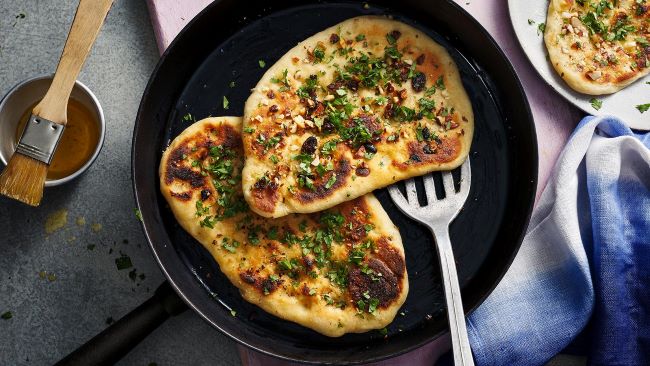
Peshwari naan sits in a strange middle ground on most Indian and Pakistani restaurant menus. It is sweet, which makes some people skip it entirely in favor of plain or garlic naan. That is a reasonable hesitation but a mistaken one when the kitchen knows what it is doing. A well-made peshwari naan has a filling of ground coconut, almond, and sultana that is sweet without being dessert-sweet, and the contrast between the charred, slightly smoky bread and the soft, fragrant filling is one of the better things a tandoor can produce. If you have been searching for the best peshwari naan near me and keep settling for whatever shows up nearest, this guide gives you a better framework for finding a version worth eating.
What Peshwari Naan Actually Is
Despite the name suggesting an origin in Peshawar, the northwestern Pakistani city known for its bold, meat-heavy cooking, peshwari naan as most people know it is largely a British-Indian restaurant creation. The dish became popular in South Asian restaurants in the United Kingdom and spread from there. In Peshawar itself, the bread traditions are different, focused more on tandoor flatbreads like roghani naan and chapli-adjacent preparations.
The version found on restaurant menus today typically uses a filling of desiccated coconut, ground almonds or almond flour, sultanas or raisins, and sometimes a small amount of sugar. The filling is stuffed into the naan dough before it goes into the tandoor, where it bakes at extremely high heat in seconds. A good tandoor runs at around 480 degrees Celsius, and the bread cooks fast enough that the outside blisters and chars in spots while the inside stays soft and the filling heats through without burning.
Some restaurants add cream or condensed milk to the filling, which makes it richer and softer. Some add a brush of butter or ghee when the naan comes out of the oven. Both are acceptable additions. What is not acceptable is a filling that is dry and dusty from using low-quality desiccated coconut, or a bread that has been baked in a regular oven rather than a tandoor and comes out flat and pale.
When you search for the best peshwari naan near me, you are looking for a kitchen with a functioning tandoor and a filling made from real ingredients rather than a pre-mixed packet.
Where to Find It
Indian and Pakistani restaurants are the obvious starting point. Almost any restaurant serving a full naan menu will carry peshwari naan, but the quality depends heavily on whether the kitchen uses a real tandoor. A restaurant without a tandoor can bake naan in a conventional oven, but the result lacks the blistering, charring, and smoke that make tandoor bread worth eating.
Bangladeshi restaurants in the UK and increasingly in the United States often carry peshwari naan as part of a full bread menu. British-Bangladeshi restaurants in particular have been central to the popularization of this dish and tend to execute it reliably.
Pakistani restaurants with a northern focus or a menu that specifies Lahori or Punjabi cuisine are worth checking. These kitchens take their bread seriously and tend to run well-maintained tandoors.
South Asian grocery stores and bakeries sometimes carry pre-made naan including peshwari varieties. These are baked off-site and reheated, which limits the quality, but in areas without many sit-down options they are a reasonable fallback.
How to Search More Effectively
A direct search for the best peshwari naan near me will usually surface Indian and Pakistani restaurants in your area, but not necessarily the ones doing this specific bread well. Here is how to narrow it down:
Search Google Maps for Indian restaurant or Pakistani restaurant and look specifically for menus that list naan varieties. A restaurant that lists four or five naan options, including peshwari, is more likely to take its bread program seriously than one with a single “naan bread” line item.
Check Yelp reviews for mentions of naan quality. Reviewers who care about bread will comment on whether it came from a tandoor, whether it had char, and whether the filling was moist or dry. These details appear in reviews more often than you might expect.
Search Instagram with “peshwari naan” plus your city name. Indian and Pakistani restaurant accounts frequently post photos of their breads, and a restaurant that photographs its peshwari naan well is usually proud of it for a reason.
Ask directly when you call to reserve or order. A kitchen that can tell you what goes into their peshwari filling without hesitation, and can confirm they use a tandoor, is giving you a strong signal about how seriously they treat the dish.
What Good Peshwari Naan Should Look Like
Once you find a place serving it, a few things tell you whether the kitchen is doing it right.
The exterior. Puffed in spots, with char marks and some blistering from the tandoor wall. A completely pale, flat naan was not made in a tandoor. The color variation across the surface is not cosmetic. It reflects the irregular contact with extreme heat that gives tandoor bread its character.
The texture. Soft and slightly chewy in the body, with a thin, slightly crisp layer where it touched the tandoor wall. The bread should tear cleanly and have some stretch. A dense or doughy interior means the bread was undercooked or the dough was not properly proofed.
The filling. Moist and fragrant, not dry or grainy. Good desiccated coconut in the filling should feel soft after baking, not like sawdust. The almonds should be ground finely enough that they integrate into the filling rather than feeling gritty. The sultanas or raisins should be plump and sweet.
The finish. A brush of butter or ghee on the surface as the naan comes out of the oven is traditional and adds richness. A naan served dry and unfinished can still be good, but the buttered version is better.
The temperature. Served immediately from the tandoor. Naan that has been sitting in a warmer or wrapped in foil for any length of time loses the contrast between crisp exterior and soft interior. A restaurant that serves bread this way is not prioritizing the experience.
Ordering Tips
Peshwari naan works best alongside dishes that have some heat or acidity to balance the sweetness of the filling. Pair it with a lamb rogan josh, a chicken tikka masala with some spice, or a dal that has been finished with a tarka of fried whole spices. The contrast between spiced food and slightly sweet bread is the point.
Do not order it as a replacement for plain naan if you are using the bread to scoop curries. The sweetness of the filling changes the flavor of everything it touches. Order one peshwari naan to share alongside plain or garlic naan for scooping, and use the peshwari as a course in itself.
Order it early in the meal. Tandoor breads are best eaten the moment they arrive. A peshwari naan that has been sitting on the table while you work through starters will have lost its texture by the time you get to it.
Pricing Expectations
A peshwari naan at a sit-down Indian or Pakistani restaurant typically runs between $4 and $9 depending on the city and restaurant tier. Higher-end South Asian restaurants in major cities may price specialty naan above $9. Casual curry houses and takeaway restaurants tend to keep it in the $4 to $6 range.
The price difference between a plain naan and a peshwari naan is usually $1 to $3 and reflects the filling ingredients. A restaurant charging the same for both is either using minimal filling or subsidizing the cost elsewhere on the menu.
Key Takeaways
- The best peshwari naan near me is most reliably found at Indian, Pakistani, and British-Bangladeshi restaurants that use a real tandoor rather than a conventional oven.
- Peshwari naan is a stuffed flatbread filled with ground coconut, almonds, and sultanas. It is a British-Indian restaurant creation rather than a dish from Peshawar itself.
- A restaurant that lists multiple naan varieties and can describe its peshwari filling without hesitation is more likely to take the bread seriously.
- Good peshwari naan has visible char and blistering from tandoor contact, a soft and moist filling, and a finish of butter or ghee applied immediately after baking.
- A pale, flat, and uniformly colored naan was not made in a tandoor. Char marks and puffing are quality signals, not imperfections.
- Pair it with spiced curries rather than mild dishes so the contrast between sweet filling and savory food comes through properly.
- Order it the moment it arrives and eat it immediately. Tandoor bread loses its character within minutes of leaving the heat.
- Expect to pay $4 to $9 at most Indian and Pakistani restaurants, with higher-end spots occasionally pricing above that range.