How Long Does an Internship Interview Take?
You got the email. A company wants to interview you for an internship. After the excitement fades, the practical questions show up. What should you wear? What will they ask? And how much time should you block out on your calendar?
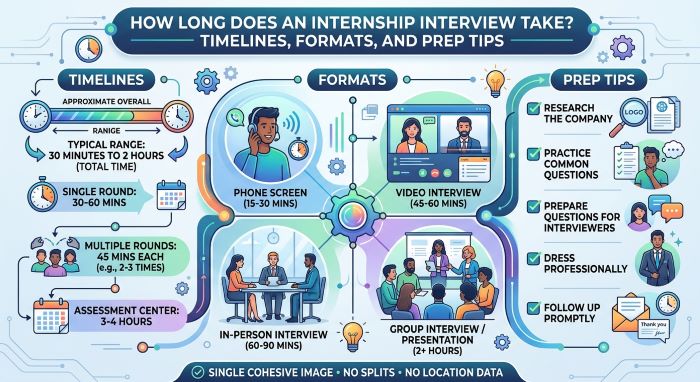
So, how long does an internship interview take? Most last between 20 and 60 minutes. A quick phone screen might wrap up in 15 minutes, while a final round at a big company can stretch across half a day. The exact length depends on the format, the company, and how far along you are in the process.
This guide breaks down what to expect at each stage, the internship interview questions you’ll likely hear, and practical first internship interview advice to help you walk in ready.
How Long Does an Internship Interview Take by Format?
The honest answer to how long does an internship interview take is that different formats run on different clocks. Here’s a quick overview:
| Interview Type | Typical Length | What Happens |
|---|---|---|
| Phone screen | 15 to 30 minutes | Basic questions about your background and interest |
| Video interview (live) | 30 to 45 minutes | Behavioral questions, a look at your resume |
| Recorded video interview | 15 to 30 minutes | You answer pre-set questions on camera |
| In-person interview | 30 to 60 minutes | Deeper questions, sometimes a tour or team intro |
| Technical interview | 45 to 90 minutes | Coding, case studies, or skills tests |
| Panel interview | 45 to 60 minutes | Several interviewers ask questions in turn |
| Assessment day or Superday | 3 to 8 hours | Back-to-back interviews, group tasks, and presentations |
Let’s look at each one in more detail.
Phone Screens
A phone screen is often the first step. A recruiter or HR team member calls to confirm you’re a good fit on paper. They’ll ask about your major, your availability, and why you applied. These calls tend to run 15 to 30 minutes. Keep your answers clear and short, and have your resume in front of you.
Video Interviews
Live video interviews on Zoom, Teams, or Google Meet usually take 30 to 45 minutes. They feel a lot like an in-person interview, just from your desk.
Recorded video interviews work differently. A platform like HireVue shows you a question, gives you a short time to think, and then records your answer. These often take 15 to 30 minutes total, though you should set aside extra time for setup and practice questions.
In-Person Interviews
An in-person interview usually runs 30 to 60 minutes. Some companies add a short office tour or a quick chat with team members, which can push the visit closer to 90 minutes. Plan to arrive 10 to 15 minutes early and leave buffer time after.
Technical and Case Interviews
If you’re applying for an engineering, data, finance, or consulting internship, expect a skills-based round. Coding interviews and case interviews often last 45 to 90 minutes. You’ll solve a problem out loud while the interviewer watches how you think.
Assessment Days and Superdays
Large companies, especially in banking, consulting, and big tech, sometimes bring finalists in for a full day. You might do three or four interviews back to back, join a group exercise, and meet current interns over lunch. These days can last anywhere from three to eight hours.
How Long Does the Whole Internship Hiring Process Take?
Knowing how long does an internship interview take is only half the picture. The full process matters too. From application to offer, most internship hiring takes two to eight weeks.
A common timeline looks like this:
- Application review: 1 to 3 weeks
- Phone or video screen: 1 week after review
- Second round or technical interview: 1 to 2 weeks later
- Final round: 1 to 2 weeks later
- Offer: a few days to 2 weeks after the final round
Small companies and startups often move faster, sometimes making an offer after one or two conversations. Large firms with structured programs tend to take longer, and some recruit almost a year ahead of the start date.
What Affects How Long an Internship Interview Lasts?
If you’re still wondering how long does an internship interview take for your specific role, these factors make the biggest difference:
- Company size. Big companies often have more rounds and longer interviews.
- Industry. Tech, finance, and consulting lean on technical or case rounds, which run longer.
- Interview stage. First rounds are short. Final rounds go deeper.
- Number of interviewers. Panel interviews take more time, since each person asks questions.
- Your answers. Clear, focused answers keep things moving. Rambling stretches them out.
- Rapport. Sometimes a good conversation simply runs over. That’s often a positive sign.
Is a Short Interview a Bad Sign?
Not always. People often ask how long does an internship interview take because they worry a short one means rejection. A 15-minute call might just be a quick screen with a set list of questions. Some recruiters have dozens of calls in a day and keep each one tight.
That said, a final round that ends far earlier than scheduled can mean the interviewer had enough information to decide, for better or worse. Try not to read too much into the clock. Focus on how the conversation felt and whether they talked about next steps.
A long interview usually signals interest, but it isn’t a promise. Some interviewers are just chatty.
Common Internship Interview Questions
Knowing the internship interview questions you’ll face can calm your nerves more than anything else. Most fall into a few groups.
Getting-to-Know-You Questions
- Tell me about yourself.
- Why are you interested in this internship?
- Why did you choose your major?
- What do you know about our company?
Behavioral Questions
- Tell me about a time you worked on a team.
- Describe a challenge you faced and how you handled it.
- Give an example of a time you made a mistake.
- How do you manage your time when you have several deadlines?
Use the STAR method to answer these: describe the Situation, the Task, the Action you took, and the Result. It keeps your answers focused and easy to follow.
Skills and Role Questions
- What skills would you bring to this role?
- What software or tools are you comfortable with?
- What do you hope to learn during this internship?
Closing Questions
- Where do you see yourself in five years?
- Do you have any questions for us?
Always have two or three questions ready for the end. Good ones include “What does a typical day look like for interns?” and “What qualities do your most successful interns share?”
First Internship Interview Advice
If this is your first time, here’s practical first internship interview advice that makes a real difference.
Research the Company
Read the company’s website, recent news, and the internship description. Know what they do and why the role matters. Interviewers notice when you’ve done your homework.
Practice Out Loud
Write down answers to common questions, then say them out loud. Practice with a friend, a career center advisor, or even your phone’s camera. Speaking your answers helps them sound natural instead of memorized.
Prepare Your Stories
Pick three or four experiences from school, part-time jobs, clubs, or volunteer work. Shape each one into a STAR answer. You can reuse these stories for many different questions.
Test Your Tech
For video interviews, check your camera, microphone, and internet the day before. Choose a quiet spot with good lighting and a plain background. Log in five minutes early.
Dress One Step Up
When in doubt, dress a little nicer than the company’s everyday style. Business casual works for most internships. For finance or law, lean more formal.
Bring the Basics
For in-person interviews, bring a few printed copies of your resume, a notebook, and a pen. Have a list of your questions ready too.
Plan Your Time
Since you now know how long does an internship interview take for most formats, block out at least double the expected time. A 30-minute interview deserves an hour on your calendar, so you’re never rushing to another class or shift.
Thinking About Your Degree Path
Interviews often push students to think harder about their long-term direction. You may realize a role fits your interests better than your current major, or that a field has new requirements. If you’re weighing a switch, read up on Professional Degree Changes to understand how shifting programs can affect your timeline and job prospects.
After the Interview
What you do after the interview matters too.
- Send a thank-you email within 24 hours. Keep it short, thank them for their time, and mention one thing you enjoyed discussing.
- Note the timeline. If they said you’d hear back in two weeks, wait that long before following up.
- Follow up politely. A brief, friendly email checking on your status is fine once the deadline passes.
- Keep applying. Don’t pause your search while you wait on one company.
Handling Multiple Offers
If things go well, you might end up with more than one offer. Choosing is a good problem to have, but declining still takes care. You want to stay on good terms, since that company might hire you full-time later. This guide on How to Turn Down a Job Offer But Keep the Door Open walks you through doing it the right way.
Final Thoughts
So, how long does an internship interview take? For most students, plan on 20 to 60 minutes per interview and two to eight weeks for the full process. Technical rounds and assessment days run longer, while phone screens are short.
The length matters less than your preparation. Research the company, practice your answers out loud, and come with good questions. Do that, and you’ll walk into any internship interview, whether it’s 15 minutes or a full day, with calm confidence.
Key Takeaways
- Most internship interviews last 20 to 60 minutes. Phone screens take 15 to 30 minutes, while technical rounds can run 45 to 90 minutes.
- Assessment days and Superdays at large firms can last three to eight hours, with several interviews and group tasks.
- The full internship hiring process usually takes two to eight weeks from application to offer. Startups move faster, and large programs often recruit far ahead.
- Company size, industry, interview stage, and the number of interviewers all affect how long an interview runs.
- A short interview isn’t always a bad sign, and a long one isn’t a guarantee. Focus on how the conversation went and whether next steps came up.
- Common internship interview questions include “Tell me about yourself,” behavioral questions about teamwork and challenges, and questions about your skills and goals.
- Use the STAR method for behavioral answers, practice out loud, and prepare three or four stories you can adapt.
- Block out at least double the expected interview time, send a thank-you email within 24 hours, and keep applying while you wait.