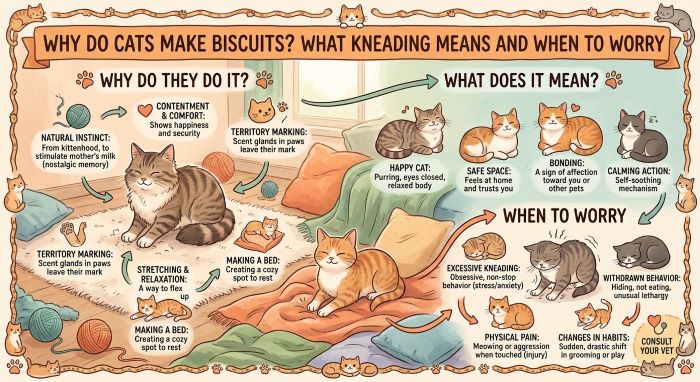
Why Do Cats Make Biscuits?
You’re settling onto the couch when your cat climbs into your lap, turns in a circle, and starts pressing its paws into your thigh. Left, right, left, right. Its eyes half close. A low purr starts up. Maybe a little drool even appears. Your cat is “making biscuits,” and it looks completely blissed out.
Nearly every cat owner has seen this. It’s one of the most charming things cats do, and one of the most common questions people ask about them: why do cats make biscuits? The answer goes back to kittenhood, with a mix of comfort, communication, and instinct mixed in.
This guide explains what kneading is, the main reasons cats do it, why your cat kneads you in particular, and when the behavior might be worth a closer look.
What Does “Making Biscuits” Mean?
“Making biscuits” is a nickname for kneading. A cat pushes its front paws in and out against a soft surface, one paw after the other, like a baker working dough. Some cats also flex their claws in and out as they press. Others knead with their back paws too.
Cats knead on all kinds of things:
- Blankets and pillows
- Beds and couches
- Stuffed animals
- Other pets
- Their owners’ laps, bellies, and chests
The motion usually comes with purring, slow blinking, and a relaxed body. It’s a sign of a calm, content cat.
Why Do Cats Make Biscuits? The Main Reasons
There isn’t just one answer to why do cats make biscuits. Experts point to several reasons, and most cats knead for a mix of them.
1. It Starts in Kittenhood
Newborn kittens knead their mother’s belly while nursing. The pressing motion helps stimulate milk flow. Kittens learn early that kneading brings warmth, food, and comfort.
Many cats keep the habit into adulthood. When an adult cat kneads, it’s often reliving that safe, cozy feeling from its earliest days. That’s why kneading is so often paired with purring and even suckling on fabric.
2. Comfort and Self-Soothing
Kneading is relaxing. Cats often knead when they’re happy, sleepy, or settling in. Some cats also knead when they feel anxious, as a way to calm themselves down, much like a person might fidget or rub their hands together.
3. Marking Territory
Cats have scent glands in the pads of their paws, which is a big part of why do cats knead people and objects they care about. When they knead, they leave behind their scent. It’s a quiet way of saying, “This is mine.” That includes blankets, beds, and yes, you.
4. Making a Comfortable Bed
Wild ancestors of house cats pressed down grass, leaves, or soil to create a soft, safe spot to rest or give birth. Your cat’s kneading before it lies down may be an old nesting instinct still at work.
5. Showing Affection
When a cat kneads you, it’s often a sign of trust and love. Your cat feels safe with you, the same way it felt safe with its mother.
6. Stretching
Kneading also stretches the muscles in the legs, paws, and back. You may notice your cat kneading after a nap, along with a big stretch.
7. Heat and Mating Signals
Female cats that aren’t spayed may knead more often when they’re in heat. It can be part of signaling to males that they’re ready to mate, along with rolling and vocalizing.
Quick Guide to Kneading Reasons
| Reason | What It Looks Like | What It Means |
|---|---|---|
| Kitten instinct | Kneading with purring or suckling | Comfort and security |
| Self-soothing | Kneading during stress or change | Calming itself down |
| Scent marking | Kneading on favorite spots or people | Claiming territory |
| Nesting | Kneading before lying down | Making a cozy bed |
| Affection | Kneading on your lap | Trust and love |
| Stretching | Kneading after naps | Loosening muscles |
| Heat | Kneading with rolling and yowling | Mating behavior in unspayed females |
Why Does My Cat Knead Me?
Many owners who ask why do cats make biscuits really want to know something more personal: “Why does my cat knead me and not the blanket?” When a cat chooses you, it’s a compliment. Here’s what’s likely going on:
- You make it feel safe. Your warmth and smell remind it of its mother.
- It’s claiming you. The scent glands in its paws mark you as part of its family.
- It’s happy. Kneading on your lap is often a sign your cat is relaxed and content.
- It wants attention. Some cats knead to ask for pets or start a cuddle session.
Cat making biscuits on your stomach or chest might also be getting comfortable before a nap. Soft, warm human bodies make great beds.
Do All Cats Knead?
No. Some cats knead every day, while others rarely or never do. People who ask why do cats make biscuits are often surprised to learn that a non-kneading cat can be just as happy and affectionate. Both are normal. Kittens that were weaned early or bottle-fed sometimes knead more as adults, though this varies a lot. A cat that doesn’t knead isn’t unhappy or unaffectionate. It just shows its feelings in other ways, such as head bumps, slow blinks, or sitting near you.
Why Do Cats Knead and Drool?
Some cats drool while kneading. This usually happens when they’re deeply relaxed. It’s tied to the same kitten memory, since nursing kittens associate kneading with milk. Light drooling during kneading is normal.
Heavy drooling outside of kneading, though, can point to dental problems, nausea, or other health issues. Talk to your vet if you notice it often.
When Kneading Might Be a Concern
Most kneading is harmless, and in the vast majority of cases the answer to why do cats make biscuits is simply comfort and contentment. But a few changes are worth watching:
- Sudden increase in kneading. It can signal stress from a move, a new pet, or a change in routine.
- Kneading with other signs of anxiety. Hiding, over-grooming, or changes in appetite may point to a bigger issue.
- Kneading and suckling that damages fabric. Some cats chew or swallow fabric, which can cause blockages.
- Signs of pain. If your cat seems uncomfortable while kneading or stops kneading suddenly, joint pain or arthritis could be a factor in older cats.
If you notice any of these, a vet visit can rule out health problems.
How to Handle Sharp Claws
Cats making biscuits is adorable until the claws come out. Knowing why do cats make biscuits helps here, since it reminds you the behavior comes from comfort and trust, not mischief. You don’t need to stop the behavior. Instead, try these tips:
- Keep claws trimmed. Trim the tips every couple of weeks with cat nail clippers.
- Use a thick blanket. Keep a folded blanket on your lap for kneading sessions.
- Redirect gently. Move your cat to a soft pillow or bed instead of pushing it away.
- Don’t punish. Scolding can confuse your cat and damage trust, since kneading is a natural, positive behavior.
- Try soft nail caps. Vinyl caps glued over the claws can protect your skin and furniture.
- Never declaw. Declawing is a painful surgery that many vets and animal welfare groups oppose.
Keeping Your Home Clean
Cats that love to knead often leave a trail of fur on blankets, couches, and your clothes. A lint roller helps in a pinch, but regular cleaning makes a bigger difference. If you’re struggling with fur on your floors and furniture, our guide to the Best Vacuum for Pet Hair can help you find the right tool.
Final Thoughts
So, why do cats make biscuits? It starts with nursing as kittens and grows into a lifelong habit tied to comfort, trust, scent marking, and instinct. When your cat kneads you, it’s telling you that it feels safe and happy in your company. Keep the claws trimmed, keep a blanket handy, and enjoy one of the sweetest signs of love a cat can give.
Key Takeaways
- “Making biscuits” is a nickname for kneading, when a cat pushes its front paws in and out on a soft surface, often while purring.
- The behavior starts in kittenhood, when kittens knead their mother’s belly to stimulate milk flow.
- Adult cats knead for comfort, self-soothing, scent marking through paw glands, nesting, stretching, and affection. Unspayed females may knead more in heat.
- When a cat kneads you, it usually means it feels safe, happy, and attached to you.
- Not all cats knead, and that’s normal. Light drooling while kneading is common, but heavy drooling at other times can signal a health issue.
- Watch for sudden increases in kneading, fabric chewing, or signs of pain, and check with a vet if you’re concerned.
- Handle sharp claws by trimming nails, using a thick blanket, redirecting gently, or trying soft nail caps. Never punish or declaw.