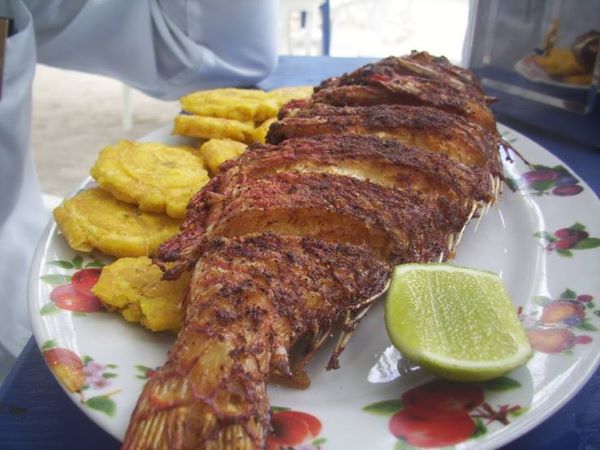
Pescado frito con patacones is one of those plates that makes complete sense the moment you eat it and that becomes harder to substitute once you know what it is supposed to taste like. Whole fried fish or large skin-on fish pieces, seasoned and fried until the exterior is crispy and the flesh inside is moist and flaking from the bone, served alongside patacones, the twice-fried green plantain discs that are one of the most satisfying fried foods in any tradition.
The combination of the crispy fish skin, the tender white flesh, the salty crunch of the patacones, and usually a side of hogao or aji sauce for dipping is a coastal Colombian and Caribbean plate that represents its culinary tradition accurately. If you have been searching for the best pescado frito con patacones near me, this guide helps you find a kitchen that fries both components properly.
What Pescado Frito con Patacones Actually Is
The dish exists across Colombian coastal cooking and throughout the broader Caribbean and circum-Caribbean culinary tradition. The Colombian version is most closely associated with the Pacific and Atlantic coasts, particularly around Cartagena, Barranquilla, and the Pacific port cities like Buenaventura, where fresh fish is abundant and frying is the dominant cooking method for seafood.
The fish. The traditional pescado frito uses whole small fish like mojarra, red snapper, or tilapia, or large skin-on portions of grouper, sea bass, or snapper. The fish is seasoned with salt, garlic, cumin, and sometimes lime juice before frying. The frying is done in oil heated to sufficient temperature that the exterior sets and crisps immediately on contact. A properly fried piece of fish has a golden, slightly blistered exterior that is crispy throughout and a moist, completely cooked interior that has not dried out from excessive heat or too long in the oil. The skin should be crispy enough to eat rather than rubbery and difficult to separate from the flesh.
The patacones. Green plantain slices fried once until slightly golden and just cooked through, then pressed flat with a tostonera or a flat heavy object, and then fried a second time at higher heat until the exterior is golden and crispy. This twice-frying process produces a patacon that is crispy on the outside and slightly soft inside, with a savory, slightly sweet flavor from the semi-ripe plantain starch. A patacon fried only once lacks the crispness of the exterior that makes it satisfying.
The accompaniments. Hogao, the Colombian cooked tomato and onion sauce, is the standard accompaniment for pescado frito con patacones in Colombian coastal cooking. Some versions serve aji sauce or a vinegar-based sauce alongside. Rice and a simple salad or cabbage slaw typically round out the plate.
When you search for the best pescado frito con patacones near me, the crispness of the fish skin and the double-fried crunch of the patacones are the two primary quality markers.
Where to Find It
Colombian restaurants with coastal menus are the most reliable source. A restaurant that specifically references Cartagena, Barranquilla, or Colombian coastal cooking will carry pescado frito con patacones as a central menu item. The combination is as fundamental to Colombian coastal cooking as ceviche is to Peruvian cooking.
Caribbean seafood restaurants across the broader Caribbean-influenced restaurant scene sometimes carry versions of this plate. Dominican, Haitian, Puerto Rican, and Cuban restaurants all have fried fish and plantain traditions that produce similar results to the Colombian preparation.
Venezuelan restaurants carry a version called pescado frito with patacones or tostones alongside, reflecting the shared Caribbean and coastal culinary traditions between Venezuela and Colombia.
Latin American seafood restaurants broadly carry pescado frito as a core menu item in many cities with South American and Caribbean communities. The key is whether the kitchen fries both the fish and the patacones fresh to order and uses proper twice-frying technique for the plantains.
Seafood markets with a prepared food counter in cities with Colombian or Caribbean communities sometimes sell pescado frito con patacones as a ready-to-eat meal, particularly on weekends when demand for traditional seafood preparations is highest.
How to Search More Effectively
A direct search for the best pescado frito con patacones near me will surface Colombian and Latin American restaurants in your area. Here is how to find the ones frying both components properly:
Search Google Maps for Colombian restaurant or Caribbean seafood restaurant in your city and browse photo sections for fish and plantain plate photos. A properly fried piece of fish has a deeply golden, slightly blistered skin visible in a photo, and properly made patacones have a flat, uniformly golden surface. Both are visually distinguishable from pale or poorly fried versions.
Search Yelp for Colombian or Caribbean seafood restaurants and read reviews that specifically mention the fish crispness, the patacon texture, and whether the hogao was freshly made. These details distinguish a kitchen that takes its frying seriously from one producing pale, soggy versions of both components.
Search Instagram with “pescado frito patacones” plus your city name. Colombian and Caribbean restaurant accounts and home cook vendors post photos of this plate regularly, and the golden, crispy fish alongside the pressed, golden patacones with hogao on the side is immediately recognizable.
Ask any restaurant whether the fish is fried to order and whether the patacones are made fresh with the double-frying method. A kitchen frying to order will confirm it. A kitchen pre-frying or reheating will either confirm it or give a vague answer.
What Good Pescado Frito con Patacones Should Look Like
Once you find a source, a few things confirm the quality.
The fish exterior. Golden to deep golden, with slightly blistered areas where the skin made direct contact with the hot oil. The skin should be completely dry and crispy rather than wet or rubbery. A properly fried fish has a visible color difference between the crisped exterior and the white flesh visible where the fish has been cut or where the frying opened a gap in the skin.
The fish interior. Moist white flesh that separates easily from the bone when pressed with a fork. The flesh should be cooked through completely without being dry or chalky. Overcooked fish has a firm, dry texture. Properly fried fish separates into moist flakes with minimal pressure.
The patacones. Flat, uniformly golden on both surfaces, crispy when tapped with a fork, and with a slight softness in the interior when bitten. The twice-fried exterior should be distinct from the softer interior, producing a textural contrast similar to a fried potato chip surrounding a slightly tender center. Pale or soft patacones were either not double-fried or the second frying was at insufficient temperature.
The hogao. Fresh, slightly cooked down, with visible tomato and onion pieces in an orange sauce. The hogao should taste of fresh tomato and sauteed onion rather than of a stored sauce that has been sitting for days.
The service temperature. Hot, with the fish crispy from the fryer and the patacones warm and crispy. Pescado frito con patacones that has been sitting on a warming shelf or under heat lamps will have lost the crispness that makes it worth ordering.
Ordering and Eating Tips
Ask for the fish fried to order if the restaurant gives you the option. A fish fried immediately before serving is significantly crispier and moister inside than one that has been held.
Eat the patacones with hogao as a dipping application rather than as a separate side. Press the patacon into the hogao to pick up the tomato and onion sauce, then eat in the same bite as a piece of fish. The combination of the crispy plantain, the fresh tomato sauce, and the fish is the intended flavor experience.
Squeeze fresh lime over the fish before eating. Most Colombian coastal preparations include fresh lime as a standard accompaniment, and the acid from the lime against the rich fried fish skin is a pairing that makes the fish taste better than it does without it.
Eat both components immediately. Fried fish and fried plantains both lose their crispness quickly as steam from the interior works outward. The best pescado frito con patacones is eaten within a few minutes of being served.
Pricing Expectations
A full plate of pescado frito con patacones at a Colombian or Caribbean seafood restaurant typically runs between $16 and $28 depending on the type and size of fish, the market, and the restaurant format. Whole fish preparations tend to be at the higher end. Portion-based preparations with a piece of fish rather than a whole fish tend to be in the middle of the range. Home cook and vendor versions sold by the plate are typically in the $12 to $20 range.
Key Takeaways
- The best pescado frito con patacones near me is most reliably found at Colombian restaurants with coastal menus, Caribbean seafood restaurants, and home cook vendors who fry both components fresh to order.
- The fish exterior must be deeply golden and crispy with no wet or rubbery skin. The fish interior must be moist and separating easily from the bone. These two qualities together confirm proper frying temperature and timing.
- Patacones must be double-fried. A single-fry patacon is softer and less crispy than a twice-fried one and the textural difference is immediately apparent.
- Ask whether both components are fried to order. Fresh-from-the-fryer fish and patacones are measurably better than held or pre-made versions.
- Eat immediately. Both fried fish and fried plantains lose their crispness within minutes as interior steam works outward through the crust.
- Squeeze lime over the fish before eating and use hogao as a dipping sauce for the patacones. These applications produce the intended flavor combination of the coastal Colombian plate.
- Expect to pay $16 to $28 at a sit-down restaurant, with whole fish preparations at the higher end and portion-based fish at the lower end.