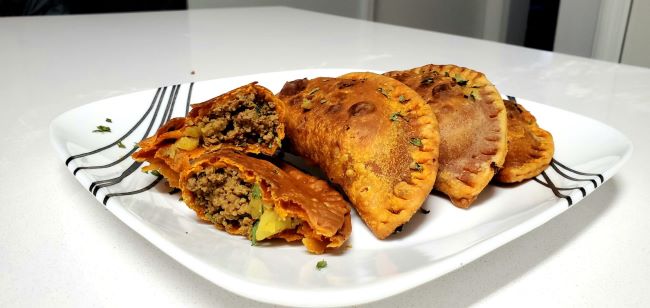
Empanadillas are one of the most beloved street foods in Puerto Rico and one of the items that Puerto Ricans living abroad miss most specifically when they think about the food of home. They are small, half-moon shaped fried turnovers made from a thin wheat dough, filled with seasoned ground beef, chicken, or seafood, and fried until the exterior is golden and blistered. They are sold at kiosks, at food stalls, at school cafeterias, and at every informal gathering where Puerto Rican food is being served, and the experience of eating a freshly fried empanadilla while standing at a kiosk in Luquillo or Piñones is one of those food memories that does not translate to a restaurant plate but that the best versions get close to. If you have been searching for the best empanadillas puerto rican near me, this guide helps you find kitchens that fry them fresh and make the fillings with the same seasoning that defines Puerto Rican cooking.
What Empanadillas Puerto Rican Actually Are
Puerto Rican empanadillas are distinct from Colombian empanadas in several important ways. The dough uses wheat flour rather than corn masa, producing a thinner, crispier exterior when fried. The shape is a half-moon, similar to the Argentine empanada format, but smaller and thinner. The frying is done in oil heated to a temperature that produces immediate blistering and crisping of the wheat dough surface.
The most traditional filling is a ground beef picadillo seasoned with Puerto Rican sofrito, tomato sauce, olives, capers, and sazon. This filling is the same picadillo used in Puerto Rican cooking across multiple dishes, and its specific flavor profile from the recao-based sofrito and the olive and caper brine is what marks it as Puerto Rican rather than any other Latin American ground beef preparation.
Other common fillings include chicken, crab meat, lobster, shrimp, pizza-style with tomato sauce and cheese, or corn and cheese. Each filling maintains the basic format of a seasoned protein or vegetable mixture enclosed in the wheat dough and fried.
The dough for empanadillas is typically made from flour, water, salt, and a small amount of fat, rolled thin enough that the fried exterior is delicate and crispy rather than thick and bready. The thin dough is one of the defining characteristics of the Puerto Rican empanadilla and distinguishes it from thicker-doughed turnovers from other traditions.
The edges are sealed with a fork crimp, and some home cooks use a specific folding technique to create a decorative edge. The crimping must be tight enough that the filling does not leak during frying.
When you search for the best empanadillas puerto rican near me, freshly fried crispy thin wheat dough, a properly seasoned sofrito-based filling, and the characteristic blistered exterior from contact with hot oil are the markers of an authentic Puerto Rican preparation.
Where to Find Them
Puerto Rican restaurants and fondas with traditional menus carry empanadillas as an appetizer or a side dish. A restaurant that also carries tostones, sorullitos, and alcapurrias alongside empanadillas has a comprehensive Puerto Rican fried food program and is likely to make all of them with consistent quality.
Puerto Rican kiosk-style food operations that replicate the street food format of Puerto Rico are the most authentic source outside of the island itself. Operations that specifically reference the kiosko tradition in their branding or that sell exclusively Puerto Rican street food items produce empanadillas in a context that most closely replicates the original.
Puerto Rican home cooks and community vendors selling through Instagram and Facebook batch orders include empanadillas regularly because they are practical to make in large quantities and hold their quality well enough for pickup and delivery within a few hours of frying. Home cooks who make their own dough from scratch and fill with homemade sofrito-seasoned picadillo produce the most authentic versions.
Puerto Rican cultural events and festivals almost always feature empanadillas as one of the most popular fried food items alongside alcapurrias and bacalaitos. Events organized by Puerto Rican community organizations are reliable sources for freshly fried empanadillas from home cooks who make them regularly.
How to Search More Effectively
A search for the best empanadillas puerto rican near me will surface Puerto Rican restaurants in your area. Here is how to find the ones frying them properly:
Search Google Maps for Puerto Rican restaurant in your city and browse menus and photo sections for empanadillas. A restaurant that shows photos of blistered, deeply golden empanadillas with visible crimped edges is producing the properly fried version.
Search Yelp for Puerto Rican restaurants and read reviews that specifically mention empanadillas. Reviewers who order them will describe whether the dough was thin and crispy, whether the filling was properly seasoned, and whether they were freshly fried or tasted reheated. These details distinguish a kitchen frying to order from one using pre-made or held product.
Search Instagram with “empanadillas puertorriquenas” or “empanadillas PR” plus your city name. Puerto Rican restaurant accounts and home cook vendors post photos of empanadillas regularly, and the golden, blistered, thin-doughed Puerto Rican version is visually distinct from the thicker-doughed versions from other traditions.
Search Facebook for Puerto Rican community groups in your city and ask where to find the best empanadillas. Puerto Ricans are very specific about which local restaurant or home cook makes the thinnest, crispiest dough with the most properly seasoned filling and will give direct recommendations.
What Good Empanadillas Puerto Rican Should Look Like
Once you find a source, a few things confirm the quality.
The dough thickness. Thin enough to see the shape of the filling through the dough when raw, and thin enough that the fried exterior is a crispy shell rather than a thick layer of cooked dough. A properly thin empanadilla dough produces a much crispier result than a thick dough because there is less mass to remain chewy between the blisters.
The exterior after frying. Golden, blistered, and slightly shiny from the frying oil. The blisters form where steam from the filling encountered the thin dough surface and pushed through into the hot oil, creating irregular bubbles that crisp as they fry. Uniformly smooth empanadillas without blisters were made with too thick a dough or were fried at insufficient temperature.
The filling flavor. Savory, slightly salty, with the recao sofrito character and the olive and caper brine present throughout. The filling should not taste bland or simply of ground meat. The sofrito seasoning should be perceptible in every bite of filling.
The crimp. Tight and uniform, with no gaps where the filling could have leaked during frying. A well-crimped empanadilla shows that the dough was properly prepared and sealed before frying.
The temperature. Hot from the fryer, with the exterior still crispy. An empanadilla that has been sitting at room temperature for more than 20 to 30 minutes will have significantly softer dough as the steam from the filling works outward through the thin crust.
Ordering and Eating Tips
Eat empanadillas immediately after they are fried. The thin dough that makes them delicious also means they lose their crispness faster than thicker-doughed versions. A freshly fried empanadilla is significantly better than one that has been sitting for half an hour.
Try multiple filling varieties if the restaurant or vendor offers them. The ground beef picadillo is the most traditional but the crab, chicken, and pizza versions each offer their own character. Ordering a mixed selection gives you a fuller picture of the kitchen’s range.
Ask whether they are fried to order. A kitchen frying on demand will produce crispier empanadillas than one that batches them in advance and holds them. Some busy operations necessarily fry in batches, but knowing this helps you eat promptly.
Pair with a cold drink rather than a hot one. Empanadillas are rich from the fried dough and a cold juice, malta, or beer provides a refreshing contrast to the warm, oily exterior.
Pricing Expectations
Individual empanadillas puerto rican at a restaurant or from a home cook vendor typically run between $2 and $4 each. A serving of three to five as an appetizer runs between $6 and $16 depending on the venue and the filling. Seafood fillings like crab or lobster are priced higher than beef or chicken. Event and street food versions are typically priced per piece in the same range.
Key Takeaways
- The best empanadillas puerto rican near me are most reliably found at Puerto Rican fondas and kiosk-style food operations that fry them fresh, through Puerto Rican home cook vendors on Instagram and Facebook, and at Puerto Rican community events where home cooks fry to order.
- Puerto Rican empanadillas use thin wheat dough fried until blistered and golden, filled with sofrito-seasoned picadillo, chicken, or seafood. The thin dough and the blistered exterior distinguish them from thicker-doughed versions from other traditions.
- The blistered exterior from thin dough in properly heated oil is the most immediate visual quality marker. Smooth, uniform empanadillas without blisters were made with thick dough or fried at insufficient temperature.
- The filling must taste of the recao sofrito with olive and caper brine. A bland filling was made without proper Puerto Rican seasoning.
- Eat immediately after frying. The thin dough loses crispness within 20 to 30 minutes as interior steam works outward.
- Search Instagram with “empanadillas puertorriquenas” plus your city name and check Puerto Rican community Facebook groups for specific restaurant and home cook recommendations.
- Expect to pay $2 to $4 per empanadilla, with seafood versions priced higher than beef or chicken versions.