Arroz chaufa is the Peruvian version of Chinese fried rice, and that description immediately understates what it is. Peru has the largest Chinese immigrant community in South America, and the fusion of Chinese cooking techniques with Peruvian ingredients over more than 150 years has produced a cuisine called chifa that is distinct from both Chinese and Peruvian cooking and has developed its own identity and loyal following. Arroz chaufa is one of the most ubiquitous dishes in this chifa tradition, eaten at dedicated chifa restaurants, at home, and as a side dish across Peruvian cooking more broadly.
When it is made properly in a properly heated wok with good technique, the rice has a character that no pan-cooked version can replicate: a slight smokiness called wok hei, intensely savory seasoning from soy and oyster sauce, and a combination of textures from the slightly crisped rice, soft scrambled egg, and tender protein that makes it one of the more complete single-dish meals available at any price point.
If you have been searching for the best arroz chaufa near me, this guide gives you a framework for finding a version made with the right technique and the right ingredients.
What Arroz Chaufa Actually Is
The name comes from the Cantonese words for fried rice, chow fan, adapted into Peruvian Spanish as chaufa. The preparation follows Chinese fried rice technique but incorporates Peruvian ingredients and flavors that have evolved within the chifa tradition.
The rice must be cold cooked rice, never freshly cooked. Day-old rice has dried out sufficiently that the individual grains separate during stir-frying rather than clumping together. Fresh rice has too much moisture and produces a sticky, clumped result regardless of how high the heat is. This is one of the most consistent failure points in fried rice of any tradition, and it is one of the easiest to verify.
The wok temperature is the other non-negotiable technical requirement. A properly heated wok, either gas-flame or very high-heat induction, produces the wok hei, a Cantonese term meaning breath of the wok, that gives well-made fried rice its characteristic slight smokiness and caramelized depth. A wok that is not hot enough before the rice goes in produces steamed rather than fried rice, which lacks the textural contrast and the flavor depth that define the dish.
The standard components of arroz chaufa include cold cooked rice, scrambled egg cooked separately before the rice goes in, some combination of Chinese-style roast pork called char siu or chicken or shrimp, soy sauce, oyster sauce, sesame oil, green onion, and sometimes ginger. The Peruvian chifa version may add aji amarillo for a touch of heat or other Peruvian flavor elements that distinguish it from a standard Chinese-American fried rice.
When you search for the best arroz chaufa near me, the wok hei smokiness, the properly separated rice grains, and the balance of soy and oyster sauce seasoning are the three most important quality markers.
Where to Find It
Peruvian restaurants are the most reliable source. Arroz chaufa is a standard Peruvian restaurant menu item that appears alongside ceviche, lomo saltado, and aji de gallina because it has been fully absorbed into Peruvian food culture. A Peruvian restaurant with a comprehensive menu almost always carries it.
Chifa restaurants are the dedicated source. Chifa is the name for the Peruvian-Chinese restaurant tradition, and a restaurant that identifies itself as a chifa rather than a general Peruvian restaurant is specifically focused on this fusion cuisine. Cities with Peruvian communities sometimes have dedicated chifa restaurants that carry a broader range of chifa dishes beyond the arroz chaufa that appears on every Peruvian menu.
Chinese-Peruvian fusion restaurants that have emerged in major cities sometimes carry arroz chaufa as a deliberate fusion item alongside other chifa dishes. These restaurants tend to take the wok technique and ingredient quality seriously enough to produce a good version.
Peruvian home cooks and community vendors selling through Instagram and Facebook batch orders sometimes include arroz chaufa as a prepared item. Home cooks who make it with the right rice preparation and proper high-heat technique produce a result that is often as good as restaurant versions.
How to Search More Effectively
A search for the best arroz chaufa near me will surface Peruvian restaurants in your area. Here is how to identify the ones making it with proper technique:
Search Google Maps for Peruvian restaurant or chifa restaurant in your city and browse menus for arroz chaufa. A restaurant that lists multiple chifa dishes alongside the arroz chaufa is specifically focused on this culinary tradition and likely has the wok setup and technique to make it properly.
Search Yelp for Peruvian restaurants and read reviews that specifically mention arroz chaufa. Reviewers will describe whether the rice had good wok flavor, whether the grains were separate, and whether the seasoning was balanced. These details appear in reviews from diners who order it specifically rather than as an incidental side.
Search Instagram with “arroz chaufa” plus your city name. Peruvian restaurant accounts and chifa restaurants post photos of arroz chaufa regularly, and the golden-brown, slightly smoky coloring of a properly wok-fired version is visually distinctive from a pale, steamed version.
Ask any Peruvian restaurant whether they use a wok on high heat for the chaufa. A kitchen with proper wok technique will answer specifically about their equipment and process. A kitchen making it in a standard frying pan on moderate heat produces a technically similar but qualitatively different result.
What Good Arroz Chaufa Should Look Like
Once you find a source and the dish arrives, a few things immediately confirm the quality.
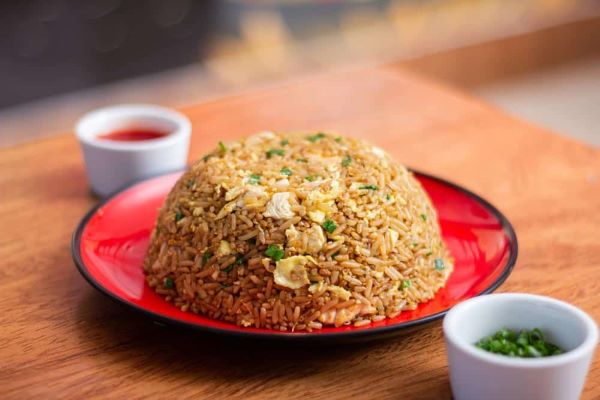
The rice grain separation. Every grain of rice should be distinct and separate from every other grain. A properly made arroz chaufa made from cold cooked rice that was wok-fired at high heat has individual grains that can be counted visually. Clumped, sticky rice that adheres together was made from fresh rice or from rice that was not properly dried before frying.
The color. Evenly golden-brown across most of the rice, not white or pale. The color comes from the soy sauce coating the rice evenly during the high-heat stir-fry and from the slight caramelization of the rice surface. Rice that is pale means it was either not cooked at high enough temperature or was turned too infrequently during cooking.
The wok hei character. A slight smokiness and caramelized depth that is detectable both in the aroma when the plate arrives and in the flavor of the first bite. This characteristic is produced by the very high heat of a properly seasoned wok and cannot be replicated at lower cooking temperatures. A version without any of this character was made in a pan rather than a proper wok at high heat.
The scrambled egg. Soft and distributed throughout the rice rather than sitting in a distinct, fully cooked layer. Properly made fried rice has egg that was added while slightly underdone and then folded into the rice so it finishes cooking in contact with the hot grains. Overcooked, rubbery egg pieces in the rice were scrambled separately to completion before being mixed in.
The seasoning balance. Savory from the soy sauce with a slight sweetness from the oyster sauce, and a background sesame fragrance from the sesame oil. None of these three elements should dominate. A version that tastes primarily of soy without any other seasoning depth was made with an oversimplified seasoning approach.
Ordering and Eating Tips
Order arroz chaufa as a main course rather than a shared side. A full portion is substantial enough to be a complete meal and the balance of rice, egg, and protein works best when you eat it as the primary focus of the meal rather than as a supporting element.
Consider ordering it alongside a small portion of lomo saltado or another Peruvian stir-fry, which is the classic chifa meal combination. The two dishes share flavor elements from the chifa tradition and eating them together provides a complete picture of Peruvian-Chinese cooking.
If the restaurant offers a choice of protein, choose the char siu roast pork if it is available. Chinese-style roasted pork brings a sweetness and a specific flavor from the char siu marinade that chicken or shrimp cannot replicate, and it is the traditional protein in many chifa preparations.
Eat immediately. Wok-fired rice loses its slight crispness and wok character within minutes as the residual heat causes steam to soften the exterior of each grain. The best version of arroz chaufa is eaten within five minutes of leaving the wok.
Pricing Expectations
A full portion of the best arroz chaufa near me at a Peruvian restaurant typically runs between $14 and $22 depending on the protein choice and the market. Shrimp and seafood versions tend to be priced higher than chicken or pork. Dedicated chifa restaurants in major Peruvian communities may price it differently based on their format. Home cook and vendor versions are typically in the $10 to $16 range per portion.
Key Takeaways
- The best arroz chaufa near me is most reliably found at Peruvian restaurants with comprehensive menus, dedicated chifa restaurants in cities with Peruvian communities, and Peruvian home cook vendors who make it with proper cold rice and high-heat technique.
- Arroz chaufa is Peruvian-Chinese fried rice from the chifa culinary tradition, made with cold day-old rice, scrambled egg, protein, and soy and oyster sauce seasoning, wok-fired at very high heat.
- Individually separated rice grains and a golden-brown color from the wok heat are the two most immediate quality markers. Clumped, pale rice indicates improper technique.
- Wok hei, the slight smokiness from very high wok heat, is detectable in the aroma and flavor of a properly made arroz chaufa. A version without this character was made at insufficient temperature.
- Ask whether the restaurant uses a wok on high heat for the chaufa. A specific answer about equipment and technique is a positive quality signal.
- Eat immediately. The grain texture and wok character both diminish within minutes of the dish leaving the wok.
- Search Instagram with “arroz chaufa” plus your city name for the most visually informative results about local quality.
- Expect to pay $14 to $22 at a Peruvian or chifa restaurant and $10 to $16 per portion from a home cook or community vendor.