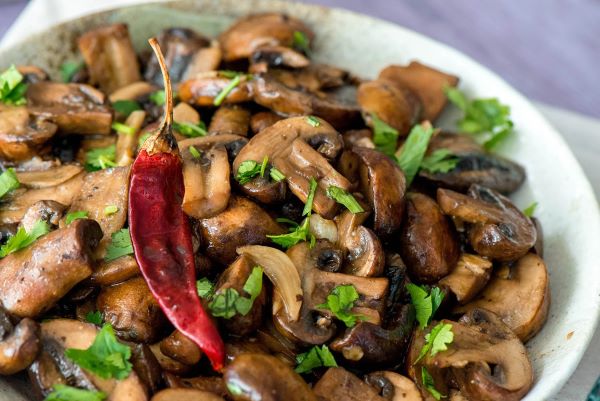
Champiñones al ajillo is one of the simplest and most satisfying tapas in Spanish cooking, and its simplicity is both its strength and the reason it is so frequently made without enough care. Mushrooms sauteed in olive oil with garlic, a splash of sherry or white wine, and fresh parsley should produce a plate where the mushrooms are golden and slightly caramelized, the garlic is fragrant without being harsh, and the olive oil in the pan has absorbed the flavors of everything that cooked in it. When it is made properly, the olive oil itself becomes the sauce, and eating the mushrooms and then soaking that garlic-infused oil up with bread is one of the better parts of a tapas meal.
If you have been searching for the best al ajillo mushrooms near me and finding pale, steamed versions drowning in liquid rather than properly sauteed in oil, this guide helps you find a kitchen that gets the technique right.
What Al Ajillo Mushrooms Actually Are
The phrase al ajillo in Spanish cooking describes a preparation in olive oil with garlic, and it applies to shrimp, chicken, and mushrooms among other ingredients. The mushroom version, champiñones al ajillo, is one of the most common vegetarian tapas across Spain and has become a standard offering at Spanish restaurants internationally.
The technique requires a hot pan, enough olive oil to properly coat and fry the mushrooms rather than steam them, and garlic added at the right moment. The most common failure in al ajillo mushrooms is crowding the pan with too many mushrooms, which causes them to steam in their own moisture rather than sauteing in the oil. Properly made champiñones al ajillo require the mushrooms to be cooked in batches if necessary, with enough space for each mushroom to make contact with the hot oil and develop color.
Whole button mushrooms, cremini, or sliced larger mushrooms are all appropriate. The mushrooms are added to the hot oil and cooked without stirring until one side develops a golden color, then turned to develop color on the other side. Garlic, either sliced thin or minced, goes in after the mushrooms have begun to color rather than at the beginning, which prevents the garlic from burning before the mushrooms are cooked.
Dry sherry, manzanilla, or white wine is added briefly and allowed to reduce. Fresh parsley goes in at the end. The finished mushrooms should be golden, slightly caramelized, and sitting in a small amount of garlic-infused olive oil with the pan juices from the mushrooms incorporated into it.
When you search for the best al ajillo mushrooms near me, the color development on the mushrooms, the garlic integration without harshness, and the quality of the olive oil that becomes the finishing sauce are the quality markers to evaluate.
Where to Find Them
Spanish tapas bars and restaurants are the primary source. Any restaurant with a comprehensive tapas menu will carry champiñones al ajillo as a standard vegetarian option. A restaurant that specifically references Andalusian or Castilian cooking is more likely to make this tapa with proper technique than one that has assembled a generic tapas menu without deep Spanish culinary knowledge.
Mediterranean restaurants broadly sometimes carry a version of garlic mushrooms under different names. Italian aglio e olio mushrooms, Greek-style garlic mushrooms, and other Mediterranean preparations share similar logic, and a restaurant with good olive oil and proper sauteing technique will produce something comparable.
Vegetarian and plant-forward restaurants that draw from Spanish cooking sometimes carry champiñones al ajillo as a signature small plate. A restaurant that uses high-quality olive oil and fresh garlic across its menu will produce a better version than one treating olive oil as a generic cooking fat.
Spanish cultural events and food festivals with tapas as a featured element sometimes carry champiñones al ajillo alongside other cold and hot tapas. Events organized by Spanish cultural associations are worth checking for home-cook versions that may exceed restaurant quality.
How to Search More Effectively
A search for the best al ajillo mushrooms near me will surface Spanish and Mediterranean restaurants in your area. Here is how to find the ones making it properly:
Search Google Maps for Spanish tapas bar or Spanish restaurant in your city and look at menus for champiñones or garlic mushrooms. A menu description that mentions sherry, parsley, or house olive oil in the description is indicating a kitchen thinking about the flavor details of this preparation.
Search Yelp for Spanish restaurants and read reviews that mention champiñones or mushrooms specifically. Reviewers who know the dish will describe whether the mushrooms were properly golden or pale and steamed, whether the garlic was fragrant without being harsh, and whether the olive oil was worth soaking bread in. These details distinguish a kitchen with proper sauteing technique.
Search Instagram with “champiñones al ajillo” plus your city name. Spanish restaurant accounts post photos of this tapa, and the golden color of properly sauteed mushrooms against the garlic-infused oil in a small clay dish is immediately distinguishable from a pale, steamed version in a restaurant photo.
Ask any Spanish restaurant what oil they use and whether the mushrooms are cooked to order in a hot pan. A kitchen using good Spanish olive oil and sauteing to order will confirm both. A kitchen using generic cooking oil and batch-preparing the mushrooms will either confirm it or give a vague answer.
What Good Al Ajillo Mushrooms Should Look Like
Once you find a source and the tapa arrives, a few things confirm the quality.
The mushroom color. Golden to deep golden on at least one surface, with visible caramelization where the mushroom made contact with the hot oil. Pale, gray, or uniformly colored mushrooms without any browning were steamed rather than sauteed. The Maillard reaction that produces the golden color also produces the flavor that makes properly cooked mushrooms worth eating.
The olive oil. Visible in the dish as a small amount of garlic-infused liquid, slightly cloudy from the mushroom juices and the garlic, and fragrant from the quality of the oil used. This oil is one of the best parts of the dish and should smell immediately of garlic and olive when the plate is brought close. A thin, watery liquid with no olive oil character means neutral cooking oil was used rather than good Spanish olive oil.
The garlic. Golden at the edges but not brown, fragrant rather than harsh. Properly cooked garlic in olive oil becomes sweet and mellow rather than sharp and biting. Garlic that is still raw-tasting means it was added too late. Garlic that is brown and bitter means it was added too early and overcooked.
The parsley. Fresh and bright green, added at the end of cooking so it retains its color and fresh herb flavor. Wilted, dark parsley indicates it was added too early in the cooking process.
The bread. Served alongside for soaking the garlic oil. A Spanish restaurant that serves champiñones al ajillo without bread has not thought through the eating experience. The oil is specifically worth soaking up and bread is the only appropriate vehicle.
Ordering and Eating Tips
Order champiñones al ajillo early in a tapas spread. Garlic mushrooms work well at the start of a meal when the palate is fresh and the garlic flavor is most interesting. After several other tapas, the garlic can feel repetitive.
Ask for extra bread if the amount provided is insufficient for the quantity of garlic oil in the dish. The oil is as much the point as the mushrooms, and a restaurant that understands this will have additional bread available without making you ask twice.
Eat the mushrooms and olive oil together in each bite. Using the mushrooms to scoop up the oil from the plate is the intended eating method rather than eating the mushrooms separately and leaving the oil behind.
Pair with a glass of manzanilla or fino sherry. The saline, dry quality of these sherries against the garlic and olive oil is a pairing that is specifically designed for this style of tapa and that makes both the drink and the food taste better together.
Pricing Expectations
A tapa portion of al ajillo mushrooms at a Spanish restaurant typically runs between $9 and $16 depending on the portion size, the quality of the olive oil used, and the market. Restaurants that use premium Spanish olive oil and cook to order tend to be at the higher end of that range. Casual tapas bars price it toward the lower end.
Key Takeaways
- The best al ajillo mushrooms near me are most reliably found at Spanish tapas bars that use good Spanish olive oil, cook the mushrooms in small batches to develop proper color, and add garlic at the right moment to keep it fragrant without burning.
- Properly made champiñones al ajillo requires a hot pan, enough olive oil to saute rather than steam, and uncrowded mushrooms so each one can develop golden color from direct oil contact.
- Golden color on the mushroom surfaces is the most immediate quality marker. Pale or gray mushrooms without caramelization were steamed rather than sauteed, which produces a fundamentally different and less flavorful result.
- The garlic-infused olive oil in the dish is as important as the mushrooms. It should smell immediately of garlic and good olive oil and be worth soaking bread in.
- Ask what oil is used and whether the mushrooms are cooked to order in a hot pan. These two answers predict quality more reliably than any other factor.
- Pair with manzanilla or fino sherry for the pairing that specifically complements garlic and olive oil-based tapas.
- Always order bread alongside and use it to soak the garlic oil. The oil is one of the best parts of the dish.
- Expect to pay $9 to $16 as a tapa portion at a Spanish restaurant.