Ajiaco cubano is one of Cuba’s oldest and most culturally significant dishes, a hearty stew that combines multiple varieties of meat with a wide range of tropical root vegetables and corn in a broth seasoned with Cuban aromatics. It is the kind of dish that takes time to make correctly, requires a range of ingredients that reflects the abundance of Cuba’s agricultural traditions, and produces a result that is more than the sum of its parts.
Finding the best ajiaco cubano near me requires knowing what the dish is, how it differs from other stews called ajiaco across Latin America, and which Cuban restaurants treat it with the historical and culinary respect it deserves.
What Ajiaco Cubano Actually Is
Ajiaco cubano is a one-pot stew with roots in Taino indigenous cooking, Spanish colonial influence, and African culinary contributions, making it one of the most historically layered dishes in Cuban food culture. It represents the creolization of Cuban cooking in a single bowl, with indigenous root vegetables, Spanish sofrito technique, and African culinary approaches to stewing all present simultaneously.
The protein in ajiaco cubano is typically a combination of meats rather than a single protein. Pork ribs, pork ear or other pork offal, beef pieces, and sometimes chicken all go into the pot, each contributing its own collagen and flavor to the broth. The variety of meats is one of the defining characteristics and produces a richness and complexity that single-meat stews cannot achieve.
The vegetables are equally diverse. Ajiaco cubano uses several types of viandas, the Cuban term for root vegetables and starchy vegetables used for cooking rather than eating raw. These include malanga, which is taro root, boniato, which is Cuban sweet potato, name, which is a starchy yam, yuca, platano verde, which is green plantain, and sometimes chayote and other available vegetables. Corn on the cob cut into rounds is a standard addition. This variety of starchy vegetables releases starch during the long cooking process that thickens the broth naturally and gives ajiaco its characteristic body.
The seasoning follows the Cuban sofrito tradition with garlic, onion, aji cachucha, cumin, and tomato, and dried or fresh chili for heat. The long cooking time, typically two to three hours, allows all the flavors to develop and integrate into a broth that is deeply savory, slightly thickened from the starches, and complex from the multiple meat and vegetable contributions.
When you search for the best ajiaco cubano near me, the variety of both meats and viandas, the natural thickening of the broth from the starchy vegetables, and the depth of the long-simmered sofrito base are the markers of a properly made traditional version.
Where to Find It
Cuban restaurants with traditional menus are the primary source. Ajiaco cubano is a somewhat less common restaurant item than ropa vieja or pernil, but restaurants that take their Cuban home-cooking program seriously will carry it as a rotating special or as a featured traditional dish. A restaurant that describes itself as serving cocina cubana tradicional is the most likely to include ajiaco as part of its rotation.
Cuban fondas in cities with Cuban communities are often the best source. These informal Cuban restaurants rotate their menu based on what is being made that day, and ajiaco cubano appears regularly because it is practical to make in large quantities and has a strong community following among older generations of Cuban Americans who grew up eating it.
Cuban home cooks and community vendors selling through Instagram and Facebook are a strong source for ajiaco cubano because home cooks from Cuba who grew up eating this dish make it with the full range of viandas and meats that define the authentic version. A home cook who describes sourcing malanga, boniato, and name alongside multiple pork and beef cuts is following the traditional recipe.
Cuban cultural events organized around Cuban heritage and traditional food sometimes feature ajiaco as a centerpiece dish precisely because of its historical and cultural significance. Events organized by Cuban cultural associations that celebrate traditional Cuban cooking are worth attending for this specific dish.
How to Search More Effectively
A direct search for the best ajiaco cubano near me will return limited results because this is a less commonly restaurant-featured dish than mainstream Cuban items. Here is how to search more productively:
Search Facebook for Cuban community groups in your city and ask directly whether anyone makes or knows where to find ajiaco cubano. Be specific about the Cuban version to distinguish it from Colombian ajiaco, which is a completely different preparation. Cuban community members will respond with knowledge about which local restaurant or home cook makes it.
Search Instagram with “ajiaco cubano” plus your city name. Cuban home cook vendors and the few restaurants that carry it post photos when they make ajiaco, and the dark, thick broth with visible multiple vegetables and meats is recognizable in a food photo.
Call Cuban restaurants in your area and ask directly whether they make ajiaco cubano and on which days. Many Cuban restaurants that do not list it on a standard menu will make it as a weekend or rotating special. Calling ahead is the most productive approach for this specific dish.
Search Yelp for Cuban restaurants and look for any reviews that mention ajiaco specifically. A reviewer who mentions finding and ordering ajiaco at a specific Cuban restaurant is confirming that the restaurant carries it.
What Good Ajiaco Cubano Should Look Like
Once you find a source, a few things confirm the quality.
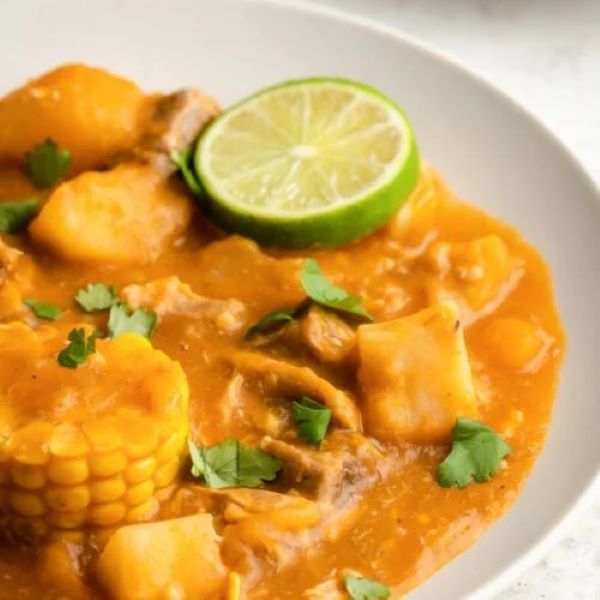
The broth. Deep, slightly murky from the dissolved starch of the multiple viandas cooked into it, with a dark amber to brown color from the long cooking and the sofrito base. Ajiaco broth should be noticeably thicker than a standard soup from the natural starch released by the malanga, yuca, and other root vegetables. Thin, clear broth means the cooking time was insufficient or fewer viandas were used than the traditional recipe calls for.
The variety of viandas. Multiple types of root vegetables visible in the bowl, each with a slightly different color and texture. Malanga appears paler and slightly slimy in texture from its high starch content. Yuca is firmer and more white. Boniato is slightly sweet and pale orange. Corn rounds are distinctive. The variety is the point, and a version with only one or two types of starchy vegetable is not the traditional ajiaco.
The meats. Multiple types visible and identifiable, each contributing a different texture to the stew. Pork ribs should be tender and releasing from the bone. Beef should be fully braised. The variety of meats should be detectable in the complexity of the broth.
The sofrito flavor. Cuban aromatics present throughout, with the garlic, onion, and cumin perceptible as a base note under the deeper stew flavors. The broth should taste like Cuban cooking rather than like a generic meat and vegetable soup.
Ordering and Eating Tips
Order ajiaco cubano as a main course with white rice as the traditional accompaniment. The starchy broth already provides significant carbohydrate from the viandas, but white rice is the cultural pairing.
Ask whether the stew includes the full range of traditional viandas. A restaurant or home cook confident in their ajiaco will be able to list the specific root vegetables included.
Eat with bread for soaking the thick broth. The naturally thickened ajiaco broth is one of the most flavorful parts of the dish and bread is a practical vehicle for not wasting it.
The dish holds and reheats exceptionally well because the starchy broth actually improves in consistency and flavor after a day of rest. A home cook or vendor version from the previous day is often better than a same-day version.
Pricing Expectations
Ajiaco cubano at a Cuban restaurant typically runs between $16 and $26 as a main course. Home cook and community vendor versions sold by the container are typically in the $12 to $20 range per serving.
Key Takeaways
- The best ajiaco cubano near me is most reliably found through Cuban community Facebook groups, direct phone calls to Cuban fondas, and Cuban home cook vendors who describe sourcing the full range of traditional viandas and multiple meat types.
- Ajiaco cubano is a long-simmered Cuban stew combining multiple meats including pork and beef with multiple varieties of tropical root vegetables including malanga, yuca, boniato, and name, plus corn rounds, in a sofrito-based broth that thickens naturally from the dissolved vegetable starch.
- The variety of both meats and viandas is the defining characteristic of traditional ajiaco cubano. A version with only one or two types of root vegetable is not the authentic dish.
- The naturally thickened, slightly murky broth from the dissolved root vegetable starch is the most immediate quality marker. Thin, clear broth indicates insufficient cooking time or missing viandas.
- Call Cuban restaurants directly to ask about ajiaco cubano as a special. Many carry it occasionally without listing it on their standard menu.
- Ajiaco improves with a day of rest. A properly made version from the previous day often has more developed flavor and better broth consistency than a same-day preparation.
- Expect to pay $16 to $26 at a Cuban restaurant and $12 to $20 per portion from a home cook or community vendor.