Your hairbrush does a lot of quiet work, and it collects a lot in return. Over time it fills up with loose hair, scalp oil, dead skin, dust, and leftover styling product. A dirty brush then puts all of that grime right back into clean hair. The good news is that you do not need fancy cleaners to fix this. Learning how to clean a hairbrush with baking soda gives you a cheap, gentle, and effective way to get your brush fresh again.
Baking soda sits in almost every kitchen, costs very little, and works well on the kind of buildup brushes collect. Below you will find the full method, the tools you need, and a few tips for different brush types so you can do this without damaging your favorite brush.
Why Baking Soda Works So Well
Baking soda is a mild abrasive, which means it can scrub away gunk without scratching most surfaces. It also helps cut through oil and neutralizes odors, so your brush comes out cleaner and fresher smelling. That combination is exactly why so many people want to know how to clean a hairbrush with baking soda rather than buying a special product.
When you understand how to clean a hairbrush with baking soda, you are really using three properties at once. The gentle grit loosens stuck-on buildup, the alkaline nature helps break down oils, and the deodorizing effect removes any musty smell. All of that comes from one inexpensive box.
What You Will Need
Gathering your supplies first makes the job quick. Here is the short list:
- Baking soda, about one to two tablespoons
- Warm water
- A small bowl or your bathroom sink
- An old toothbrush for scrubbing
- A rat-tail comb, pen, or your fingers to lift out hair
- A towel for drying
That is it. You likely have everything already, which is part of why this method is so popular.
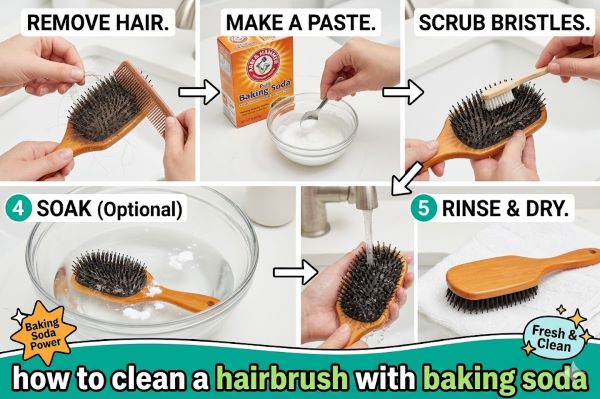
Step One: Remove the Loose Hair
Before any washing, pull the trapped hair out of the brush. Slide a rat-tail comb, the end of a pen, or even your fingers under the hair near the base of the bristles, then lift up and out. For stubborn tangles, snip through the hair with scissors first, then pull it free in sections.
This step matters because the baking soda cannot reach the base of the bristles if a mat of hair is blocking it. A clean starting surface makes the rest of the process far more effective.
Step Two: Mix the Baking Soda Solution
Now make your cleaning mix. Add one to two tablespoons of baking soda to a bowl of warm water and stir until it dissolves. The water should feel slightly gritty and a little cloudy. If you want a deeper clean, you can add a drop of gentle shampoo to help lift extra oil.
This solution is the heart of how to clean a hairbrush with baking soda, so do not skip the stirring. You want the baking soda spread through the water rather than sitting in a clump at the bottom.
Step Three: Soak or Dip Based on Brush Type
How long you soak depends on what your brush is made of, and this is where many people go wrong.
Plastic brushes and synthetic bristles handle soaking well. You can submerge the bristle portion in the baking soda solution for three to five minutes to loosen buildup. Try to keep the water level below any padded base so you do not soak the cushion.
Wooden brushes and boar bristle brushes need more care. Wood can warp and natural bristles can loosen if they sit in water too long. For these, skip the long soak. Instead, dip your toothbrush in the solution and clean the bristles directly without submerging the whole brush.
Knowing this difference protects your tools. The method for how to clean a hairbrush with baking soda is the same in spirit for every brush, but the soaking time changes with the material.
Step Four: Scrub the Bristles and Base
Dip the old toothbrush into the baking soda mix and scrub along the bristles, working from the base upward. Pay attention to the pad or cushion where oil and product collect most. Use small circular motions to lift grime out from between the bristles.
For brushes with a vented or hollow base, scrub those openings too, since dust loves to gather there. Keep dipping the toothbrush back into the solution as you go so you always have fresh baking soda working for you. This scrubbing stage is where the real cleaning happens, and a few minutes of effort makes a visible difference.
Step Five: Rinse Thoroughly
Once the brush looks clean, rinse the bristles under cool running water to wash away the loosened grime and any leftover baking soda. Hold the brush so the bristles point down, which lets the water and debris run off rather than pooling in the base.
For wooden or boar bristle brushes, rinse quickly and gently, and avoid letting water soak into the wood. A damp cloth can wipe down the handle instead of a full rinse if you want to be extra careful.
Step Six: Dry the Brush Properly
Drying matters more than people think. Shake off the excess water, then set the brush bristle-side down on a towel. This position lets any remaining moisture drain out of the base instead of settling into the cushion, where it could cause mildew over time.
Let the brush air dry fully before you use it again. Avoid putting a damp brush back in a drawer, since trapped moisture leads to odor and mold. A windowsill or open counter works well for drying.
How Often Should You Clean Your Brush?
For most people, a full clean every two to four weeks keeps a brush in good shape. If you use a lot of styling products, gels, or dry shampoo, you may want to learn how to clean a hairbrush with baking soda more often, since those leave heavier residue. Pulling loose hair out after each use also cuts down on buildup between deep cleans.
Once you know how to clean a hairbrush with baking soda, the routine takes only a few minutes, so it is easy to fold into your regular cleaning schedule. A clean brush works better, lasts longer, and keeps your hair healthier.
A Few Extra Tips
If your brush has heavy product buildup, you can add a little white vinegar to the rinse step for extra cleaning power, though never seal baking soda and vinegar in a closed container since they react and fizz. Use them in sequence, not mixed and trapped.
For a brush that smells musty, the deodorizing effect is one of the best reasons to use baking soda. The powder naturally absorbs odors, so your brush comes out smelling neutral rather than stale.
Finally, resist the urge to use very hot water on plastic brushes, since heat can warp the bristles or soften the base. Warm is enough to help the baking soda work without risking damage.
Key Takeaways
- Learning how to clean a hairbrush with baking soda gives you a cheap, natural way to remove oil, product buildup, and odor.
- Baking soda works because it is a mild abrasive that scrubs gently, cuts through grease, and neutralizes smells all at once.
- You only need baking soda, warm water, a bowl, an old toothbrush, and something to lift out trapped hair.
- Always remove the loose hair first, since buildup at the base blocks the baking soda from reaching the bristles.
- Mix one to two tablespoons of baking soda into warm water, and add a drop of gentle shampoo for a deeper clean if you like.
- Plastic and synthetic brushes can soak for three to five minutes, while wooden and boar bristle brushes should only be spot cleaned to avoid damage.
- Scrub the bristles and base with the toothbrush, focusing on the cushion where oil and product gather most.
- Rinse with the bristles pointing down, then dry the brush bristle-side down so moisture drains away from the base.
- Clean your brush every two to four weeks, or more often if you use heavy styling products.
- Knowing how to clean a hairbrush with baking soda takes only a few minutes and keeps your brush and your hair fresher.