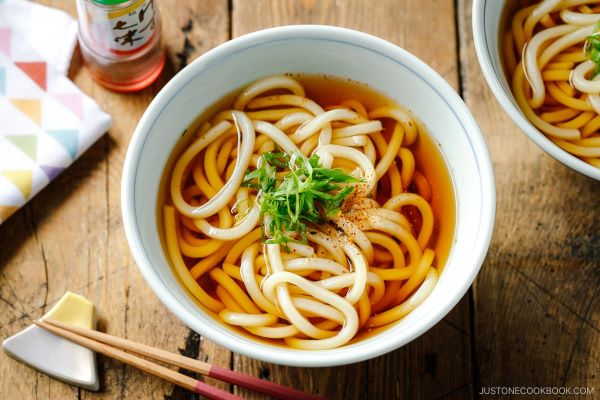
Udon noodle soup is one of the most forgiving yet most revealing dishes in Japanese cooking. The noodles themselves are thick, white, and chewy, made from wheat flour and salt, and their simplicity means they do not hide behind complex flavor. The dashi-based broth, which is made from konbu seaweed and katsuobushi, dried fermented tuna flakes, provides a clear, umami-rich foundation that tastes clean and deeply savory simultaneously.
When both components are right, udon noodle soup is one of the most satisfying bowls of food available at any price point. When either is wrong, the noodles are mushy or the broth is flat and thin, and the simplicity of the dish leaves nowhere to hide. If you have been searching for udon noodle soup near me and finding versions that do not deliver on what the dish should taste like, this guide helps you identify the kitchens making it properly.
What Makes Good Udon Noodle Soup
Two components, both requiring attention.
The noodles. Udon is made from wheat flour, water, and salt, kneaded until the gluten is fully developed and then rested before rolling and cutting. Good udon is thick, firm, and slightly translucent, with a satisfying chewiness that requires a brief moment of resistance before giving way. Fresh udon, made the same day, is noticeably better than refrigerated or frozen udon in both texture and flavor. Properly cooked udon is heated through without becoming soft throughout. Overcooked udon loses its chew and becomes slippery and bland. The benchmark is the al dente equivalent for thick noodles: fully cooked but with clear textural presence.
The broth. Japanese udon broth is based on dashi, a stock made from konbu seaweed and katsuobushi. The konbu provides a clean, slightly oceanic umami depth. The katsuobushi, which is shaved dried tuna, adds a smoky, savory character that is specific to Japanese broth and unlike any other stock tradition. The dashi is then seasoned with soy sauce and mirin in a ratio that produces a broth that is light golden to amber in color, clear, and intensely savory without being salty.
A restaurant that makes its dashi from scratch will produce a broth with a clarity and depth that commercial liquid dashi or instant dashi powder cannot replicate. The aroma alone of a properly made dashi broth tells you something is different from the moment the bowl is placed in front of you.
Common udon toppings. Kake udon is the simplest version: noodles in broth with green onion and nori. Tempura udon adds shrimp or vegetable tempura placed on top. Kitsune udon adds aburaage, fried tofu skin simmered in sweet soy. Tsukimi udon adds a raw egg that poaches in the hot broth. Each addition interacts with the broth in a specific way, and a restaurant that makes multiple udon varieties is committed to the full range of the dish.
When you search for udon noodle soup near me, asking whether the dashi is made from scratch and whether the udon is fresh or frozen are the two most useful questions before ordering.
Where to Find It
Dedicated udon restaurants are the most reliable source. A restaurant whose identity is built entirely around udon, similar to the Sanuki udon shop tradition from the Kagawa prefecture of Japan, will make its noodles fresh, develop its dashi carefully, and offer the full range of udon preparations. These shops exist in major cities and in areas with large Japanese populations.
Japanese noodle restaurants that carry both ramen and udon sometimes produce excellent udon alongside their ramen program. The quality depends on whether the kitchen gives the udon broth the same attention as the ramen broth or treats it as a secondary offering.
Japanese restaurants broadly that carry udon as a menu item should be evaluated based on whether the noodles are house-made or purchased and whether the broth is made from scratch or from commercial concentrate.
Japanese grocery stores with prepared food counters sometimes carry udon noodle soup as a hot food item. These counters are worth checking for a convenient and often authentic option when dedicated udon restaurants are not available.
How to Search More Effectively
A search for udon noodle soup near me will return Japanese restaurants in your area. Here is how to find the ones making it properly:
Search Google Maps for udon restaurant or Japanese restaurant in your city and look specifically for restaurants that identify udon as their primary focus or that describe house-made noodles. A restaurant that makes its udon in-house will typically mention it prominently.
Search Yelp for Japanese restaurants and read reviews that describe the udon noodle texture specifically. Reviewers who know good udon will describe whether the noodles were thick and chewy or thin and soft, and whether the broth had a clear dashi character or tasted flat. These details distinguish a kitchen with proper Japanese broth technique.
Search Instagram with “udon” plus your city name. Japanese restaurants with a strong udon program post bowl photos regularly, and the thick, white, glistening noodles in a clear, golden broth with clean toppings are identifiable in a well-composed food photo.
Ask any Japanese restaurant whether they make their dashi from scratch or use instant dashi. A kitchen making fresh dashi will answer specifically about konbu and katsuobushi. A kitchen using commercial concentrate will either confirm it or give a vague answer.
What Good Udon Noodle Soup Should Look Like
Once you find a source, a few things confirm the quality.
The broth clarity. Clear to light golden, with no cloudiness or murkiness. A properly made konbu and katsuobushi dashi is clear enough to see the bottom of the bowl through the broth. Cloudy or murky broth indicates either the dashi was overextracted or the broth was boiled rather than kept at a gentle simmer.
The broth flavor. Clean, deeply umami, with a slight smokiness from the katsuobushi and a mineral depth from the konbu. The seasoning should be present without the broth tasting primarily of soy sauce. A flat, thin broth without umami depth was made from commercial base or instant dashi.
The noodle texture. Firm and chewy, requiring a brief moment of resistance before yielding. Picking up a noodle with chopsticks should show a thick, slightly springy noodle that holds its shape rather than drooping immediately. Soft, limp noodles were overcooked.
The noodle temperature. Hot throughout, which is essential for a thick noodle that takes time to heat through. A cold center in a thick udon noodle means the noodle was not heated sufficiently before being placed in the broth.
The toppings. Appropriate for the style ordered, fresh, and properly prepared. Tempura should be light and crispy, not soggy. Green onion should be freshly sliced. Aburaage should be properly simmered and sweet.
Ordering and Eating Tips
Order kake udon, the simplest version with only noodles, broth, and green onion, at a new restaurant to evaluate the baseline quality before ordering elaborated versions. The simplest preparation reveals whether the kitchen’s dashi and noodles are worth eating without the complexity of additional toppings masking any weaknesses.
Eat the noodles promptly. Udon noodles continue cooking in the hot broth and will become progressively softer as the bowl sits. The best texture is in the first several minutes of eating.
Add condiments at the table in small amounts rather than all at once. Shichimi togarashi, a Japanese seven-spice blend, and yuzu kosho are common udon condiments that add heat and citrus character. Adding them gradually allows you to find the right balance for your preference.
Drink the broth after finishing the noodles. A properly made dashi broth is worth drinking directly and is one of the clearest indicators of whether the kitchen cares about the dish. A broth that is satisfying to drink plain was made with real dashi.
Pricing Expectations
A bowl of udon noodle soup at a dedicated udon restaurant or Japanese noodle shop typically runs between $12 and $22 depending on the version ordered, the toppings included, and the market. Simple kake udon is at the lower end. Tempura udon and more elaborate versions are at the higher end. Japanese restaurants with a broader menu price udon similarly.
Key Takeaways
- Finding quality udon noodle soup near me is most reliable at dedicated udon restaurants and Japanese noodle shops that make their broth from scratch dashi and use fresh or house-made udon noodles.
- Great udon noodle soup requires two things done correctly: thick, chewy noodles with firm texture, and a clear, deeply umami dashi broth made from konbu and katsuobushi. Both must be right simultaneously.
- Ask whether the dashi is made from scratch and whether the noodles are fresh or frozen. Specific answers about konbu and katsuobushi for the dashi and same-day noodle production confirm quality preparation.
- Clear, golden broth you can see through is the visual marker of properly made dashi. Cloudy broth indicates overextraction or boiling.
- Order kake udon at a new restaurant to evaluate baseline broth and noodle quality without topping complexity masking weaknesses.
- Eat the noodles promptly. Udon continues cooking in the hot broth and softens progressively as the bowl sits.
- Drink the broth after the noodles. A satisfying dashi broth drunk plain confirms the kitchen invested in proper broth technique.
- Expect to pay $12 to $22 depending on the version ordered, with simple kake udon at the lower end and tempura udon at the higher end.