Arepa pabellon is Venezuela’s national dish in portable form. Pabellon criollo, the traditional Venezuelan plate of shredded beef, caraotas negras, white rice, and fried sweet plantains, gets loaded into a split arepa instead of spread across a plate, and the combination of the warm corn bread with all four traditional components produces one of the more complete handheld meals in any food tradition. When the arepa is properly made, when the caraotas are properly seasoned with panela and spice, when the carne mechada has the aji dulce sofrito character of Venezuelan cooking, and when the tajadas are properly ripe and caramelized, an arepa pabellon is worth seeking out with some effort.
If you have been searching for the best arepa pabellon near me, this guide helps you find a Venezuelan restaurant or vendor that makes all the components correctly and assembles them in the right format.
What Arepa Pabellon Actually Is
Arepa pabellon takes its name from pabellon criollo, Venezuela’s national dish, and is an arepa rellena, a stuffed arepa, filled with the four components of that national plate.
The arepa itself. Made from masarepa, precooked white or yellow corn flour, mixed with water and salt and cooked on a dry griddle until golden spots develop on both surfaces, then split open to receive the filling. The arepa for a pabellon should be thick enough to hold all four fillings without collapsing, typically about 1.5 to 2 centimeters deep, and the corn flavor of the arepa provides a neutral but supportive backdrop for the complex fillings.
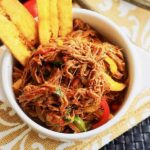
The carne mechada. Shredded beef in the Venezuelan style, which uses a aji dulce sofrito base identical to the one used in other Venezuelan preparations. Flank steak simmered until tender and shredded, then braised in onion, garlic, tomato, aji dulce, and sometimes leek, producing a filling that is similar to Cuban ropa vieja in format but lighter in seasoning and specifically Venezuelan in the aji dulce character.
The caraotas negras. Venezuelan black beans cooked with panela, the unrefined cane sugar block, and seasoned with onion, garlic, and cumin. The panela adds a slight sweetness that distinguishes Venezuelan caraotas from unsweetened black beans. They should be slightly thick in their sauce, creamy from the cooked bean starch, and sweet enough to be detectable as a distinct flavor note against the savory beef.
The tajadas. Fried ripe sweet plantains, fully caramelized and deep golden from a properly ripe plantain fried at the right temperature. The sweetness of the tajadas against the savory beef and beans is the defining contrast of pabellon criollo and must be present for the arepa to fully represent its namesake dish.
The queso blanco. Many versions also add a slice or crumble of fresh white cheese inside the arepa, which adds creaminess and mild saltiness alongside the other fillings. This is optional but traditional in many Venezuelan households and restaurants.
When you search for the best arepa pabellon near me, all four core components being present and properly made is the standard against which you should evaluate any version you find.
Where to Find It
Venezuelan restaurants and areperas are the primary source. Any Venezuelan restaurant or arepera that carries a full selection of arepa rellena options will list arepa pabellon as one of its most important offerings. Venezuela has a strong arepa culture in which the arepa pabellon holds a specific prestige as the most complete and most Venezuelan of the stuffed arepa options.
Venezuelan areperas specifically in cities with Venezuelan communities are the most dedicated sources. These operations focus entirely on arepas and their fillings, and the arepa pabellon is typically the best-selling and most carefully made item on the menu.
Venezuelan home cooks and community vendors selling through Instagram and Facebook are a strong source in cities where dedicated Venezuelan restaurants are scarce. Home cooks who make all four pabellon components from scratch, with properly sweetened caraotas and aji dulce carne mechada, produce versions that are often better than fast-food volume production.
Latin American restaurants with Venezuelan menus that specifically identify Venezuelan dishes and carry arepa options will sometimes carry arepa pabellon alongside other Venezuelan preparations. The quality depends on whether the kitchen makes authentic Venezuelan caraotas with panela and uses aji dulce in the carne mechada.
How to Search More Effectively
A search for the best arepa pabellon near me will surface Venezuelan restaurants and areperas in your area. Here is how to find the ones making all four components properly:
Search Google Maps for Venezuelan restaurant or arepera venezolana in your city and browse menus specifically for arepa pabellon. A menu that lists the four pabellon components explicitly, including caraotas, carne mechada, tajadas, and queso, is making a transparent claim about the complete traditional assembly.
Search Yelp for Venezuelan restaurants and read reviews that mention arepa pabellon specifically. Reviewers who know the dish will describe whether the caraotas were properly sweet, whether the carne mechada had the aji dulce sofrito character, and whether the tajadas were properly caramelized from ripe plantains. These details distinguish a kitchen making authentic Venezuelan pabellon components from one using simplified preparations.
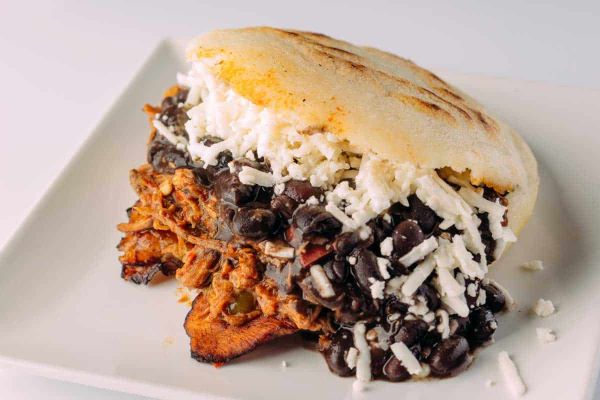
Search Instagram with “arepa pabellon” plus your city name. Venezuelan restaurant accounts and home cook vendors post photos of arepa pabellon regularly, and the cross-section of a split arepa showing the four distinct fillings, with the black caraotas, the shredded beef, the yellow plantain, and the white cheese, is immediately recognizable.
Search Facebook for Venezuelan community groups in your city and ask where to find the best arepa pabellon. Venezuelans are specific about which local arepera or home cook makes the most properly seasoned caraotas and the most authentic carne mechada and will give direct recommendations.
What Good Arepa Pabellon Should Look Like
Once you find a source, a few things confirm the quality.
The arepa itself. Golden spots on both surfaces from griddle contact, thick enough to hold all four fillings when split, with a warm, freshly cooked corn aroma. A properly made arepa for a pabellon has structural integrity when split and filled, not collapsing under the weight of the fillings.
The carne mechada. Long strands of shredded beef in a lightly orange-red sofrito sauce with the characteristic aji dulce sweetness perceptible as a distinct note. The beef should be moist and flavorful from the braising liquid. Plain, unseasoned shredded beef or beef in a generic tomato sauce is not the Venezuelan preparation.
The caraotas negras. Slightly thick in their cooking liquid, dark and slightly glossy, and with a detectable sweetness from the panela. Venezuelan caraotas should be noticeably different from plain unseasoned black beans both in color and flavor. Pale, watery, unsweetened black beans indicate a shortcut preparation.
The tajadas. Deep golden to amber on the cut surfaces, soft inside, and genuinely sweet from the ripe plantain. Underripe plantains that are not sweet or tajadas that are pale from insufficient caramelization miss the sweet contrast that is the defining element of pabellon criollo.
The assembly. All four components present and generously filled. An arepa pabellon that is mostly corn bread with token amounts of each filling is not worth the search. The filling should be generous enough that every bite contains all four components.
Ordering and Eating Tips
Order arepa pabellon as a main course rather than alongside other substantial dishes. With all four pabellon components inside, it is a complete and filling meal on its own.
Eat it immediately. The warm arepa, the warm fillings, and the structural integrity of the corn bread all decline as the arepa cools. An arepa pabellon eaten within five minutes of being assembled is significantly better than one that has been sitting for 15 minutes.
Try to get all four components in every bite. The sweet tajada, the savory beef, the slightly sweet earthy caraotas, and the mild cheese together in one bite from the corn bread provides the complete pabellon flavor experience that eating each component separately does not.
Ask whether the caraotas are made with panela. A Venezuelan kitchen using the traditional sweetened preparation will confirm it. A kitchen using unsweetened beans will either confirm it or give a vague answer about their preparation method.
Pricing Expectations
Arepa pabellon at a Venezuelan restaurant or arepera typically runs between $12 and $20 depending on the size and the market. Areperas in cities with larger Venezuelan communities tend to price at the lower end due to higher volume. Home cook and vendor versions sold through batch orders are typically in the $10 to $16 range.
Key Takeaways
- The best arepa pabellon near me is most reliably found at Venezuelan areperas with full pabellon component menus and through Venezuelan home cook vendors who make all four components from scratch including properly sweetened caraotas.
- Arepa pabellon contains all four traditional pabellon criollo components inside a split grilled arepa: aji dulce-seasoned carne mechada, panela-sweetened caraotas negras, caramelized tajadas from ripe plantains, and usually fresh white cheese.
- The panela sweetness in the caraotas is the most important flavor marker distinguishing Venezuelan caraotas from unsweetened black beans. Ask directly whether panela is used.
- The aji dulce sofrito in the carne mechada is what marks the beef as Venezuelan. A beef that tastes only of tomato without the aji dulce sweetness is not the authentic Venezuelan preparation.
- All four components must be present and generous. An arepa with token amounts of each filling is not worth seeking out.
- Eat immediately. Warm components in a warm arepa with structural integrity is significantly better than a cooled version.
- Search Instagram with “arepa pabellon” plus your city name and check Venezuelan community Facebook groups for specific arepera and home cook recommendations.
- Expect to pay $12 to $20 at a Venezuelan arepera or restaurant and $10 to $16 from a home cook or community vendor.