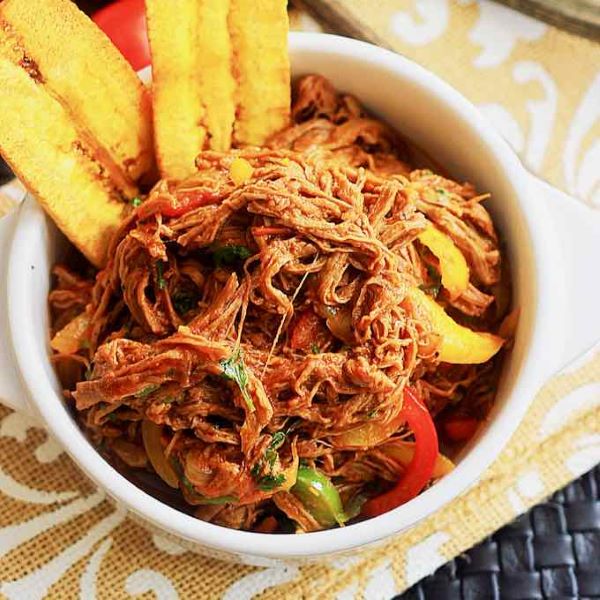
Ropa vieja cubana is arguably the most recognized Cuban dish internationally and the one that sets the standard against which all other versions of shredded beef in Latin American cooking are measured. When it is made properly, it is one of the most complete single dishes in any food tradition: beef flank steak simmered until completely tender and then shredded into long strands, braised in a tomato sauce built on sofrito with bell pepper, onion, garlic, cumin, and white wine, finished with olives and capers that add brine and complexity, and served with white rice and black beans so the sauce ties everything together on the plate.
The name, which means old clothes, refers to the appearance of the shredded beef rather than any quality of the ingredients, and a properly made ropa vieja cubana is one of the furthest things from old or tired. If you have been searching for the best ropa vieja cubana near me, this guide gives you the most direct path to finding a kitchen making it with the technique and seasoning that the dish deserves.
What Ropa Vieja Cubana Actually Is
The Cuban ropa vieja has its roots in the Canary Islands, where a different version of the dish was made with leftover chickpeas and meat, and arrived in Cuba through Spanish immigration. Over centuries, it became thoroughly Cuban, adapting to local ingredients, the Cuban sofrito tradition, and the specific combination of olives and capers that appears across Cuban cooking from picadillo to fricase.
The beef preparation is fundamental. Flank steak or skirt steak, both of which have long grain fibers that separate into strands when fully cooked and then shredded, is the traditional cut. The beef is first simmered in water with aromatics, onion, garlic, bay leaf, and cumin, until completely tender, which takes approximately 90 minutes to two hours depending on the thickness of the cut. The cooking liquid is reserved because it forms the base of the sauce.
The shredded beef is then braised in the sofrito-tomato sauce. The Cuban sofrito for ropa vieja uses onion, green bell pepper, garlic, tomato, and cumin as the primary components. White wine deglazes the sofrito and adds depth. Some versions add dry sherry. The reserved beef broth goes in to build the sauce volume. The shredded beef simmers in this sauce for an additional 20 to 30 minutes, absorbing the sofrito flavors and giving its own flavor back to the sauce in return.
Green olives, either whole or sliced, and capers go in toward the end of cooking. These additions are not optional. The brine from the olives and the vinegary sharpness of the capers provide the acid element that prevents the rich tomato and beef sauce from becoming flat. They also add textural interest that a sauce without them lacks.
When you search for the best ropa vieja cubana near me, the proper shredding of flank steak with long visible strands, the sofrito-based sauce with olives and capers, and the overall depth of flavor from the two-stage cooking process are the markers of a kitchen making it the right way.
Where to Find It
Cuban restaurants are the primary and most reliable source. Ropa vieja cubana appears on virtually every Cuban restaurant menu and is one of the dishes that defines whether a Cuban restaurant has mastered the basics. A restaurant that carries ropa vieja alongside picadillo, vaca frita, and pernil is operating with the full traditional Cuban main course range.
Cuban fondas and casual home-style restaurants in cities with Cuban communities treat ropa vieja as a daily essential that is made in large batches and served as part of a rotating plate program. These informal restaurants often produce the most consistently satisfying versions because the dish is made for a community that knows exactly what it should taste like.
Cuban home cooks and community vendors selling through Instagram and Facebook are a strong source in cities where dedicated Cuban restaurants are limited. Home cooks who describe the two-stage cooking process of first boiling the flank steak and then braising the shredded beef in sofrito are following the traditional Cuban method and will produce a depth of flavor that short-cut versions cannot replicate.
Latin American restaurants with Cuban sections on their menus sometimes carry ropa vieja cubana alongside dishes from other countries. The quality depends on whether the kitchen follows the Cuban preparation with olives, capers, and the two-stage process or makes a simplified version under the same name.
How to Search More Effectively
A search for the best ropa vieja cubana near me will surface Cuban restaurants in your area. Here is how to find the ones making it with proper technique:
Search Google Maps for Cuban restaurant in your city and browse photo sections for ropa vieja photos. Properly shredded flank steak with long, visible strands in a deep orange-red sofrito sauce with green olive pieces visible is immediately distinguishable from chunks of beef in thin tomato sauce in a photo.
Search Yelp for Cuban restaurants and read reviews that specifically mention ropa vieja. Reviewers who know the dish will describe whether the beef was properly shredded into long strands, whether the sofrito flavor was present and complex, and whether the olives and capers were included and detectable. These details distinguish a kitchen using the full traditional recipe from one making a simplified version.
Search Instagram with “ropa vieja cubana” plus your city name. Cuban restaurant accounts and home cook vendors post photos of ropa vieja regularly, and the deep orange-red sauce with visible shredded beef strands and green olive pieces is one of the most characteristic visual presentations in Cuban cooking.
Ask any Cuban restaurant directly what cut of beef they use for ropa vieja and whether they include olives and capers. A kitchen making authentic Cuban ropa vieja will confirm flank or skirt steak and both olives and capers without hesitation.
What Good Ropa Vieja Cubana Should Look Like
Once you find a source and the plate arrives, a few things confirm the quality.
The beef texture. Long, thin, irregular strands that separate when touched with a fork rather than chunks or pieces. The strands should be moist and have absorbed the sofrito sauce throughout rather than being dry with sauce only on the surface. Properly braised shredded flank steak has fibers that pull apart into clean strands following the grain of the original cut.
The sauce color. Deep orange-red from the tomato and sofrito base, slightly thick from the reduction during braising. The sauce should be clearly flavored rather than thin and watery. A thick, deeply colored sauce indicates sufficient cooking time and proper reduction.
The olives and capers. Visible as distinct elements in the sauce, distributed throughout the shredded beef rather than settled at the bottom. Green olives should be identifiable and their brine should be perceptible in the sauce. Capers should provide a separate, sharper acid note. A ropa vieja without these elements is missing essential flavor components.
The sofrito flavor. Present throughout the sauce and in the beef itself from the braising process. Cumin, garlic, green pepper, and the tomato base should be detectable as an integrated whole rather than as separate notes. A flat, underseasoned sauce indicates insufficient sofrito or inadequate cooking time.
The service. Traditionally accompanied by white rice and black beans on the same plate, with the sauce from the ropa vieja mixing with the rice when the plate is assembled. The complete plate with all three components is the intended experience.
Ordering and Eating Tips
Order ropa vieja cubana with white rice and black beans as the traditional accompaniments. Eating the shredded beef with the sauce mixed into the white rice and the black beans alongside produces the intended flavor balance of the Cuban plate.
Ask whether the kitchen uses flank or skirt steak rather than a different beef cut. Both are correct for ropa vieja cubana. Chuck or round, which are common shortcuts, produce a different texture and flavor than the fibrous cuts that shred properly into long strands.
The dish improves with rest. A ropa vieja made and rested for several hours or overnight develops deeper flavor as the shredded beef continues absorbing the sauce. A home cook or vendor version from a previous day is often better than a same-day restaurant version.
Eat the beef, rice, and black beans together in the same bite. The combination of the savory, slightly briny ropa vieja with the starchy white rice and the earthy black beans is the complete Cuban plate experience.
Pricing Expectations
A full plate of the best ropa vieja cubana near me at a Cuban restaurant typically runs between $16 and $26 with rice and beans included. Cuban fondas at the lower end of that range often produce the most satisfying traditional versions. Home cook and vendor versions sold by the portion are typically in the $12 to $18 range.
Key Takeaways
- The best ropa vieja cubana near me is most reliably found at Cuban fondas and traditional restaurants that make it as a daily essential and through Cuban home cook vendors who describe the two-stage flank steak preparation with sofrito, olives, and capers.
- Ropa vieja cubana uses flank or skirt steak simmered until tender and then shredded into long strands, braised in a tomato-sofrito sauce with white wine, green olives, and capers. The two-stage cooking process and the olive and caper additions are what make it Cuban.
- Long, visible strands of shredded beef in a deep orange-red sofrito sauce with identifiable olive pieces are the most immediate quality markers. Chunks of beef in thin tomato sauce indicate a shortcut preparation.
- Olives and capers are not optional. Their absence changes the flavor profile of the dish significantly and indicates a simplified or inauthentic preparation.
- Ask what cut of beef is used. Flank or skirt steak confirms the correct cut. Chuck or round produces a different texture.
- The dish improves with rest. A ropa vieja made and held for several hours or overnight often has more developed flavor than a rushed same-day preparation.
- Eat with white rice and black beans for the complete Cuban plate. The sauce mixing into the rice is part of the intended experience.
- Expect to pay $16 to $26 at a sit-down Cuban restaurant and $12 to $18 per portion from a home cook or community vendor.