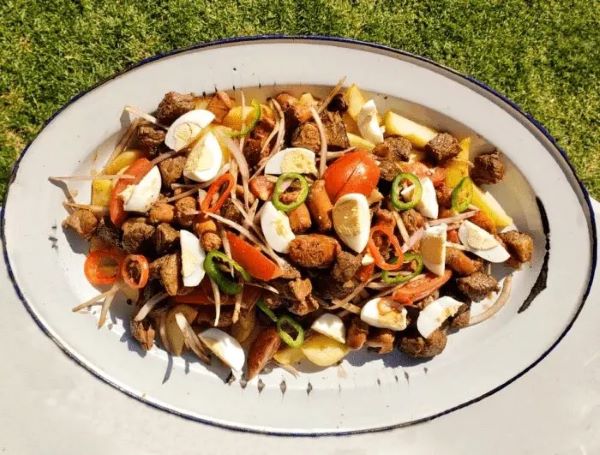
Pique macho is one of those dishes that is almost impossible to describe without underselling it. It is a Bolivian street food and bar dish built on a foundation of french fries piled with sliced beef, sliced hot dog, hard-boiled egg, tomato, onion, and a generous pour of a spicy aji sauce, all served in a single large plate designed to be shared with a group and eaten informally with forks directly from the communal dish. The name suggests bravado, and the eating experience follows through on that suggestion. When it is made properly with tender, well-seasoned beef, properly fried potatoes, and a hot sauce that delivers actual heat, pique macho is one of the more satisfying group eating experiences in any culinary tradition.
If you have been searching for the best pique macho near me and finding almost nothing, that is an accurate reflection of how rarely this very specific Bolivian dish appears outside of Bolivia and Bolivian communities, and this guide gives you the most direct path to finding it.
What Pique Macho Actually Is
Pique macho originated in Cochabamba, Bolivia, where it developed as a late-night and weekend social dish at markets and informal restaurants. The name combines pique, which in Bolivian slang means something like to provoke or challenge, with macho, suggesting the dish is for those who can handle both the quantity and the heat.
The construction of pique macho follows a specific layering. French fries go on the plate first in a generous pile. Sliced beef, typically from a tender cut like sirloin or tenderloin, sauteed with onion and tomato, goes over the fries along with sliced frankfurters or hot dog sausages, which add a different texture and saltiness. Hard-boiled eggs, quartered or sliced, go across the top. The entire construction is finished with sliced tomato, sliced onion, and a generous application of a spicy sauce made from locoto peppers, which are the small, round, intensely hot Bolivian chili related to habanero in heat but with a slightly different fruity flavor profile.
Some versions add additional condiments like ketchup, mustard, or mayonnaise alongside the chili sauce. Some add marinated vegetables. The specific construction varies by restaurant and by tradition, but the core elements of beef, hot dog, fries, egg, and locoto heat are consistent across versions.
The locoto sauce is the element most likely to be compromised outside of Bolivia. Locoto peppers are not widely available outside of Andean markets, and restaurants making pique macho outside of Bolivia often substitute with habanero, aji amarillo paste, or a generic hot sauce. A version made with the correct locoto sauce will have a specific fruity heat that habanero substitutes do not replicate exactly.
When you search for the best pique macho near me, the combination of beef and hot dog over fries, the hard-boiled egg, and the locoto-based heat are the markers of an authentic Bolivian preparation.
Where to Find It
Bolivian restaurants are the primary source, and as with all Bolivian dishes, they are concentrated in cities with established Bolivian communities. Washington D.C., Arlington in Virginia, Providence in Rhode Island, and parts of New York and New Jersey have the most reliable options for pique macho specifically. A Bolivian restaurant that carries fricase, anticucho, and salteñas as core items is also likely to carry pique macho as a social and shareable menu offering.
Bolivian home cooks and community vendors are often the most reliable source in cities without dedicated Bolivian restaurants. Pique macho is a practical batch-prep dish because the components can be prepared separately and assembled to order, which makes it suitable for community events and batch sales. Instagram and Facebook groups for Bolivian expats in your city will surface vendors who make pique macho for weekend events and community gatherings.
Bolivian cultural events and festivals almost always feature pique macho as a centerpiece dish because it is inherently communal and social. Events organized by Bolivian cultural associations around national holidays, particularly Independence Day in August, are reliable sources for finding pique macho made in the traditional Bolivian format.
South American restaurants with broad menus that include Bolivian dishes sometimes carry pique macho. Given how specific the dish is, any restaurant that lists it is worth investigating, though the quality of the locoto sauce and the beef preparation will determine whether it represents the authentic version.
How to Search More Effectively
A direct search for the best pique macho near me will return very limited results in most cities. Here is how to search more productively:
Search Facebook for Bolivian community groups in your city or region. Ask directly whether anyone makes or sells pique macho. This is the single most productive search method for this dish outside of Bolivia. Bolivians who live abroad maintain strong food culture connections and will respond with specific names and contacts.
Search Instagram with “pique macho” plus your city name. Bolivian restaurant accounts and home cook vendors post photos of pique macho when they make it, and the distinctive visual of fries topped with beef, hot dog slices, egg quarters, and chili sauce is immediately identifiable.
Search for Bolivian restaurants in cities within driving distance if none exist locally. A dedicated Bolivian restaurant within a reasonable drive is worth the trip for a dish this specific and this difficult to find.
Contact Bolivian cultural associations in your region. Even in cities without Bolivian restaurants, these organizations know home cooks who make traditional Bolivian food and may be able to connect you with a source for pique macho.
What Good Pique Macho Should Look Like
Once you find a source, a few things confirm the quality.
The fries. Properly fried, golden, and crispy enough to hold some structural integrity under the weight of the toppings. Fries that are pale and soggy before the toppings even go on will be completely collapsed by the time you eat halfway through the plate. A properly made pique macho uses fries that can absorb some of the sauce and meat juices without completely losing their form.
The beef. Tender, thinly sliced, and seasoned with the onion and tomato it was sauteed with. Tough, chewy beef means either the wrong cut was used or it was cooked too long. The beef should be identifiable as a distinct and flavorful component rather than just a protein presence in the pile.
The hot dog. Sliced into rounds and either sauteed or included warm, distributed through the pile. The hot dog is not an afterthought but a structural component that adds a specific salty, smoky note different from the beef.
The egg. Hard-boiled, fully set, and quartered or sliced with a yolk that is fully set but not green-rimmed. A green-ringed yolk means overcooking.
The heat. Genuine and present, coming from the chili sauce applied generously over the entire construction. A pique macho without real heat has missed the point of the dish. The locoto or its substitute should produce a warmth that builds as you work through the plate.
Ordering and Eating Tips
Order pique macho as a shared dish for two to four people rather than as an individual main course. The format is inherently communal and the portion sizes reflect this. Ordering one for a single person produces more food than most people can eat and misses the social eating experience the dish is designed for.
Eat directly from the communal plate with individual forks, which is the traditional Bolivian eating format for this dish. Serving it out onto individual plates is acceptable but changes the eating dynamic.
Work from the edges toward the center as you eat. The fries at the outside of the plate will be most accessible and the layers will become more integrated as you work toward the center where the toppings have concentrated.
Apply additional hot sauce if the restaurant or vendor provides it. Pique macho is designed to be eaten with heat as a constant presence, and having more chili sauce available at the table is standard in Bolivian contexts.
Pricing Expectations
Pique macho at a Bolivian restaurant typically runs between $18 and $28 as a shared plate for two to four people. Home cook and community vendor versions sold for events or pickup are often priced in the $15 to $25 range for a full plate. The price reflects the multiple protein components and the labor of preparing each separately before assembly.
Key Takeaways
- The best pique macho near me is most reliably found through Bolivian community Facebook groups and Instagram vendors rather than through standard restaurant searches, since dedicated Bolivian restaurants are rare outside of a few specific cities.
- Pique macho is a Bolivian communal dish of french fries topped with sauteed beef, sliced hot dog, hard-boiled egg, tomato, onion, and a generous locoto chili sauce. It is street food and bar food designed to be shared from a single plate.
- The locoto chili sauce is the defining heat element. Outside of Bolivia, locoto is often substituted with habanero or aji amarillo, which produces a different but still acceptable heat if the quantity is sufficient.
- Facebook community groups for Bolivian expats in your city are the single most productive search channel for this dish in most cities.
- Order as a shared plate for two to four people. The format is inherently communal and the portions reflect group eating rather than individual service.
- Crispy fries that can hold some structural integrity under the toppings, tender seasoned beef, and genuine heat from the chili sauce are the three primary quality markers.
- Search Instagram with “pique macho” plus your city name and look for Bolivian cultural events organized around national holidays for reliable access to authentic versions.
- Expect to pay $18 to $28 for a shared plate at a Bolivian restaurant and $15 to $25 from a home cook or community vendor.