Ensaladilla rusa is one of the most ordered tapas in Spain and one of the most frequently made badly. In a tapas bar from Madrid to Seville, it appears on almost every menu as a default cold tapa alongside olives and patatas bravas, which also means it is one of the tapas most commonly produced with minimal care. A properly made ensaladilla rusa uses freshly boiled potato and carrot still with some bite, quality canned tuna or cooked vegetables, properly cooked eggs without green-ringed yolks, and a mayonnaise that has been made in-house with good olive oil rather than squeezed from a commercial bottle.
When all of those elements come together and the dish is served at the right temperature, it is one of the most satisfying cold tapas on any menu. Finding the best tapas ensaladilla rusa near me means knowing which bars and restaurants treat it as a serious preparation rather than an afterthought.
What Ensaladilla Rusa Actually Is
The name, which means Russian salad in Spanish, references the dish’s origin in 19th century Russia, where it was created by Belgian-born chef Lucien Olivier at a Moscow restaurant. The original was an elaborate composed salad with numerous ingredients including grouse and crayfish. As the dish traveled through Europe and into Spanish cooking, it simplified into the potato and vegetable mayonnaise salad that Spanish bars now consider a national institution.
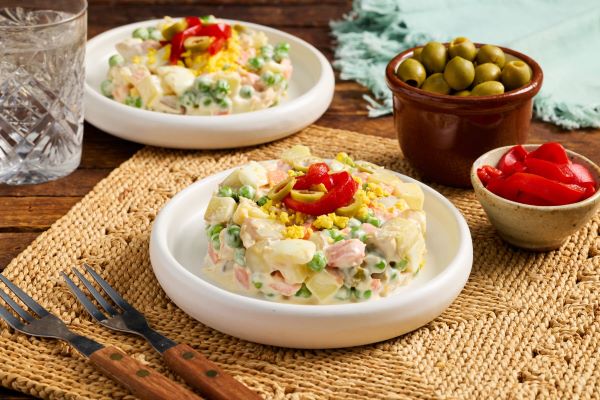
The Spanish ensaladilla rusa uses a specific combination of ingredients that has become standard across the country: diced potato, diced carrot, peas, green beans in some versions, canned tuna or strips of cooked white fish, hard-boiled egg, and a mayonnaise dressing. Some regions add roasted red pepper, olives, or anchovies. The entire composition is bound with enough mayonnaise to coat everything evenly and served cold.
The mayonnaise is the element that most dramatically separates a great ensaladilla rusa from a mediocre one. House-made aioli or mayonnaise made with good Spanish olive oil, egg, lemon, and salt has a richness, slight bitterness from the olive oil, and brightness from the lemon that commercial mayonnaise cannot replicate. A tapas bar that makes its own mayonnaise for ensaladilla rusa is making a conscious investment in quality that shows immediately in the flavor.
The vegetable preparation matters almost as much. Potato that is boiled until just tender and still holds its shape when diced produces a better textural experience than potato that has been cooked until soft and fallen apart. Carrot that is still slightly firm adds a pleasant bite against the softer potato. Peas that are bright green and tender rather than olive-colored and mushy confirm fresh or properly cooked frozen vegetables.
When you search for the best tapas ensaladilla rusa near me, the freshness of the vegetable preparation, the quality of the mayonnaise, and the proper temperature of the finished dish are the three most important quality variables.
Where to Find It
Spanish tapas bars with traditional menus are the most reliable source. A bar that has been serving ensaladilla rusa as a permanent menu item for decades and has developed a consistent recipe is likely to produce a better version than a newer establishment that added it to a tapas list without establishing a clear house recipe.
Spanish restaurants with Andalusian or Castilian focus sometimes treat ensaladilla rusa as a serious preparation rather than a default item. A restaurant that describes its cooking as traditional Spanish or cocina de siempre, meaning traditional home cooking, will typically approach ensaladilla rusa with more care than a trendy tapas concept.
Spanish delis and prepared food counters in cities with Spanish communities sometimes carry ensaladilla rusa as a prepared item sold by weight. These counters are worth checking when restaurant options are limited, though the quality depends on when the salad was prepared and whether the mayonnaise is house-made.
Spanish cultural events and community dinners sometimes feature ensaladilla rusa as part of a cold tapas spread. Events organized by Spanish cultural associations are worth attending for home-cook versions that often exceed restaurant quality.
How to Search More Effectively
A search for the best tapas ensaladilla rusa near me will surface Spanish restaurants and tapas bars in your area. Here is how to find the ones making it properly:
Search Google Maps for Spanish restaurant or tapas bar in your city and browse menu descriptions. A menu that describes ensaladilla rusa with specific ingredients, particularly one that mentions house-made mayonnaise or aioli, is making a claim about preparation quality worth investigating.
Search Yelp for Spanish restaurants and read reviews that specifically mention ensaladilla rusa. Reviewers who know the dish will describe whether the vegetables were properly cooked, whether the mayonnaise was house-made or commercial, and whether the dish was served at the right temperature. These details distinguish kitchens that care about the preparation from those treating it as a filler tapa.
Search Instagram with “ensaladilla rusa” plus your city name. Spanish restaurant accounts that take their cold tapas program seriously post photos of their ensaladilla rusa, and a properly made version, presented neatly with visible vegetable components and a generous coating of house mayonnaise, is visually different from a commercial version scooped from a commercial container.
Ask any Spanish restaurant directly whether they make their mayonnaise in-house. A tapas bar making its own mayonnaise will confirm it readily and may describe the olive oil they use. A bar using commercial mayonnaise will confirm it or give a vague answer. This single question predicts quality more reliably than any other factor for this specific tapa.
What Good Ensaladilla Rusa Should Look Like
Once you find a source and the tapa arrives, a few things immediately confirm the quality.
The mayonnaise. Slightly yellow or ivory from the olive oil rather than stark white like commercial mayonnaise, with a texture that is thick but not stiff, coating all the ingredients rather than pooling at the bottom. The flavor should have the slight bitterness of olive oil and the brightness of lemon juice. Commercial mayonnaise tastes primarily of neutral oil and vinegar and has a characteristically homogenous, very white appearance.
The potato. Holding its shape distinctly in small, even cubes, tender throughout but not crumbling. Each piece should be identifiable as a discrete cube rather than a soft mass of potato that has merged with the surrounding mayonnaise. Properly cooked potato for ensaladilla rusa is cooked until just done, not until soft.
The carrot. Slightly firmer than the potato, bright orange, cut into small even pieces. Carrot that is completely soft and has no texture distinction from the potato was overcooked. Carrot that is still quite firm and crunchy was undercooked.
The peas. Bright green, round, and with their shape intact. Olive-colored, collapsed peas confirm either overcooking or canned peas of low quality. Bright peas confirm proper cooking or quality frozen peas properly thawed.
The egg. Visible as distinct pieces, either sliced or chopped, with a fully set yolk that is yellow without any green rim. A green ring confirms overcooking and a slightly sulfurous flavor note.
The serving temperature. Cold but not refrigerator-cold. An ensaladilla rusa served at a temperature where you can feel the cold of the bowl is at the right temperature. One served so cold that the mayonnaise is firm and the flavors are muted was either just removed from a very cold refrigerator or was stored at too low a temperature.
Ordering and Eating Tips
Order ensaladilla rusa as a shared tapa at the start of a Spanish meal. It works well alongside olives, jamón, and patatas bravas as part of a spread of cold and hot tapas before a main course.
Ask the server to bring it at room temperature if it seems to have been sitting in cold storage. Very cold ensaladilla tastes flat and the olive oil in the mayonnaise loses its flavor complexity when cold.
Use bread to scoop the ensaladilla rusa rather than a fork alone. The combination of bread, mayonnaise, potato, and tuna in one bite is the intended eating experience at a Spanish tapas bar, and eating it with a fork alone misses the texture contribution of bread against the mayonnaise dressing.
Ask whether the version includes tuna or fish. Some vegetable-only versions exist, particularly in regions where the seafood variation is less traditional. Knowing whether the protein component is present helps set flavor expectations.
Pricing Expectations
A tapa portion of ensaladilla rusa at a Spanish tapas bar or restaurant typically runs between $8 and $16 depending on the portion size and the market. Bars that make their own mayonnaise and use quality tuna tend to be at the higher end of that range. Traditional tapas bars with standard pricing tend to offer it closer to $8 to $12. Spanish deli counter versions sold by weight are typically $6 to $10 per portion.
Key Takeaways
- The best tapas ensaladilla rusa near me is most reliably found at Spanish tapas bars with traditional long-standing menus, particularly those that make their own mayonnaise or aioli from olive oil rather than using commercial product.
- Ensaladilla rusa is a Spanish potato and vegetable salad bound with mayonnaise, typically including carrot, peas, canned tuna, and hard-boiled egg. The mayonnaise quality is the single most important differentiating factor between a great and a mediocre version.
- House-made mayonnaise from Spanish olive oil is slightly yellow or ivory in color, has a slight olive oil bitterness, and a lemon brightness. Commercial mayonnaise is stark white and tastes primarily of neutral oil and vinegar.
- Properly cooked potato and carrot that hold their shape in distinct cubes, bright green peas, and hard-boiled egg without a green yolk ring are the vegetable quality markers.
- Ask directly whether the mayonnaise is made in-house. A confident, specific answer predicts quality more reliably than any other factor for this specific dish.
- Serve and eat at cool but not refrigerator-cold temperature. Very cold ensaladilla has muted flavors and a stiff mayonnaise texture.
- Use bread to scoop along with a fork. The bread and mayonnaise combination is part of the intended eating experience at a Spanish tapas bar.
- Expect to pay $8 to $16 as a tapa portion at a Spanish restaurant, with house-made mayonnaise versions at the higher end of that range.