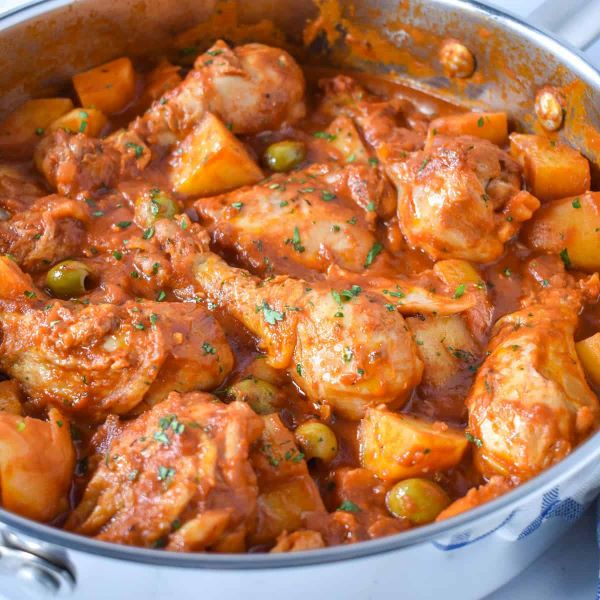
Fricase de pollo is one of the most comforting and least celebrated dishes in Cuban cooking, which is a problem because a properly made version is one of the more complete meals you can find at any Cuban restaurant. It is chicken braised in a tomato-based sauce with wine, olives, capers, and potato, cooked slowly until the chicken is completely tender and the sauce has reduced into something rich and complex that carries the flavor of the chicken along with the brine from the olives and the brightness from the capers. It is not a flashy dish.
It does not photograph particularly dramatically. But people who grew up eating it understand immediately why it is on every Cuban abuela’s rotation, and people who encounter it for the first time are often surprised by how much is happening in a bowl that looks like a simple chicken stew. If you have been searching for the best fricase de pollo near me, this guide gives you a clear path to finding it.
What Fricase de Pollo Actually Is
Cuban fricase de pollo is a braised chicken dish that shares some structural DNA with Spanish chicken preparations but has developed its own character through the Cuban culinary tradition. The preparation starts with bone-in chicken pieces, typically thighs and drumsticks, browned in oil to develop color before anything else goes into the pot. This browning step is what builds the depth of flavor in the finished sauce and is one of the steps most commonly skipped by restaurants cooking at volume.
The sofrito base of onion, garlic, green bell pepper, and tomato is cooked in the same pot after the chicken, picking up the browned bits from the bottom. White wine or dry sherry goes in for deglazing, then canned or fresh tomatoes, chicken stock, and the chicken returns to the pot. The braise continues at low heat until the chicken is completely tender.
The olives and capers go in toward the end of cooking, which preserves their distinct flavors rather than dissolving them into the sauce over the full braise. Green olives, stuffed with pimiento or plain, add a specific briny note that is one of the flavor signatures of this dish. Capers add a sharp, vinegary brightness. The combination of these two briny elements against the rich tomato and chicken sauce is what makes fricase de pollo taste specifically Cuban rather than generically Latin.
Potato is added mid-braise in the traditional version and cooks until completely tender, absorbing the flavored braising liquid and becoming one of the most flavorful things on the plate.
When you search for the best fricase de pollo near me, the browning of the chicken before braising, the presence of both olives and capers in the sauce, and the potato cooked in the braising liquid are the markers of a kitchen following the traditional preparation.
Where to Find It
Cuban restaurants are the primary and most reliable source. Fricase de pollo appears on traditional Cuban restaurant menus alongside ropa vieja, picadillo, and arroz con pollo, and a restaurant with a comprehensive Cuban home-cooking menu will treat it as a serious preparation. Restaurants that rotate daily specials in the Cuban fonda tradition are particularly likely to carry it as a featured dish.
Cuban fondas and casual home-style restaurants in cities with Cuban communities are often the best source. These informal Cuban restaurants serve rotating daily plates that reflect what is being made fresh that day, and fricase de pollo appears regularly in this format because it is practical to make in large quantities and improves with time in the sauce.
Cuban home cooks and community vendors selling through Instagram and Facebook are a strong source in cities where dedicated Cuban restaurants are scarce. Home cooks who make fricase de pollo as a batch order will often make it the way the dish has been made in Cuban households for generations, with proper browning, real wine, and generous olives and capers.
Latin American restaurants with broad Caribbean menus sometimes carry fricase de pollo as a daily special or rotating menu item. Look for restaurants that specifically mention Cuban dishes or that have strong connections to Cuban culinary tradition.
How to Search More Effectively
A search for the best fricase de pollo near me will surface Cuban restaurants in your area. Here is how to find the ones making it properly:
Search Google Maps for Cuban restaurant in your city and browse menu descriptions for fricase de pollo. A menu description that mentions olives, capers, wine, or potato in the dish description indicates a kitchen following the traditional preparation rather than making a simplified version.
Search Yelp for Cuban restaurants and read reviews that mention fricase de pollo. Reviewers who know the dish will describe whether the sauce had the right briny depth from the olives and capers, whether the chicken was properly tender, and whether the potato was included and flavorful. These details distinguish a kitchen that made it carefully from one using a simplified recipe.
Search Instagram with “fricase de pollo” plus your city name. Cuban restaurant accounts and home cook vendors post photos of this dish, and a properly made version with visible olive pieces, a rich orange-red sauce, and potato pieces in the bowl is recognizable in a photo.
Search Facebook for Cuban community groups in your city and ask where to find fricase de pollo. Cuban community members will give you specific recommendations for which restaurant or home cook makes the most authentic version with the traditional briny elements.
What Good Fricase de Pollo Should Look Like
Once you find a source and the plate arrives, a few things confirm the quality.
The sauce color. Deep orange-red from the tomatoes and the browning of the chicken, slightly darker than a fresh tomato sauce because the braise has reduced and concentrated the flavors. A pale or very thin sauce means the braise did not run long enough or the browning step was skipped.
The chicken. Completely tender, releasing from the bone with minimal pressure, and having absorbed the flavors of the braising liquid throughout the meat rather than only on the surface. A piece of chicken that is still firm and requires effort to remove from the bone was not braised long enough.
The olives and capers. Visible as distinct components in the sauce, not completely dissolved into the liquid. Green olives should be present and their brine flavor should be clearly perceptible in every spoonful that contains one. The capers add a separate, sharper brightness that complements the olives rather than duplicating them.
The potato. Fully cooked through and slightly crumbling at the edges from the braise, having absorbed the colored sauce and the chicken fat during cooking. The potato should taste of the braising liquid rather than of plain boiled potato.
The depth of flavor. The sauce should taste of the sofrito, the wine, the tomato, the chicken, the olives, and the capers in combination, not of any single one of these elements exclusively. A well-braised fricase has a complexity that emerges from the interaction of all components over the cooking time.
Ordering and Eating Tips
Order fricase de pollo as a main course with white rice and either black beans or fried plantains as the traditional Cuban accompaniments. The sauce from the braise is one of its best parts and is specifically designed to be soaked up by rice.
Ask whether the chicken is bone-in or boneless. Bone-in chicken produces a richer sauce because the collagen from the bones dissolves into the braising liquid, adding body and depth. Boneless chicken is easier to eat but produces a less complex sauce.
Eat the potato and the sauce together in the same bite as the chicken. The potato has absorbed the braising liquid and the combination of the flavored potato with the sauce and the chicken is more complete than eating each component separately.
The dish reheats well. Fricase de pollo, like most braises, develops more depth of flavor after a day of resting in the refrigerator. A home cook or vendor version from a previous day’s batch is often better than a same-day restaurant version.
Pricing Expectations
A full plate of the best fricase de pollo near me at a Cuban restaurant typically runs between $16 and $24 depending on the market and the restaurant. Cuban fondas at the lower end of that range often produce the most honest and traditional versions. Home cook and vendor versions sold by the portion are typically in the $12 to $18 range.
Key Takeaways
- The best fricase de pollo near me is most reliably found at Cuban fondas and traditional restaurants that rotate home-style daily plates, and through Cuban home cook vendors who follow the traditional recipe with wine, olives, capers, and potato.
- Cuban fricase de pollo is chicken braised in a sofrito and tomato sauce with white wine, green olives, capers, and potato. The combination of briny olives and sharp capers in the sauce is the flavor signature that distinguishes the Cuban version from other braised chicken preparations.
- Proper browning of the chicken before braising builds the depth of the finished sauce. A pale or thin sauce indicates the browning step was skipped.
- Both olives and capers should be present and distinctly perceptible in the sauce. Their absence makes the dish taste like a simpler tomato-braised chicken rather than the specific Cuban preparation.
- Ask whether the chicken is bone-in. Bone-in pieces produce a richer, more complex sauce from the dissolved collagen.
- The dish improves with rest. A home cook batch from a previous day often has more developed flavor than a same-day restaurant version.
- Search Instagram with “fricase de pollo” plus your city name and check Cuban community Facebook groups for specific restaurant and vendor recommendations.
- Expect to pay $16 to $24 at a sit-down Cuban restaurant and $12 to $18 per portion from a home cook or community vendor.