Fabada asturiana is one of the great bean stews of the world, and that is not a claim made lightly. The combination of large, creamy Asturian faba beans cooked slowly with Spanish chorizo, morcilla, lacón, and tocino until the beans are completely tender and the cooking liquid has absorbed all the fat and flavor from the cured meats produces a bowl of food that is simultaneously rustic and deeply complex.
It is cold-weather food from Asturias, the green, rainy region in northern Spain, and it has the weight and richness of a dish designed to sustain people through hard physical work in a cold climate. Finding the best fabada bean stew near me outside of Asturias requires knowing where to look and what a properly made version actually tastes like when all the elements are right.
What Fabada Asturiana Actually Is
The name comes from the faba asturiana, a large, white, butter-smooth bean grown specifically in Asturias and protected by EU designation of origin status. These beans are plumper, creamier, and more delicate in skin than almost any other white bean variety, and they are one of the central reasons why a properly made fabada is different from any other white bean and sausage stew.
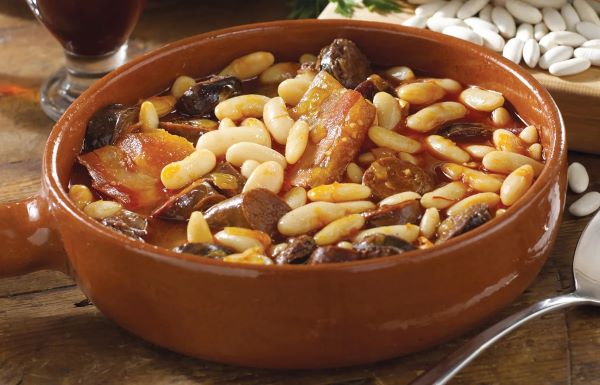
The compango is the collective term for the cured meat components that cook alongside the beans. Traditional fabada uses at least three types: chorizo asturiano, a firm cured pork sausage with pimenton and garlic; morcilla asturiana, a blood sausage seasoned with onion; and lacón, which is cured pork shoulder, sometimes accompanied by tocino, cured fatback. Together these meats release their fat, spice, and gelatin into the bean cooking liquid, producing a broth that is red-orange from the chorizo pimenton, slightly smoky, and deeply savory.
The preparation requires patience. The beans must be soaked overnight. The compango is added to the pot with the beans from the beginning, not as a finishing element. The entire pot simmers gently for two to three hours, during which the beans become completely tender without losing their shape, and the broth becomes so rich that it coats a spoon. The traditional technique calls for periodic cold water additions during cooking, called asustar, which regulates the temperature and helps prevent the bean skins from bursting.
The finished fabada is thick, deeply orange-red from the pimenton in the chorizo, and served in deep bowls with the whole beans and pieces of the compango visible. It is traditionally eaten as a midday meal rather than a dinner.
When you search for the best fabada bean stew near me, the use of faba beans or a comparable large white bean, the presence of all three compango elements, and the long slow cooking that produces a thick, richly colored broth are the markers of a kitchen taking the dish seriously.
Where to Find It
Spanish restaurants with Asturian or northern Spanish menus are the primary source. A restaurant that specifically identifies Asturian cooking or northern Spanish cuisine in its menu description is more likely to carry fabada as a serious preparation than a general tapas bar.
Spanish restaurants with cocina de cuchara menus are worth seeking out. This term, which translates as spoon food, refers to the tradition of hearty bean and vegetable stews that are central to Spanish home cooking across many regions. A restaurant that describes its cooking in these terms will often carry fabada when the season is right.
Canned fabada from established Spanish producers is available at Spanish specialty food stores and online retailers and represents a practical and surprisingly good alternative for cities without Spanish restaurants making it from scratch. Brands like La Pote and Litoral produce canned fabada from Asturian ingredients that, while not identical to a restaurant version made over several hours, is genuinely good food.
Spanish cultural events and food festivals with northern Spanish or Asturian representation sometimes feature fabada as a featured dish. Events organized by Spanish cultural associations with Asturian membership are worth checking specifically for this preparation.
How to Search More Effectively
A direct search for the best fabada bean stew near me will surface Spanish restaurants in your area. Here is how to find the ones making it properly:
Search Google Maps for Spanish restaurant and filter for those that mention Asturias, northern Spanish, or spoon food menus. Browse menus for fabada under the soups or stews section. A menu description that mentions the specific cured meat components of the compango indicates a kitchen following the traditional preparation.
Search Yelp for Spanish restaurants and read reviews that mention fabada. Reviewers who know the dish will describe whether the broth was properly thick and pimenton-colored, whether the beans were large and creamy, and whether the chorizo and morcilla were present and flavorful. These details distinguish a kitchen that made it properly from one serving a simplified version.
Search Instagram with “fabada” plus your city name. Spanish restaurant accounts that make fabada with proper attention to the compango and the bean quality post photos of the finished dish, and the deep orange-red broth with whole white beans and visible sausage pieces is immediately identifiable.
Ask any Spanish restaurant whether they use faba beans or another large white bean and whether the compango includes chorizo, morcilla, and lacón. A kitchen making a proper fabada will describe its compango specifically.
What Good Fabada Bean Stew Should Look Like
Once you find a source, a few things confirm the quality.
The broth color. Deep orange-red from the pimenton in the chorizo and morcilla, slightly opaque from the starch released by the beans and the fat from the cured meats. A pale, clear broth means the compango was insufficient or the cooking time was too short for the colors and flavors to fully develop.
The beans. Large, plump, completely tender throughout, with skins that are intact rather than burst open. Faba beans at the correct cooking stage have a creamy, almost buttery interior that dissolves slightly against the palate. Beans that are still slightly firm were undercooked. Beans that are completely falling apart and mushy were overcooked.
The compango pieces. Visible in the bowl alongside the beans, with each type of cured meat identifiable. Chorizo rounds should have maintained their form. Morcilla slices should be intact. Lacón pieces should be tender and giving. Each type contributes a different flavor note, and all three should be present in the bowl.
The broth consistency. Thick enough to coat the beans and to have a slight body from the dissolved bean starch and rendered fat. Watery broth means the cooking time was insufficient or too much water was used relative to the beans and meat.
The richness. Fabada is a rich dish. There should be visible fat droplets on the surface from the rendered chorizo and tocino, and the overall impression of the broth should be deeply savory and slightly smoky from the pimenton. A lean, low-fat version that has had its fat removed is a different and less satisfying dish.
Ordering and Eating Tips
Order fabada as a main course for a midday meal rather than a dinner. It is heavy food that follows the Spanish tradition of eating the largest meal in the middle of the day. As a dinner dish it sits heavily and is better suited to colder evenings than to summer dining.
Ask the server when the fabada was made. Fabada, like most bean stews, improves significantly after a day of resting because the flavors continue to develop and the broth becomes more cohesive. A version made the previous day and reheated is often better than one made the same morning.
Eat with good crusty bread for soaking the broth. This is the traditional accompaniment and the bread-to-broth interaction at the bottom of the bowl is one of the better parts of eating fabada.
Pair with a glass of sidra asturiana, Asturian cider, if the restaurant carries it. The slightly tart, low-alcohol cider cuts through the richness of the fabada in a way that was specifically developed over generations of Asturian eating culture. A light red wine from the region also works well.
Pricing Expectations
A full bowl of the best fabada bean stew near me at a Spanish restaurant typically runs between $18 and $30 as a main course depending on the market and the restaurant’s positioning. The price reflects the cost of proper cured meat compango and the long preparation time. Good quality canned fabada from a Spanish specialty food store runs between $8 and $16 per can, serving one to two people.
Key Takeaways
- The best fabada bean stew near me is most reliably found at Spanish restaurants with Asturian or northern Spanish menus that specifically describe the compango components, and at Spanish specialty food stores that carry quality canned fabada from established Asturian producers.
- Fabada asturiana is a slow-simmered stew of large white beans with chorizo, morcilla, and lacón cooked until the broth becomes deep orange-red from the pimenton and thick from the dissolved bean starch and rendered fat.
- The deep orange-red broth color confirms proper compango and sufficient cooking time. Pale broth means insufficient sausage or too short a cook.
- Ask whether the compango includes all three traditional components: chorizo, morcilla, and lacón. A kitchen making a proper fabada will list them specifically.
- Good quality canned fabada is a legitimate option for cities without Spanish restaurants making it from scratch. This is one of the few dishes where a quality canned version is genuinely close to the restaurant original.
- Fabada improves with a day of rest. A reheated version made the previous day often has more developed flavor than one made the same morning.
- Pair with Asturian sidra or a light red wine and eat with crusty bread for soaking the broth.
- Expect to pay $18 to $30 at a Spanish restaurant for a properly made version.