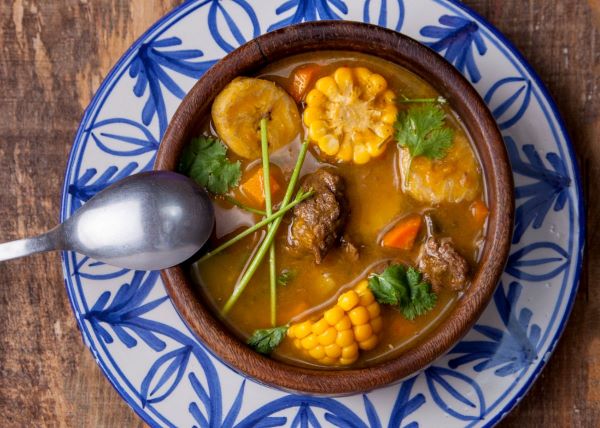
Sancocho colombiano is one of those dishes that functions differently depending on where you encounter it. In Colombia, it is the meal you make when feeding a crowd, when recovering from a difficult night, or when the family comes together on a Sunday. It is a long-simmered soup of chicken, pork ribs, or a combination of meats with plantain, yuca, corn on the cob, and potatoes, built in a large pot over several hours until the broth becomes rich and slightly cloudy from the starch released by the root vegetables.
It is not a complicated dish in terms of technique. It is a dish that requires patience and good ingredients and a pot large enough to do it properly. Finding the best sancocho colombiano near me outside of a Colombian kitchen or a dedicated Colombian restaurant means knowing where to look and what a well-made version actually tastes like.
What Sancocho Colombiano Actually Is
Sancocho is a broad category of slow-cooked meat and vegetable soups that exists across the Caribbean and Latin America, and the Colombian version has specific characteristics that distinguish it from Dominican, Puerto Rican, or Venezuelan sancochos.
The Colombian sancocho uses a combination of proteins and starchy vegetables that varies by region. The most common national versions include:
Sancocho de pollo, which uses chicken pieces, is the most widely made at home and in restaurants. It is lighter in color and flavor than versions using pork or beef but is still substantial from the vegetable starch.
Sancocho de tres carnes, which uses three meats, typically chicken, pork ribs, and beef, is the most celebratory and substantial version, common at large family gatherings.
Sancocho costeño from the Caribbean coast adds coconut milk to the broth, producing a richer and distinctly different character from the interior versions.
All Colombian sancochos share a base of sofrito with onion, garlic, cilantro, and cumin, a long simmering time to build broth depth, and the standard vegetable combination of green plantain, ripe plantain in some versions, yuca, corn on the cob cut into rounds, and potato. The yuca and plantain release starch into the broth during cooking, thickening it slightly and giving the soup its characteristic body.
The cilantro is a defining flavor. A Colombian sancocho without sufficient cilantro lacks the herb brightness that lifts what would otherwise be a purely starchy, savory broth.
When you search for the best sancocho colombiano near me, the depth of the broth from a long simmer, the presence of yuca and green plantain alongside the corn and potato, and the cilantro and cumin flavor running through the soup are the primary quality markers.
Where to Find It
Colombian restaurants are the primary source. Sancocho colombiano appears on Colombian restaurant menus as a main course soup, often available on weekends when the kitchen has time to prepare it properly. A restaurant that lists sancocho as a daily or weekend special rather than a permanent fixed menu item is likely making it fresh in the traditional format rather than preparing it in quantity from a base.
Colombian fondas and casual lunch spots in cities with Colombian communities are often the best source. These informal restaurants serve rotating daily plates and sancocho is a standard weekend offering that draws Colombian families specifically because they know the restaurant makes it the right way.
Colombian home cooks and community vendors are a strong source in cities without dedicated Colombian restaurants. Sancocho is a practical dish to make in large quantities and sell by the container, and Colombian home cooks who make it properly for community sales often produce a broth with more depth than restaurant versions made under time pressure.
Colombian cultural events and community gatherings almost always feature sancocho as a centerpiece dish. The large-pot format and communal serving style make it ideal for events, and the versions served at community gatherings organized by Colombian associations are typically made by experienced home cooks who have been making this dish for decades.
How to Search More Effectively
A direct search for the best sancocho colombiano near me will surface Colombian restaurants in your area. Here is how to identify the ones making it properly:
Search Google Maps for Colombian restaurant in your city and browse menus for sancocho. A restaurant that lists the specific type, sancocho de pollo or sancocho de tres carnes, with the component vegetables described in the menu is making it with enough attention to detail to distinguish it from generic chicken soup.
Search Yelp for Colombian restaurants and read reviews that mention sancocho. Reviewers will describe whether the broth was rich and deeply flavored, whether the yuca and plantain were properly cooked, and whether the cilantro flavor was present. These details appear consistently in reviews from diners who order this dish specifically.
Search Instagram with “sancocho colombiano” plus your city name. Colombian restaurant accounts and home cook vendors post photos of sancocho in large pots and serving bowls, and the distinctive combination of corn rounds, yuca, and chicken visible in the broth is identifiable in photos.
Search Facebook for Colombian community groups in your city and ask where to find the best sancocho colombiano. This question generates strong, opinionated responses from community members who take this dish seriously and will give you specific recommendations.
What Good Sancocho Colombiano Should Look Like
Once you find a source, a few things confirm the quality.
The broth. Slightly cloudy and golden to light brown, with visible fat dots on the surface from the meat and sofrito. The broth should smell deeply of cilantro and cumin when the bowl is placed in front of you. A pale, clear broth with no depth of color or aroma was not simmered long enough for the collagen from the meat and the starch from the vegetables to enrich it properly.
The yuca. Fully cooked and tender throughout, with a slightly waxy quality that distinguishes it from potato. Yuca takes longer to cook than potato and a sancocho where the yuca is still tough or fibrous was not given enough time. A properly cooked yuca piece should yield to light pressure and have a slightly creamy interior.
The corn. Cooked through with the kernels fully softened but the cob holding its structure. The corn absorbs flavor from the broth during cooking and should taste of the soup rather than of plain boiled corn.
The cilantro. Present throughout the broth and as a fresh garnish on top. The herb should be a dominant aromatic element, not a decorative sprig. A sancocho without cilantro flavor in the broth was either made with insufficient cilantro or with the herb added too late to infuse the liquid.
The meat. Tender enough to fall from the bone without resistance for chicken, or easily pulled apart for pork or beef. The meat should have given flavor to the broth during the long simmer and should itself taste of the seasoned liquid it cooked in.
Ordering and Eating Tips
Sancocho colombiano is a main course, not a starter soup. Order it as the central plate of the meal with the traditional accompaniments: white rice, avocado, and hogao, which is the Colombian cooked tomato and onion sauce, served alongside for adding to taste.
Eat the broth and the solid components together rather than drinking the broth first and then eating the vegetables and meat separately. The flavor of the broth changes as you add rice, which absorbs some of the liquid, and the combination of broth-soaked rice with yuca and meat in the same spoonful is the intended eating experience.
Add avocado to the bowl rather than eating it separately. The creaminess of avocado against the savory broth is one of the standard pairings in Colombian sancocho culture and elevates the overall dish.
Ask whether the sancocho is made fresh that day or was made the previous day and reheated. Sancocho actually improves slightly after a night of resting because the flavors continue to develop, and a day-old reheated version can be excellent. However, a version that has been sitting for more than two days will have yuca and plantain that have become overly soft and broken down into the broth.
Pricing Expectations
A full bowl of the best sancocho colombiano near me at a Colombian restaurant typically runs between $16 and $28 depending on the type of meat used and the market. Three-meat versions are priced at the higher end. Home cook and vendor versions sold by the container are typically in the $12 to $20 range per serving and often represent excellent value given the time investment in a properly made sancocho.
Key Takeaways
- The best sancocho colombiano near me is most reliably found at Colombian fondas and casual restaurants that serve it as a weekend special, and through home cook vendors who make it in the traditional large-pot format with proper simmering time.
- Colombian sancocho is a long-simmered soup of meat, green plantain, yuca, corn, and potato, seasoned with a cilantro and cumin sofrito base. The broth depth from a long simmer and the presence of yuca and plantain alongside the corn are what distinguish it from a generic chicken soup.
- A cloudy, golden broth with cilantro fragrance and visible fat from the sofrito confirms proper cooking time and technique. A pale, clear broth indicates insufficient simmering.
- The yuca must be fully cooked through. Tough or fibrous yuca means insufficient cooking time, which also means the broth has not had enough time to develop proper depth.
- Search Instagram with “sancocho colombiano” plus your city name and check Colombian community Facebook groups for specific restaurant and home cook recommendations.
- Eat with white rice, avocado, and hogao added to the bowl. These accompaniments are structural parts of the dish in Colombian food culture, not optional sides.
- Ask when the sancocho was made. A day-old reheated version is often excellent. Beyond two days, the vegetables become too soft and the broth loses its clarity.
- Expect to pay $16 to $28 at a sit-down Colombian restaurant and $12 to $20 per serving from a home cook or community vendor.