Arepa boyacense is one of the most specific and least exported regional Colombian arepas, which is saying something given that Colombia has dozens of regional arepa styles. It comes from Boyaca, the Andean department in the center of Colombia known for its cold climate, its agricultural produce, and its culinary traditions that rely heavily on corn, potatoes, and fresh dairy products.
The arepa boyacense uses a mixture of maize flour and fresh white cheese mixed directly into the dough, producing a thicker, slightly chewy arepa with cheese integrated throughout rather than melted on top. If you have been searching for the best arepa boyacense near me and finding only the standard white cornmeal variety, this guide helps you understand what makes this version distinct and where to find it outside of Boyaca.
What Arepa Boyacense Actually Is
The arepa boyacense differs from the more widely known Colombian arepas in both construction and character. Most Colombian arepas start with a plain masa made from precooked white or yellow cornmeal, shaped into a disc, and cooked on a griddle. The boyacense version uses a masa that incorporates grated or crumbled fresh white cheese directly into the cornmeal mixture before shaping. This cheese-integrated approach produces an arepa that tastes of cheese throughout rather than only where a topping has been applied.
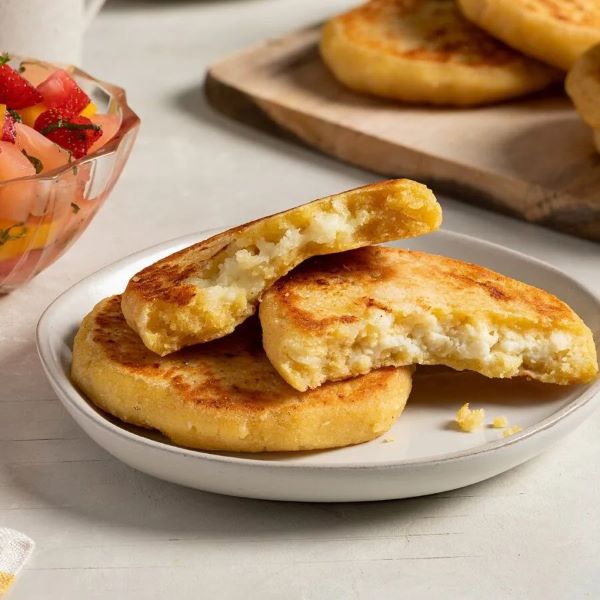
The texture is also distinctive. The arepa boyacense is thicker than many other Colombian varieties, typically about a centimeter or slightly more in depth, and has a slightly chewy quality from the combination of the cheese proteins and the corn masa. The exterior develops a light crust from griddle contact while the interior stays soft and moist from the cheese throughout.
Some versions add a small amount of butter or cream to the masa alongside the cheese, which adds richness and helps the arepa brown more evenly on the griddle surface. Some versions use a mixture of fresh cheese and an aged cheese for more complex flavor.
Arepa boyacense is served as a breakfast or snack item in Boyaca, typically eaten with hot chocolate or a small black coffee called tinto. The slight saltiness of the cheese against the mild sweetness of the corn makes it satisfying without needing additional toppings, though some people add a thin spread of butter when the arepa comes off the griddle.
When you search for the best arepa boyacense near me, the cheese integrated throughout the dough rather than applied as a topping, and the slightly thicker profile compared to other Colombian arepas, are the characteristics that identify the correct version.
Where to Find It
Colombian bakeries and panaderias in cities with Colombian communities are the primary source. A Colombian bakery that carries multiple regional arepa styles beyond the standard white corn variety is more likely to carry or make the boyacense version. Look for bakeries that display multiple arepa types and describe them by regional origin.
Colombian restaurants and cafes sometimes carry arepa boyacense as a breakfast item or a late-afternoon snack offering. A restaurant that takes its Colombian breakfast menu seriously and lists multiple regional arepa types is more likely to have it than one that carries only a single generic arepa.
Colombian home cooks and community vendors from Boyaca or the broader Andean interior of Colombia are the most reliable source in cities without dedicated Colombian bakeries. Home cooks who grew up eating arepa boyacense and make it from the correct recipe will produce a version that is significantly more authentic than any commercial substitute. Instagram and Facebook groups for Colombian expats, particularly those from Boyaca, Cundinamarca, and the Andean interior, are the most productive search channels.
Colombian cultural events and community gatherings sometimes feature regional food from different departments of Colombia, and arepa boyacense may appear at events organized by Boyacense or Colombian Andean community organizations.
How to Search More Effectively
A direct search for the best arepa boyacense near me will return limited results in most cities. Here is how to search more productively:
Search Instagram with “arepa boyacense” plus your city name. Colombian home bakers who make traditional regional arepas post photos, and the thick profile and golden exterior of a properly made arepa boyacense are identifiable in photos.
Search Facebook for Colombian community groups in your city, particularly groups with members from Boyaca or the Colombian Andean interior. Ask directly where to find arepa boyacense. This question will surface home cooks and vendors who make it regularly and are willing to sell.
Search Google Maps for Colombian bakery in your city and contact them directly by phone or through their listing to ask whether they carry arepa boyacense or can make it by order. Bakeries that carry multiple regional arepa styles will know the boyacense variety immediately.
Search for Boyacense community organizations or cultural associations in your city or region. These groups celebrate their regional identity and food traditions and may organize events or know home cooks who make traditional Boyacense food.
What Good Arepa Boyacense Should Look Like
Once you find a source, a few things confirm whether the preparation is authentic.
The thickness. Noticeably thicker than a standard Colombian white arepa. The arepa boyacense should be at least a centimeter deep, producing a bread-like quality when bitten rather than the thin, flat quality of a standard arepa.
The exterior color. Golden on both flat surfaces from griddle contact, with a slight crust that gives some resistance before the softer interior is reached. A pale exterior means insufficient griddle temperature or time. A very dark exterior means overbaking on the griddle.
The cheese integration. Visible throughout the cut surface when the arepa is broken or cut, not concentrated in one area or absent from the interior. Every bite should contain cheese flavor that runs through the full depth of the arepa. If the cheese is only detectable at the surface or is absent from the interior, it was applied as a topping rather than mixed into the dough.
The interior texture. Soft and slightly moist, with a slight chewiness from the cheese proteins. The interior should feel substantial when pressed rather than collapsing immediately. A crumbly interior means the dough had insufficient fat or cheese to bind it properly.
The flavor. Mild sweetness from the corn masa with a savory, slightly salty note from the fresh cheese throughout. The two flavors should feel integrated rather than layered. A version that tastes of plain corn with occasional cheese encounters was not made with the cheese properly mixed into the masa.
Ordering and Eating Tips
Arepa boyacense is a breakfast or snack item in the Colombian Andean tradition. It is not typically a dinner or main course preparation. Order it with Colombian hot chocolate or tinto coffee for the traditional pairing.
Eat it warm rather than hot. Directly from the griddle, the cheese in the interior is at its hottest and the full flavor is slightly muted by the heat. Two to three minutes of resting brings the cheese flavor into clearer focus and makes the interior texture more pleasant.
A thin spread of butter on the warm surface is traditional in Boyaca and adds richness that complements the cheese inside. If the vendor or bakery offers butter alongside, apply it while the arepa is still warm enough to melt it slightly.
Ask whether the cheese is mixed into the masa or applied to the surface. A confident answer describing cheese mixed into the dough before shaping confirms the authentic boyacense preparation. An answer that describes adding cheese after the arepa is cooked indicates a different style.
Pricing Expectations
Individual arepa boyacense at a Colombian bakery typically runs between $2 and $5 depending on the size and market. Home cook and vendor versions sold through batch orders are often priced similarly. At a Colombian restaurant where it is served as a breakfast item alongside other elements, it may be included in a set breakfast plate priced between $8 and $14.
Key Takeaways
- The best arepa boyacense near me is most reliably found through Colombian home cook vendors from Boyaca and the Andean interior, dedicated Colombian bakeries that carry regional arepa varieties, and community events organized by Boyacense cultural associations.
- Arepa boyacense is a thick Colombian arepa with fresh white cheese mixed directly into the corn masa, producing an arepa that tastes of cheese throughout rather than only where a topping is applied.
- The cheese should be integrated throughout the dough, visible in every bite when the arepa is cut. Cheese applied only to the surface is not the boyacense preparation.
- Search Instagram with “arepa boyacense” plus your city name and check Colombian community Facebook groups specifically for members from Boyaca or the Colombian Andean interior.
- Ask whether the cheese is mixed into the masa or applied afterward. This single question confirms whether a bakery or vendor is making the authentic regional preparation.
- Eat warm but not hot, with a thin spread of butter on the surface if available. Pair with Colombian hot chocolate or tinto coffee for the traditional Boyacense serving context.
- The thickness, golden exterior, and cheese flavor running through the full interior are the three most immediate quality markers.
- Expect to pay $2 to $5 per arepa at a bakery or from a home cook vendor.