Ensalada de zanahoria y arvejas is the kind of composed salad that appears on Latin American restaurant menus and Argentine bakery counters as a reliable, everyday side dish rather than a destination item. Carrot and pea together are mild, slightly sweet, and compatible in a way that makes the salad approachable to almost anyone, which also means it is frequently made carelessly because the low expectations built into its simplicity allow kitchens to skip the details.
A version made with properly cooked carrots that still have some structure, sweet fresh or properly thawed peas, and a dressing seasoned with enough lemon and salt to make the vegetables taste like themselves is a genuinely enjoyable side dish. A version made with mushy overcooked carrot, canned peas drained of their liquid, and a bland mayonnaise coating is a different proposition entirely.
If you have been searching for the best ensalada de zanahoria y arvejas near me and finding only the second type, this guide helps you locate the kitchens making the first.
What Ensalada de Zanahoria y Arvejas Actually Is
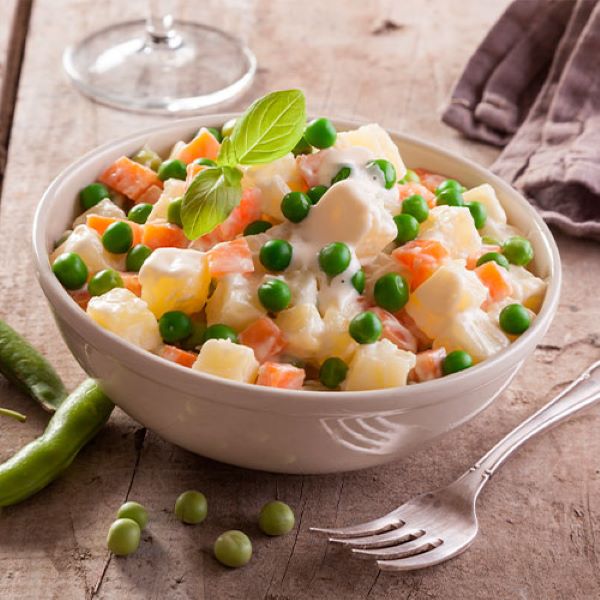
This is a composed salad built on two main vegetables: cooked carrot and cooked peas, bound with a dressing that is typically mayonnaise-based in the Latin American tradition or a light vinaigrette in the Spanish tradition. Additional ingredients vary by tradition and household but commonly include hard-boiled egg, onion, fresh herbs like parsley, and sometimes corn kernels or diced potato.
The Argentine version is the most commonly encountered outside of Spain and uses diced cooked carrot, cooked frozen or fresh peas, sometimes hard-boiled egg, and a mayonnaise dressing seasoned with lemon juice and salt. It appears on bakery prepared food counters and restaurant lunch menus as a standard side dish alongside composed salads, tartas, and milanesas.
The Spanish version tends to be lighter, using a sherry vinegar or white wine vinegar dressing rather than mayonnaise, and may include additional raw or marinated vegetables. This version is closer to a dressed vegetable salad than a bound mayonnaise preparation.
The carrot preparation is a key differentiator between a good and a mediocre version. Carrot cut into uniform small dice and cooked until just tender retains some structural integrity and produces a pleasant texture contrast with the softer peas. Carrot cooked until completely soft and cut into irregular chunks is less pleasant. Carrot that has been cooked so thoroughly it has no distinct texture disappears into the salad and contributes only color.
When you search for the best ensalada de zanahoria y arvejas near me, the texture of the carrot and the brightness of the peas are the two most immediate quality indicators.
Where to Find It
Argentine bakeries and panaderias are the primary source. Ensalada de zanahoria y arvejas is a standard prepared food item at Argentine bakeries, typically made fresh each morning and displayed in the cold case alongside other composed salads. A bakery that makes its salads daily rather than receiving them from a commercial supplier will use fresher vegetables and make a more carefully seasoned dressing.
Argentine and Latin American restaurants carry this salad as a side dish or starter. A restaurant that offers multiple composed cold salads on a rotating lunch menu is treating its cold kitchen with enough seriousness to produce a decent version.
Latin American delis and prepared food counters sell ensalada de zanahoria y arvejas by weight or container. The quality at these counters depends on frequency of preparation and the quality of the source vegetables.
Argentine home cook vendors selling through Instagram and Facebook batch orders include this salad as a practical and popular prepared food item. Home cooks who make it from scratch with fresh vegetables and homemade dressing consistently produce better results than commercial volume operations.
How to Search More Effectively
A direct search for the best ensalada de zanahoria y arvejas near me will return limited specific results. Here is how to search more effectively:
Search Google Maps for Argentine bakery or panaderia argentina in your city. Browse photo sections and menu listings for prepared food items. A bakery that posts photos of its daily prepared food selection showing colorful, fresh-looking composed salads is rotating its stock regularly.
Search Instagram with “ensalada zanahoria arvejas” plus your city name. Argentine bakery accounts and home cook vendors post photos of their salad selections, and the orange-green color combination of a properly made carrot and pea salad is visually identifiable.
Search Facebook for Argentine community groups in your city and ask where to find fresh ensalada de zanahoria y arvejas. Community members who buy prepared food regularly will know which bakery or home cook makes the most consistently fresh version.
Ask any Latin American deli or bakery counter when the salad was made and whether the carrots and peas are cooked fresh each day. A counter that can answer both questions is managing its prepared food with more care than one that cannot.
What Good Ensalada de Zanahoria y Arvejas Should Look Like
Once you find a source, a few things confirm whether the preparation was done well.
The carrot. Orange, uniform in size, and cooked until tender but still holding its shape when pressed. Each piece of carrot should have a slight resistance before yielding, not crumble immediately when touched. Overcooked carrot that falls apart at the slightest pressure contributes texture that works against the salad rather than with it.
The peas. Bright green and round, fully cooked but not mushy. Green peas cooked properly retain their spherical shape and spring back slightly when pressed. Overcooked peas that have collapsed and turned olive-green contribute a starchy, flat flavor and an unappealing texture. Canned peas, easily identified by their softer texture and more uniform, slightly dull color, produce a less fresh-tasting salad than properly cooked frozen or fresh peas.
The dressing. Light enough to coat the vegetables without pooling at the bottom of the serving dish. The mayonnaise-based version should be seasoned with enough lemon juice or vinegar to prevent it from feeling heavy. The vinaigrette version should have enough body to cling to the vegetables rather than running off immediately.
The seasoning. Complete without requiring additional salt at the table. The vegetables should taste seasoned rather than bland. A flat-tasting salad that improves dramatically with salt was assembled without adequate seasoning during preparation.
The overall color. Vibrant orange from the carrot and bright green from the peas, not dull or faded. The color of both vegetables is an indicator of proper cooking and freshness. Dull, muted colors indicate overcooking or the use of preserved rather than freshly cooked vegetables.
Ordering and Eating Tips
Ensalada de zanahoria y arvejas is a side dish or starter. It pairs well with any grilled protein, milanesa, or main course that would benefit from a slightly sweet, mild side dish to balance richer flavors.
Eat it at room temperature rather than cold from refrigeration. Cold suppresses the natural sweetness of both the carrot and the peas, and the dressing flavor is more perceptible when the salad is not chilled. Allowing 15 minutes at room temperature before eating makes a noticeable difference.
Ask when the salad was made. A same-day preparation uses vegetables that have been cooked more recently and have not had time to absorb excess moisture from the dressing. A salad that has been sitting for several days will have softer vegetables and a dressing that has been diluted by the liquid released from the vegetables over time.
Pricing Expectations
Ensalada de zanahoria y arvejas at a Latin American restaurant as a side dish or starter typically runs between $7 and $13. Prepared versions at Argentine bakery or deli counters sold by weight or container are typically in the $5 to $10 range per portion. Home cook and vendor versions are priced similarly to deli counter rates.
Key Takeaways
- The best ensalada de zanahoria y arvejas near me is most reliably found at Argentine bakeries that make their composed salads fresh daily and at home cook vendors who use fresh vegetables and make their own dressing from scratch.
- Properly cooked carrot that holds its shape with slight resistance is the primary texture quality marker. Overcooked carrot that crumbles immediately indicates insufficient care in vegetable preparation.
- Bright green peas that retain their spherical shape confirm proper cooking. Olive-colored, collapsed peas indicate overcooking or the use of canned peas rather than fresh or properly cooked frozen peas.
- The dressing should coat without pooling and should be seasoned with enough acid to lift the richness of the mayonnaise base.
- Ask when the salad was made. A same-day preparation has better vegetable texture and a fresher dressing than one that has been sitting for multiple days.
- Eat at room temperature rather than cold. Cold suppresses the natural sweetness of both vegetables and makes the dressing flavor less perceptible.
- Search Instagram with “ensalada zanahoria arvejas” plus your city name and check Argentine community Facebook groups for bakery and home cook recommendations.
- Expect to pay $7 to $13 at a restaurant and $5 to $10 at a deli counter or from a home cook vendor.