Ensalada de arvejas y jamon is one of those prepared salads that appears on Latin American restaurant menus and Argentine bakery counters as a classic cold side dish or starter, familiar enough to be ordered without much thought and easy enough to make poorly without anyone complaining. Peas and ham together are mild, approachable, and versatile, which means they are also frequently combined in ways that produce a flat, underseasoned result that relies on the mayonnaise dressing to carry a dish with insufficient intrinsic flavor.
A properly made ensalada de arvejas y jamon uses sweet, properly cooked peas, good quality ham with actual flavor, a dressing seasoned with enough lemon and salt to make the ingredients taste like themselves, and possibly additional elements like hard-boiled egg or carrot that give the salad more dimension. If you have been searching for the best ensalada de arvejas y jamon near me and finding versions that taste of nothing in particular, this guide helps you find and evaluate a better version.
What Ensalada de Arvejas y Jamon Actually Is
This salad exists across the Spanish and Latin American culinary traditions as a composed cold salad combining cooked green peas, diced ham, and a binding dressing. The variations between traditions are mostly in the additional ingredients and the dressing style.
The Argentine version is the most commonly found outside of the Iberian Peninsula and typically uses cooked frozen or fresh peas, diced cooked ham, hard-boiled egg, sometimes carrot, and a mayonnaise dressing seasoned with lemon juice and salt. It appears on Argentine restaurant lunch menus and bakery counters alongside other composed salads and is considered part of the broader ensalada rusa and composed salad tradition that Argentine cuisine inherited from European immigration.
The Spanish version sometimes uses a lighter vinaigrette rather than mayonnaise and may include additional vegetables like roasted red pepper or onion. The Spanish interpretation tends to be less bound and more like a dressed salad than a cohesive mayonnaise-based preparation.
In both cases, the quality of the ham is a significant quality variable. Spanish serrano or cooked jamon york provide completely different flavor profiles. Argentine cooked ham varies widely in quality from watery, flavorless product to well-seasoned, properly cured product that adds genuine savory depth to the salad. A salad made with quality ham that has real flavor needs less dressing to taste complete than one made with flavorless processed ham that contributes only salt and texture.
When you search for the best ensalada de arvejas y jamon near me, the quality of the ham and the proper seasoning of the dressing are the two most important quality variables.
Where to Find It
Argentine restaurants and bakeries are the primary source. Ensalada de arvejas y jamon appears on Argentine lunch menus and bakery prepared food sections as a standard item. A bakery that makes its own composed salads daily using fresh peas and quality ham will produce a significantly better version than one using pre-made commercial salad bases.
Spanish restaurants and tapas bars sometimes carry a version as a cold tapa or starter. Spanish restaurants that take their cold kitchen seriously and use quality Spanish ham in their salad preparations are worth seeking out.
Latin American delis and prepared food counters sell ensalada de arvejas y jamon by weight or by container as a practical takeout item. The quality varies considerably depending on whether the kitchen uses fresh peas and quality ham or frozen peas and processed low-quality ham.
Argentine and Latin American home cook vendors selling through Instagram and Facebook batch orders include this salad in their weekly prepared food selections. Home cooks who make the dressing from scratch and use good ham typically produce a better result than commercial prepared versions.
How to Search More Effectively
A direct search for the best ensalada de arvejas y jamon near me will surface Latin American restaurants and delis in your area. Here is how to find the ones making it well:
Search Google Maps for Argentine restaurant or Argentine bakery and browse their menu or photo sections. A bakery that posts daily photos of its prepared food selections, including composed salads, is making them fresh rather than using pre-made commercial stock.
Search Instagram with “ensalada arvejas jamon” plus your city name. Argentine home cook vendors and bakery accounts post photos of their prepared food, and a composed salad that looks fresh, colorful, and properly dressed indicates care in preparation.
Search Facebook for Argentine community groups in your city and ask where to find fresh, well-made ensalada de arvejas y jamon. Community members who buy prepared food regularly will point you to the best bakery or home cook in the area.
Ask any Latin American deli or prepared food counter directly when the salad was made and what ham they use. A deli that can answer both questions specifically is managing its prepared food with more attention than one that cannot.
What Good Ensalada de Arvejas y Jamon Should Look Like
Once you find a source, a few things confirm the quality.
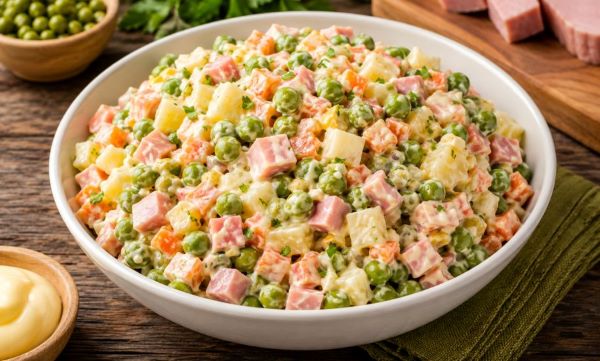
The peas. Bright green, fully cooked but still holding their shape without being mushy. Overcooked peas turn olive-colored and develop a starchy, flat flavor. Fresh or properly cooked frozen peas that have been refreshed in cold water after cooking retain their color and natural sweetness. A salad with dull, olive-green peas was made with overcooked or improperly handled peas.
The ham. Visible in generous pieces, with a flavor that is detectable through the dressing. Quality ham adds a savory, slightly salty note that binds the salad into something more than peas with mayonnaise. Watery, flavorless ham that contributes only texture without flavor is the most common failure point in this salad. Each piece should have enough ham character to taste independently from the dressing.
The dressing. Light enough to coat rather than swamp the peas and ham. The dressing should be present in every bite without the salad tasting primarily of mayonnaise. Lemon juice or a small amount of vinegar in the dressing adds brightness that keeps the salad from feeling heavy. A version that tastes only of mayonnaise without any acid lift was not properly balanced.
The additional ingredients. Hard-boiled egg, if included, should be fully cooked with no green ring around the yolk. Carrot, if included, should be cooked until tender but not mushy. Each additional element should be present in a quantity that contributes to rather than dilutes the salad.
The seasoning. Complete and balanced without needing additional salt at the table. The ham and the dressing together should season the salad properly. A flat-tasting salad that improves significantly with added salt was not seasoned during preparation.
Ordering and Eating Tips
Ensalada de arvejas y jamon works as a side dish, a light starter, or part of a composed plate alongside other cold salads. It pairs well with a simple milanesa or a grilled protein at an Argentine restaurant.
Eat it at room temperature or slightly cool rather than refrigerator-cold. Cold suppresses the flavor of both the ham and the dressing, and a salad allowed to come to room temperature for 15 minutes before eating tastes noticeably more complete than one served directly from the refrigerator.
Ask when the salad was made. A same-day preparation is preferable to one that has been sitting for multiple days. The peas begin to absorb the dressing over time and the salad becomes denser and less bright as the days pass.
If ordering from a deli counter, taste before buying a full portion if the counter allows sampling. The ham flavor is the easiest thing to evaluate in a quick taste and tells you immediately whether the quality of the main protein ingredient is adequate.
Pricing Expectations
Ensalada de arvejas y jamon at a Latin American restaurant as a starter or side dish typically runs between $8 and $14. Prepared versions at deli counters sold by weight or container are typically in the $6 to $12 range per portion. Home cook and vendor versions are priced similarly to deli counter rates.
Key Takeaways
- The best ensalada de arvejas y jamon near me is most reliably found at Argentine bakeries and restaurants that make their composed salads fresh daily using quality ham, and at home cook vendors who make the dressing from scratch and source good ingredients.
- The quality of the ham is the most important variable. Quality ham with genuine savory flavor carries the entire salad. Watery, flavorless processed ham makes the salad taste of nothing beyond mayonnaise.
- Bright green peas that hold their shape indicate proper cooking and handling. Olive-colored, mushy peas indicate overcooking or improper preparation.
- The dressing should coat without swamping, and should include enough acid from lemon juice or vinegar to lift the richness of the mayonnaise base.
- Search Instagram with “ensalada arvejas jamon” plus your city name and check Argentine community Facebook groups for bakery and vendor recommendations.
- Eat at room temperature or slightly cool. Cold suppresses both the ham flavor and the dressing balance.
- Ask when the salad was made. A same-day preparation is noticeably brighter and fresher than one that has been sitting for multiple days.
- Expect to pay $8 to $14 at a restaurant and $6 to $12 at a deli counter or from a home cook vendor.