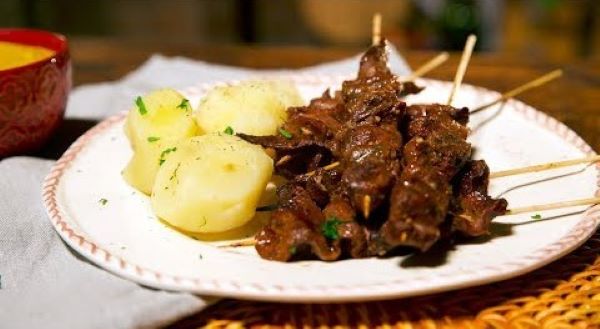
Anticuchos are one of those dishes that reveal something about a food culture the moment you encounter them. In Bolivia, as in Peru, anticuchos are grilled skewers of beef heart marinated in a spiced mixture and cooked over charcoal until the exterior chars slightly and the interior stays tender and juicy. They are street food. They are sold at night markets and roadside grills and at festivals where the smoke from the charcoal carries the smell of the marinade through the air before you even see the grill.
If you have been searching for the best anticucho boliviano near me and finding either nothing at all or versions that bear no resemblance to what the dish should taste like, this guide gives you a realistic framework for finding and evaluating the real thing outside of Bolivia.
What Anticucho Boliviano Actually Is
The Bolivian anticucho shares its roots with the Peruvian version, which is the more internationally known preparation, but the two have developed distinct characteristics over time. Both use beef heart as the traditional protein. Both marinate the meat in a mixture built around dried chili, cumin, garlic, and vinegar before grilling over charcoal. The differences lie in the specific chili used, the marinade balance, and the accompaniments.
The Bolivian version of the anticucho marinade typically uses aji colorado or a local dried red chili rather than the aji panca more common in Peru. The result is a slightly different color in the finished skewer and a different heat character. Cumin is present in both versions but the Bolivian marinade often uses more of it, giving the finished anticucho a more pronounced earthiness alongside the chili heat.
The beef heart preparation is critical. Raw beef heart has a dense, slightly fibrous texture that requires both proper trimming and proper marination to become tender and palatable. The heart must be cleaned of connective tissue and fat, cut into even pieces, and marinated for long enough that the acid in the vinegar begins to break down the muscle fiber. Improperly cleaned beef heart has a rubbery, chewy quality that no amount of correct grilling can correct.
The grilling is done over charcoal at high heat, which chars the exterior of each piece while leaving the interior moist. The skewers are basted during grilling with additional marinade or a fat-based basting sauce that keeps the lean beef heart from drying out over the intense heat.
Traditional accompaniments in Bolivia include boiled potato, toasted corn called tostado, and a sauce made from local chili or a llajwa, the Bolivian fresh chili salsa made from locoto pepper and tomato.
When you search for the best anticucho boliviano near me, the charred exterior, the spiced marinade flavor, and proper beef heart preparation are the quality markers to evaluate.
Where to Find It
Bolivian restaurants are the primary source. Anticuchos appear on Bolivian restaurant menus as a starter or a main course, and the quality reflects how seriously the kitchen treats the beef heart preparation and the marinade. A restaurant with a comprehensive Bolivian menu that goes beyond the most obvious dishes is more likely to carry anticucho boliviano as a serious offering.
Bolivian street food vendors and pop-up operations are often the most authentic source outside of Bolivia itself. Anticuchos are fundamentally street food, and home cooks and vendors who set up grills at Latin American markets, community events, and outdoor festivals produce a version that is closer to the original street food context than a restaurant plate.
Bolivian community events and cultural festivals almost always feature anticuchos as a food offering. Events organized around Bolivian national holidays, particularly Independence Day in August, are reliable sources for finding anticucho boliviano made by cooks who have been preparing this dish for years.
Latin American food markets with live grill stations in cities with Bolivian communities sometimes feature anticucho vendors on weekends. The live charcoal grill is central to the dish and vendors who set up a proper grill rather than using a flat griddle are the ones producing the closest result to the traditional version.
Peruvian restaurants sometimes carry anticuchos as well, though the Peruvian version will differ in marinade and accompaniments from the Bolivian one. If no Bolivian source is available, a Peruvian anticucho from a kitchen that takes the dish seriously is a reasonable alternative for understanding the broader tradition.
How to Search More Effectively
A direct search for the best anticucho boliviano near me will return limited results in most cities. Here is how to search more productively:
Search Google Maps for Bolivian restaurant in your city and browse menus for anticucho. A restaurant that lists it with a description of the beef heart and the marinade components is making it with more transparency than one that simply lists it as a generic menu item.
Search Instagram with “anticucho boliviano” plus your city name. Bolivian vendors and home cooks who set up grills for community events post photos of their anticuchos, and the char marks on the beef heart pieces and the accompanying llajwa are visually distinctive.
Search Facebook for Bolivian community groups in your city. Ask where to find anticucho boliviano locally. This question consistently generates specific responses from community members who attend events and know which vendors produce the best version.
Search for Latin American food markets or South American street food events in your city. These events often feature Bolivian vendors specifically because the live grill setup required for anticuchos is practical in an outdoor market context.
What Good Anticucho Boliviano Should Look Like
Once you find a source, a few things confirm the quality.
The char marks. Visible grill marks on each piece, with some darker spots where the meat contacted the hottest part of the grill directly. This char is not burned meat. It is a Maillard reaction and caramelization of the marinade components that creates flavor. A pale, uniformly cooked anticucho without any char was not cooked over sufficient heat or was cooked on a flat surface rather than a grill.
The exterior and interior contrast. Slightly firm and charred on the outside, tender and moist inside. Beef heart cooked properly over charcoal should yield when pressed but not crumble or fall apart. If it resists significantly when bitten, the marination or cooking time was insufficient.
The marinade color. Deep red from the dried chili in the marinade, visible on the surface of each piece. A pale or brownish surface without any red tint means insufficient chili was used in the marinade or the marination time was too short.
The spice flavor. Cumin and chili present in every bite, with a slight tang from the vinegar in the marinade running underneath. These three elements together should be immediately identifiable. A version that tastes only of grilled meat without spice depth was not marinated properly.
The accompaniments. Boiled potato or corn and a chili sauce alongside. The llajwa or chili sauce is not a condiment added for decoration. It is a functional part of the dish that adds fresh heat and acid to the rich, spiced grilled meat.
Ordering and Eating Tips
Eat anticuchos immediately off the grill. Beef heart cools quickly and the contrast between charred exterior and moist interior diminishes as the meat temperature drops. A skewer eaten within two minutes of leaving the grill is significantly better than one that has been sitting for five.
Use the accompanying sauce generously. The llajwa or chili sauce is designed to complement the rich, spiced beef heart and the starchy potato accompaniment. Eating all three together in one bite is the intended experience.
If you are ordering from a vendor at a market or festival, ask whether they are using charcoal or a gas grill. Charcoal produces smoke and char that a gas grill cannot replicate. A vendor using charcoal is following the traditional preparation method and will produce a more authentic result.
Order a full portion rather than a single skewer if the option is available. Two to three skewers with accompaniments is the standard serving and eating one skewer alone does not give you enough of the dish to fully evaluate the balance of meat, char, spice, and sauce.
Pricing Expectations
Anticuchos bolivianos from a street vendor or market grill typically run between $3 and $6 per skewer. A full serving of two to three skewers with accompaniments at a Bolivian restaurant runs between $14 and $22. Community event versions are often priced at the street food end of the range regardless of quality. Home cook and catering versions vary by arrangement.
Key Takeaways
- The best anticucho boliviano near me is most reliably found through Bolivian community events, outdoor market vendors with live charcoal grills, and dedicated Bolivian restaurants rather than through general Latin American restaurant searches.
- Anticucho boliviano uses beef heart cleaned of connective tissue, marinated in dried chili, cumin, garlic, and vinegar, then grilled over charcoal until charred on the exterior and moist inside.
- Char marks on the grilled meat and deep red marinade color on the surface are the two most immediate quality indicators. A pale, unmarked surface means insufficient heat or marinade.
- Charcoal is not optional for the authentic preparation. Ask whether the vendor is using charcoal or gas. Charcoal produces the smoke and char that define the dish.
- Search Facebook Bolivian community groups and Instagram with “anticucho boliviano” plus your city name for the most productive search results.
- Eat immediately off the grill. The contrast between charred exterior and moist interior diminishes within minutes of leaving the heat.
- Use the accompanying llajwa or chili sauce generously and eat it with the potato in the same bite as the meat.
- Expect to pay $3 to $6 per skewer at a street vendor and $14 to $22 for a full restaurant serving.