Seco de cordero is one of the more complex and deeply flavored stews in Peruvian cooking, which is a cuisine with strong competition in that category. Lamb braised in a sauce built from cilantro, aji amarillo, chicha de jora or beer, and a long list of aromatics until the meat is falling-off-the-bone tender and the sauce has reduced into something that concentrates every flavor in the pot. It is called seco, which means dry, not because the dish is dry but because compared to soupy stews it finishes with a thicker, more sauce-forward result.
When it is made properly, the herb fragrance from the cilantro and the warmth from the aji amarillo run through every component of the dish, and the lamb becomes a vehicle for one of the more interesting sauces in the Andean kitchen.
If you have been searching for the best seco de cordero near me and finding versions that are either bland or missing the cilantro-forward character that defines the dish, this guide helps you find a kitchen that makes it the right way.
What Seco de Cordero Actually Is
The word seco in Peruvian cooking refers to a specific style of braise in which the meat is cooked in a thick herb and chili sauce rather than in a large quantity of stock. The result is a finished dish with a concentrated sauce that clings to the meat rather than a broth-based soup or stew.
The sauce base for seco de cordero starts with a large quantity of fresh cilantro, blended into a paste or finely chopped, combined with aji amarillo for heat and color, onion, garlic, and tomato. Chicha de jora, a fermented corn beer traditional to Andean cooking, is the preferred liquid for deglazing and adding depth to the sauce. Where chicha is unavailable, a light beer or combination of beer and stock is an acceptable substitute.
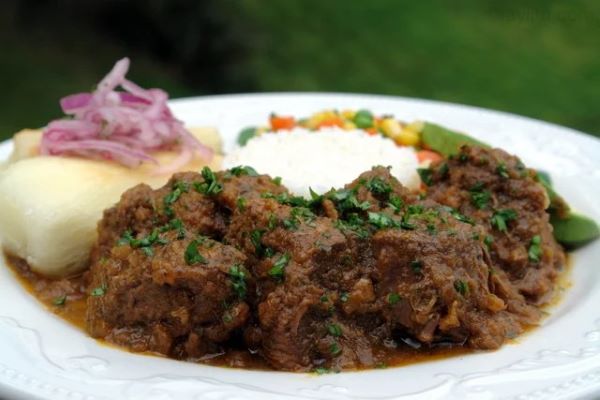
The lamb, typically bone-in shoulder or leg pieces, is browned first to develop color and flavor, then added to the sauce base and braised slowly until the collagen in the bones has dissolved into the sauce and the meat pulls away without resistance. The finished sauce should be a deep green-brown, thick, fragrant with cilantro, and warm from the aji amarillo.
Traditional accompaniments are white rice and canary beans, called frijoles canarios, which are cooked separately and served alongside. Some versions also include yuca or potato in the stew itself, which absorbs the cilantro sauce during cooking and becomes one of the best parts of the plate.
When you search for the best seco de cordero near me, the herb-forward sauce color, the cilantro fragrance, and the tenderness of the lamb are the three primary quality markers.
Where to Find It
Peruvian restaurants are the primary source. Seco de cordero is a classic Peruvian main course that appears on traditional menus alongside ceviche, lomo saltado, and aji de gallina. A restaurant with a comprehensive Peruvian menu that goes beyond the internationally known dishes is more likely to carry seco de cordero as a permanent menu item.
Peruvian fondas and home-style restaurants are often the best source. The fonda format, which serves daily rotating home-cooking plates, features seco de cordero regularly as a weekend special or as part of a set lunch menu. These restaurants cook the dish slowly because they have the time and volume to do it properly.
Peruvian home cooks and community vendors selling through Instagram and Facebook batch orders include seco de cordero in their weekly offerings, particularly on weekends when demand for traditional slow-cooked dishes increases. Home cooks who make this dish from scratch with proper ingredients often produce a result equal to restaurant versions.
Peruvian community events and cultural gatherings sometimes feature seco de cordero as part of a traditional food spread. Events around Peruvian national holidays or organized by Peruvian cultural associations are worth checking.
How to Search More Effectively
A direct search for the best seco de cordero near me will surface Peruvian restaurants in your area. Here is how to identify the ones making it properly:
Search Google Maps for Peruvian restaurant and browse menus for seco de cordero or seco de res, which is the beef version that appears on many of the same menus. A restaurant that lists seco as a category with multiple protein options is running a traditional Peruvian menu with this preparation as a serious offering.
Search Yelp for Peruvian restaurants and read reviews that mention seco de cordero. Reviewers will describe whether the cilantro sauce was fragrant, whether the lamb was properly tender, and whether the beans alongside were properly made. These details are specific enough to tell you how seriously the kitchen takes this dish.
Search Instagram with “seco de cordero” plus your city name. Peruvian restaurant accounts and home cook vendors post photos of this dish, and the distinctive green-brown sauce color of a properly made seco is identifiable immediately in photos.
Search Facebook for Peruvian community groups in your city and ask where the best seco de cordero is. Peruvians are opinionated about this dish and will give you specific recommendations without much prompting.
What Good Seco de Cordero Should Look Like
Once you find a source and the plate arrives, a few things confirm whether the dish was made properly.
The sauce color. Deep green-brown from the blended cilantro and the reduced cooking liquid. A bright, vivid green sauce means the cilantro was added at the end rather than cooked into the base. A pale or brown sauce without green tones means insufficient cilantro was used. The correct color is somewhere between earthy olive and deep forest green.
The sauce consistency. Thick enough to coat the lamb pieces and not pool thinly at the base of the plate. The reduction during braising concentrates the sauce into something that clings to the meat. A watery or thin sauce was either not cooked long enough or had too much liquid added during braising.
The lamb texture. Falling off the bone without resistance. Bone-in pieces should release their meat when pressed with a fork. A piece that requires cutting and chewing was not braised long enough. Properly made seco de cordero needs a minimum of 90 minutes of low braising and often longer depending on the cut.
The cilantro fragrance. The herb aroma should hit before the first bite. A properly made seco de cordero has a fragrance that fills the immediate area when the plate arrives. A dish without this herb presence was made with insufficient cilantro or with dried cilantro, which does not produce the same result.
The accompaniments. White rice and canary beans served alongside, not mixed into the stew. The beans should be properly cooked, slightly creamy in the interior, and lightly seasoned. Combining a spoonful of seco sauce, rice, and beans in one bite is the traditional way to eat this dish.
Ordering and Eating Tips
Order seco de cordero as a main course. It is a substantial dish and does not need supplementary plates alongside it. The rice and beans provided complete the meal.
Ask the server how long the lamb is cooked. A kitchen that braises the lamb for two hours or more will produce a different result from one that cooks it for 45 minutes. The answer tells you what to expect in terms of tenderness.
Ask whether the dish uses chicha de jora or beer as the braising liquid. A kitchen using chicha de jora is following the traditional Peruvian preparation and will produce a slightly different flavor depth than a beer-based version. Both are acceptable, but chicha adds a specific fermented corn note that beer does not replicate.
Eat the lamb, rice, and beans together in the same bite whenever possible. The sauce, the starchy rice, and the creamy beans are designed to work together as a plate rather than as separate courses.
Pricing Expectations
A full plate of the best seco de cordero near me at a Peruvian restaurant typically runs between $18 and $28 depending on the market and the restaurant. The price reflects the cost of lamb and the long braising time required. Fondas and casual lunch restaurants tend to be at the lower end of the range. Home cook and vendor versions sold by the portion are typically in the $14 to $22 range.
Key Takeaways
- The best seco de cordero near me is most reliably found at Peruvian fondas and traditional restaurants that rotate home-style dishes, and at home cook vendors who prepare it as a weekend batch offering.
- Seco de cordero is lamb braised in a thick sauce of blended cilantro, aji amarillo, onion, garlic, and chicha de jora or beer until the meat is falling off the bone and the sauce is concentrated and herb-forward.
- The deep green-brown sauce color and the strong cilantro fragrance when the plate arrives are the two most immediate quality markers. A pale sauce or no herb aroma indicates the dish was not made correctly.
- The lamb must be braised for at least 90 minutes to reach proper tenderness. Ask how long the kitchen braises it before ordering.
- Search Instagram with “seco de cordero” plus your city name. The distinctive sauce color is identifiable in photos and makes a properly made version easy to spot.
- Eat the lamb, rice, and beans together in the same bite. The components are designed as a unified plate and taste better together than separately.
- Expect to pay $18 to $28 at a sit-down Peruvian restaurant and $14 to $22 per portion from a home cook or community vendor.